
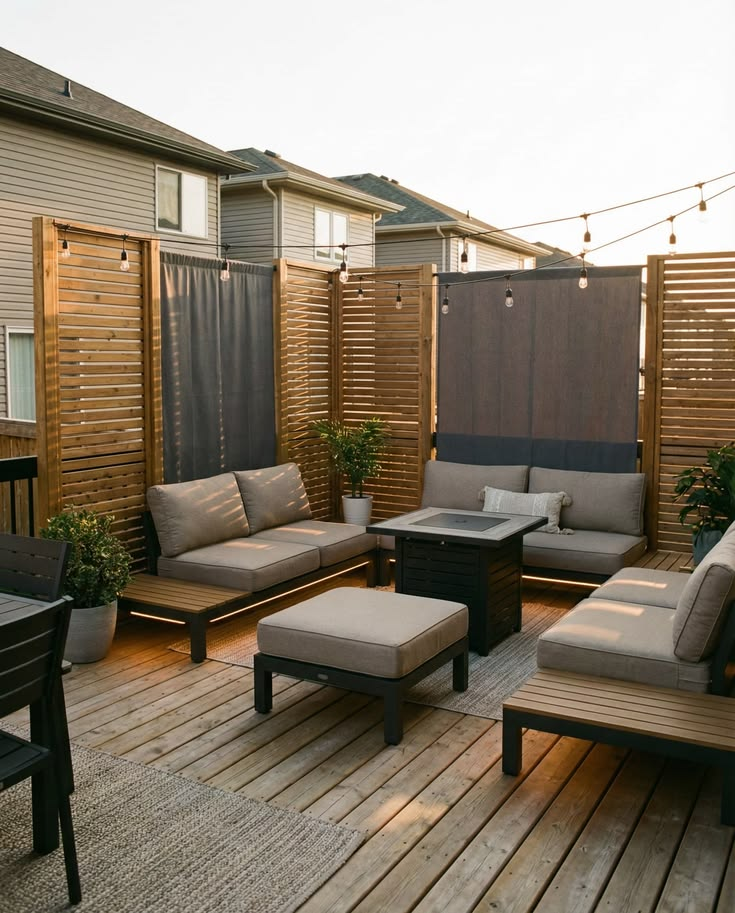
I used to eat dinner on my back patio facing away from my neighbor’s kitchen window because I could see straight into it, and I’m sure they could see straight into mine, and neither of us ever said anything about it for two years.
It wasn’t until I actually looked into outdoor privacy solutions instead of just rearranging my patio furniture that I realized the fix was one $80 trellis panel and a fast-growing vine, not some huge fencing project I’d been putting off.
That’s kind of the theme with outdoor privacy — most people picture a full privacy fence as the only real option, assume it’s expensive or against their lease, and give up.
But there’s a huge range between “do nothing” and “build an 8-foot fence,” and a lot of it depends on whether you’re dealing with a full backyard, a rental you can’t drill into, a balcony, or one specific problem spot like a hot tub or a window that faces a neighbor’s deck.
So I’ve broken this list into permanent fencing and screening, plant-based privacy, rental-friendly temporary options, structural additions like pergolas, small-space and balcony-specific solutions, and a few situational fixes for the spots that always seem to need something a little different.
If you’re renting or don’t want to commit to anything permanent, skip straight to the temporary section — a lot of people don’t realize how much privacy you can get without touching a single fence post.
Fencing and Permanent Screening Solutions

If you own your place and privacy is a long-term, whole-yard problem rather than one specific spot, permanent fencing and screening is usually worth the upfront cost because you’re not redoing it every season.
1. A standard 6-foot privacy fence

This is the default answer for a reason — a solid 6-foot wood or vinyl fence blocks sightlines completely and, depending on your area’s HOA or city code, is usually the maximum height allowed without a variance.
Check your local height restrictions before you order materials, because a lot of areas cap backyard fences lower than you’d expect, especially in front-facing or corner-lot situations.
2. Horizontal slat or shadowbox fencing for a modern look

Horizontal slat fencing (versus traditional vertical pickets) has become the go-to for anyone wanting privacy without the “stockade fence” look — it reads more like a design feature. Shadowbox style,
where boards alternate sides of the rail, gives you privacy from a straight-on angle while still letting some airflow through, which matters more than people think in hot climates.
3. Corrugated metal panel fencing
Metal panel fencing is having a real moment in modern backyard design right now, and it’s genuinely a good option if you want something low-maintenance that won’t warp or need repainting the way wood does.
It runs hotter to the touch in direct summer sun than wood, so keep that in mind if kids or pets are going to be near it.

4. A living privacy wall built from stacked planters
A modular stacked planter wall — essentially a freestanding vertical garden structure — gives you a permanent-feeling privacy screen without digging post holes, which matters if you’re on a slab foundation or dealing with tricky ground.
It’s a heavier upfront investment than plants alone, but it solved a real problem for my sister, whose HOA wouldn’t approve a taller fence but had no rules against planters.

Pro tip: Before installing any permanent fence, call your local utility marking service (811 in the US) to check for buried lines — skipping this step is the single most common expensive mistake people make with a DIY fence project.
Living and Plant-Based Privacy Solutions
Plants solve privacy problems fences can’t — namely, softening a space instead of walling it off, and working in spots where a hard structure isn’t allowed or wouldn’t look right.

5. A row of fast-growing arborvitae or similar evergreen hedge
Arborvitae is the classic backyard privacy hedge because it grows relatively fast, stays green year-round, and forms a dense wall within a few years. The trade-off is patience — even the fast-growing varieties need 2-4 years to reach real screening height, so this isn’t a this-summer fix.

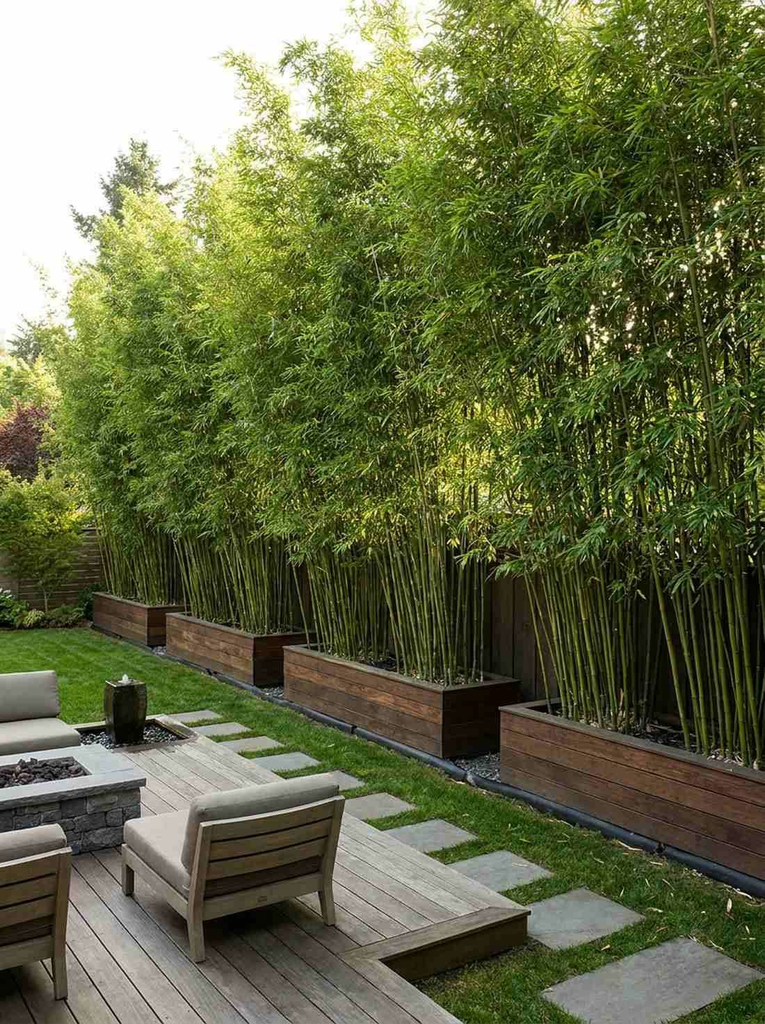
6. Bamboo in contained planters, never planted directly in the ground
Bamboo grows fast enough to give you privacy in a single season, which makes it tempting, but running bamboo planted directly in the ground is genuinely one of the worst landscaping mistakes I see repeated — it spreads through underground rhizomes and can show up in a neighbor’s yard years later.
Clumping varieties in large, contained planters give you the fast growth without the invasive spread.
7. Espaliered or trellised climbing vines along an existing fence

If you already have a shorter fence that just needs more height and coverage, training a fast climber like clematis, honeysuckle, or star jasmine up a trellis extension adds privacy without replacing the whole structure.
Star jasmine specifically has become a favorite on my own Pinterest boards for this — one of my trellis pins has over 30k saves, mostly from people using it for exactly this fence-extension purpose.
8. Ornamental grasses for softer, seasonal screening

Tall ornamental grasses like feather reed grass or miscanthus give you movement and texture along with screening, though they die back in winter in colder climates, so this works best paired with something evergreen rather than as your only privacy source.
9. A mixed hedgerow instead of a single-species hedge
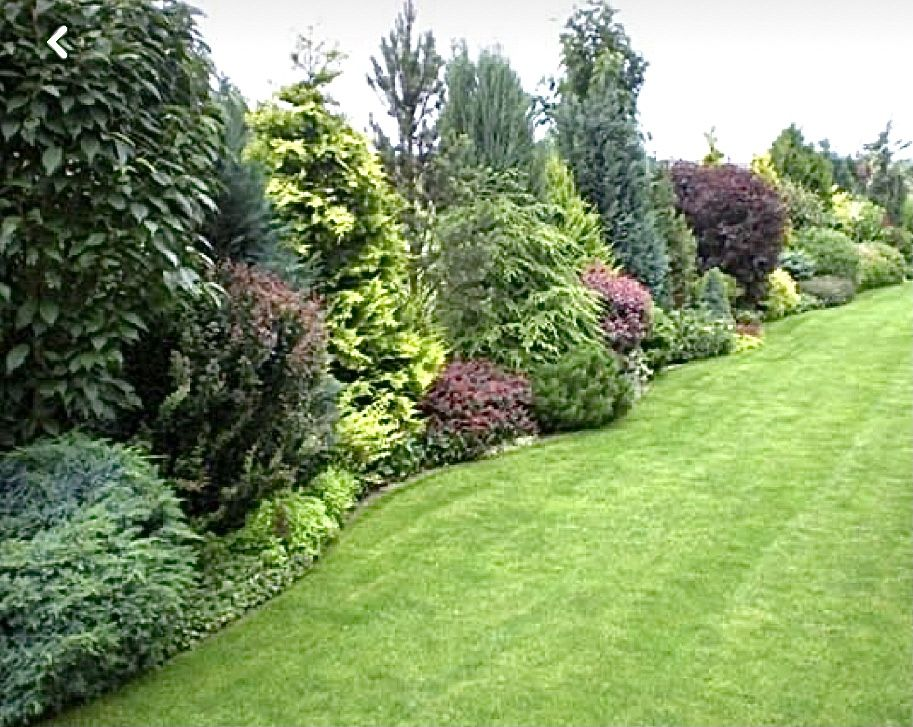
A hedgerow mixing 2-3 different shrub species instead of one uniform hedge gives you a more natural look and some resilience — if one species gets hit by a pest or disease, you’re not losing your entire privacy screen at once, which is a real risk with a monoculture hedge.
Pro tip: Check a plant’s mature width, not just height, before planting a privacy hedge along a property line — a lot of people plant too close to the fence and end up needing to remove or drastically prune plants a few years in once they hit their actual mature spread.
Rental-Friendly and Temporary Privacy Solutions
If you can’t dig, drill, or plant anything permanent, there’s still a real range of options — you just need things that stand freely or attach without damage.
10. Freestanding outdoor privacy screens or panels

Freestanding folding screens or fixed panel sets that don’t require any digging or mounting are the most straightforward rental-friendly option, and they can be moved with you when you leave.
They range widely in price depending on material — a basic bamboo folding screen runs $40-80, while a more substantial wood-look composite panel set can run $150-300.
11. Outdoor curtains on a freestanding frame or tension rod
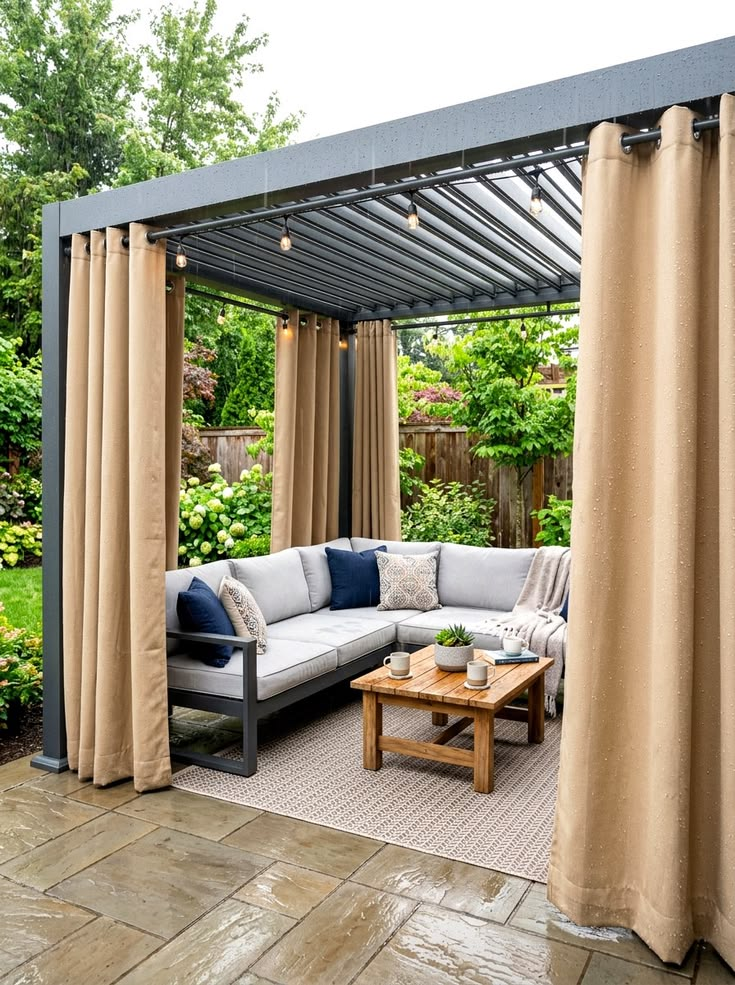
Outdoor-rated curtain panels hung from a freestanding frame (not mounted into anything) give you adjustable privacy — open them up for sun, close them for evening use — which a fixed screen can’t do.
I tried the cheap indoor curtain version outside first, thinking it would be fine for a covered patio, and it faded and mildewed within one season; outdoor-rated fabric costs more but actually survives the elements.
12. Potted trees or large shrubs in rolling planters

Large potted trees (think olive trees, arborvitae in containers, or tall ornamental grasses) in planters with caster wheels give you movable privacy that doesn’t touch the actual ground or structure at all, which makes it fully lease-compliant in almost every rental situation.
13. A tension-mounted trellis with a fast-growing annual vine

Trellises that use pressure or clamps instead of screws or anchors let you grow a full season of privacy vine (morning glory and black-eyed Susan vine both grow fast from seed) without any permanent installation, and you just take it down at the end of the season if needed.
Pro tip: Always check your lease specifically for balcony and patio modification language, not just general “no alterations” clauses — a lot of leases that ban permanent changes still explicitly allow freestanding furniture and planters, and landlords are usually fine with anything that doesn’t leave holes.
Structural Privacy Additions
Sometimes the actual problem isn’t a sightline from the side — it’s being overlooked from above, or needing shade and privacy in one structure rather than two separate projects.
14. A pergola with a privacy lattice or louvered roof
A pergola alone gives you some overhead structure, but adding a lattice panel or louvered slat roof turns it into real privacy from second-story windows next door, which a lot of people don’t consider until they realize their patio is visible from a neighbor’s upstairs bathroom.

15. Retractable outdoor shades mounted to an existing structure
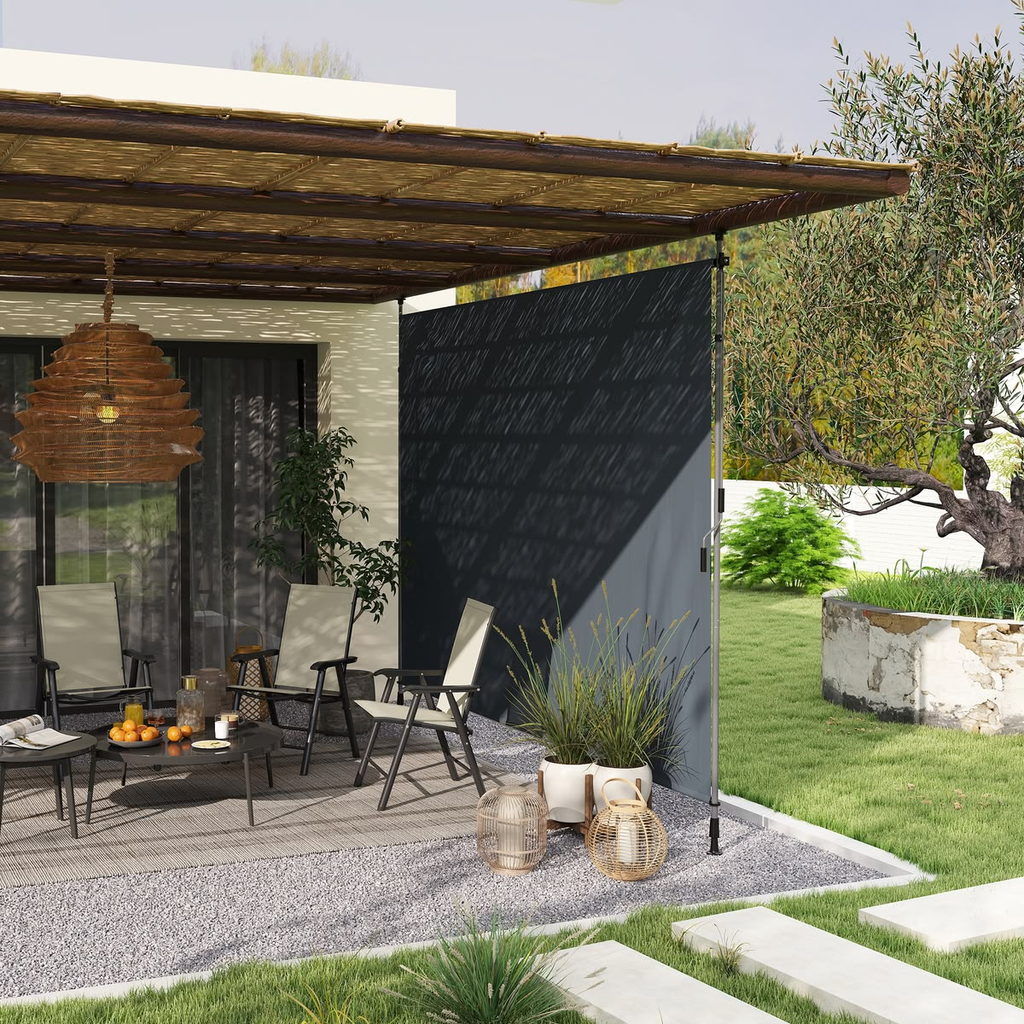
Retractable shade screens mounted along a patio or pergola edge give you privacy on demand without a permanent wall, and most modern versions come in enough colors and textures that they don’t read as purely functional the way old-school bamboo roll-up shades did.
16. A pergola with fabric drapery on two or more sides
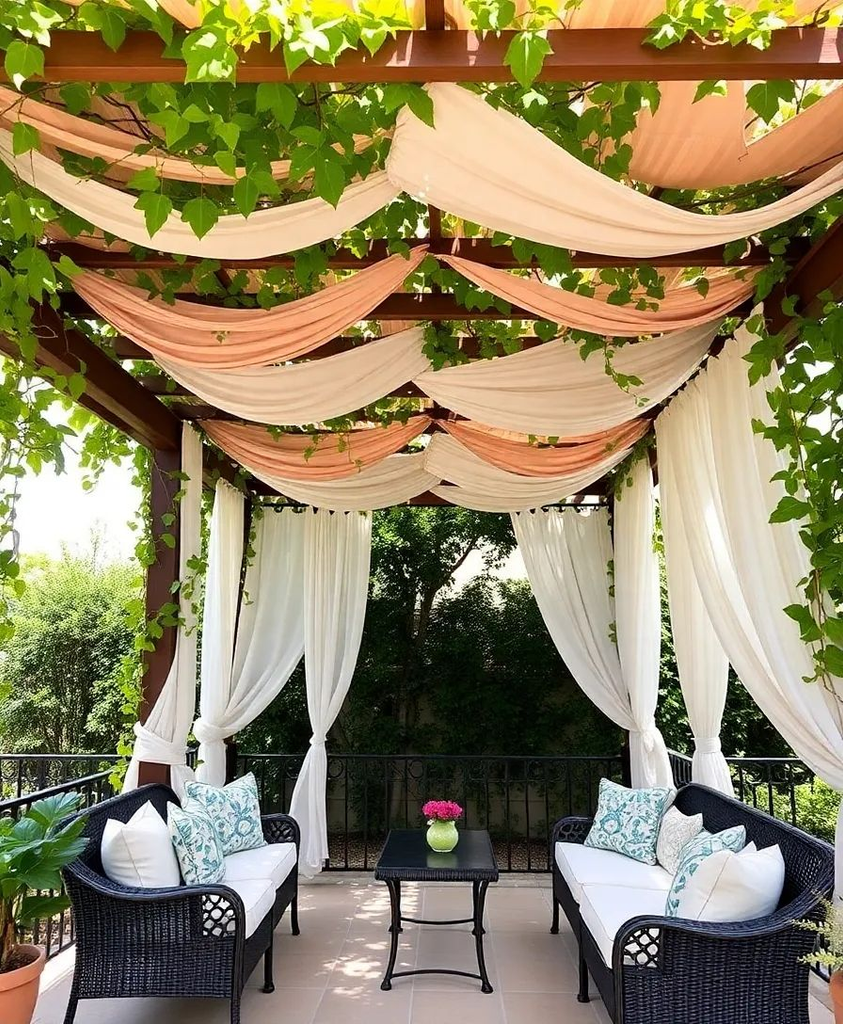
Outdoor-weight fabric hung from pergola posts, similar to idea #11 but built into a permanent structure, gives you flexible privacy that can be tied back or let down depending on the situation — great for a space that needs to be open for daytime entertaining and private for an evening hot tub session.
17. A dedicated privacy screen wall as a standalone structure

A standalone screen wall — not attached to the house or a fence, just a freestanding structural element — works well for blocking one specific sightline (like a neighbor’s upstairs window facing a hot tub or pool) without needing to fence in an entire yard.
Pro tip: Before building any structure taller than a standard fence, check whether it counts as an “accessory structure” under your local code — some areas have separate permit requirements and setback rules for pergolas and screen walls that don’t apply to simple fencing.
Balcony and Small-Space Privacy Solutions
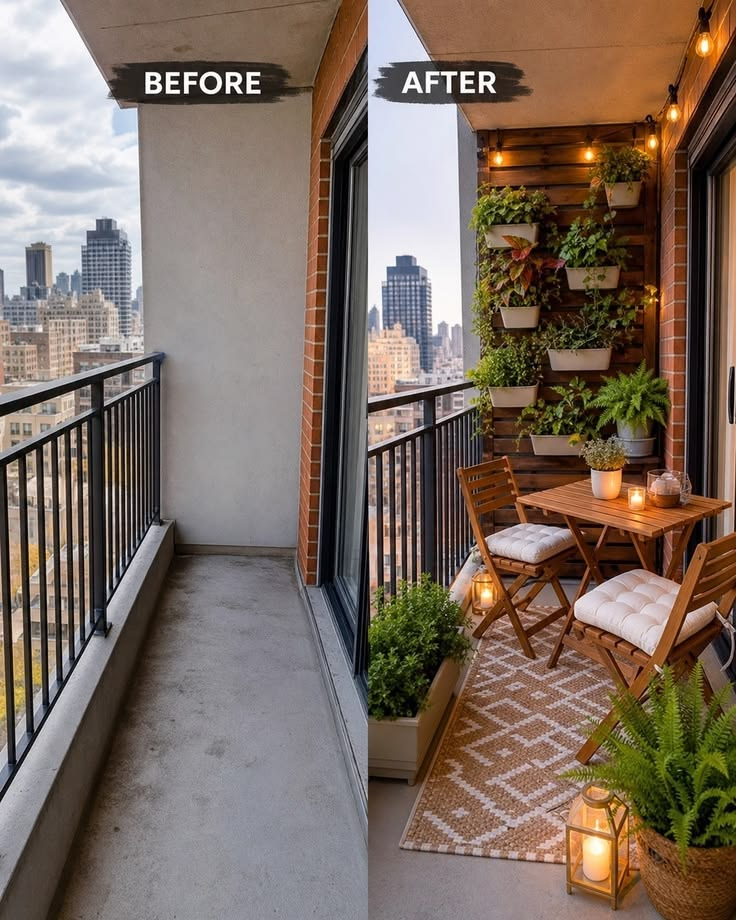
Apartment balconies have a specific privacy problem — you’re usually dealing with sightlines from neighboring units on multiple sides, not just from ground level, and most solutions need to work within strict weight and mounting restrictions.
18. Balcony privacy screening mesh or fabric attached to railings

Zip-tied or clipped privacy mesh along balcony railings is the cheapest and most common apartment fix, and most HOAs and property managers are fine with it because it attaches without drilling. It does look more “apartment balcony” than intentional design, so pair it with plants if you want it to read less utilitarian.
19. Tall potted plants strategically placed at sightline angles

Rather than trying to screen the entire balcony perimeter, placing one or two tall plants at the specific angle where a neighbor’s window or balcony has a direct sightline into yours solves the actual problem without covering the whole railing.
20. A retractable or removable balcony privacy panel
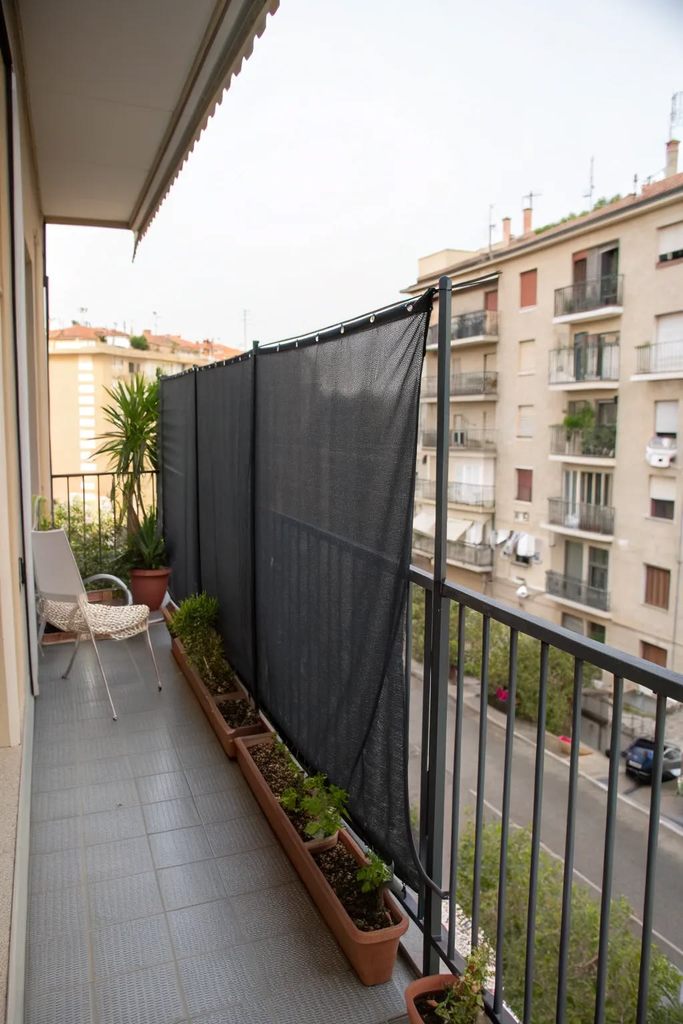
Panels designed specifically for balcony rails that clip on and off let you have privacy when you’re out there and an open view the rest of the time, which matters more on a balcony than a backyard since you’re usually working with a much smaller total space.
21. Frosted or privacy window film for sliding doors facing a shared walkway

If your balcony’s sliding door faces a shared hallway or another unit’s line of sight, a removable frosted film on the glass itself solves the indoor-visible-from-outside version of the privacy problem, which balcony screening alone doesn’t address.
Pro tip: Weight limits matter more on balconies than almost anywhere else on this list — check your building’s balcony weight restrictions before adding heavy planters or structural screening, especially on older buildings.
Situational Privacy Solutions
Some privacy problems are about one specific spot, not the whole outdoor space — a hot tub, a pool, a single window that happens to face a neighbor’s deck.
22. A privacy enclosure or screen specifically around a hot tub

Hot tubs get used most in the evening when interior and exterior lighting makes visibility worse, not better, so a dedicated screen or small structure just around the tub itself is often more effective than trying to privacy-screen an entire patio.
23. Pool-side privacy screening at deck height, not full fence height
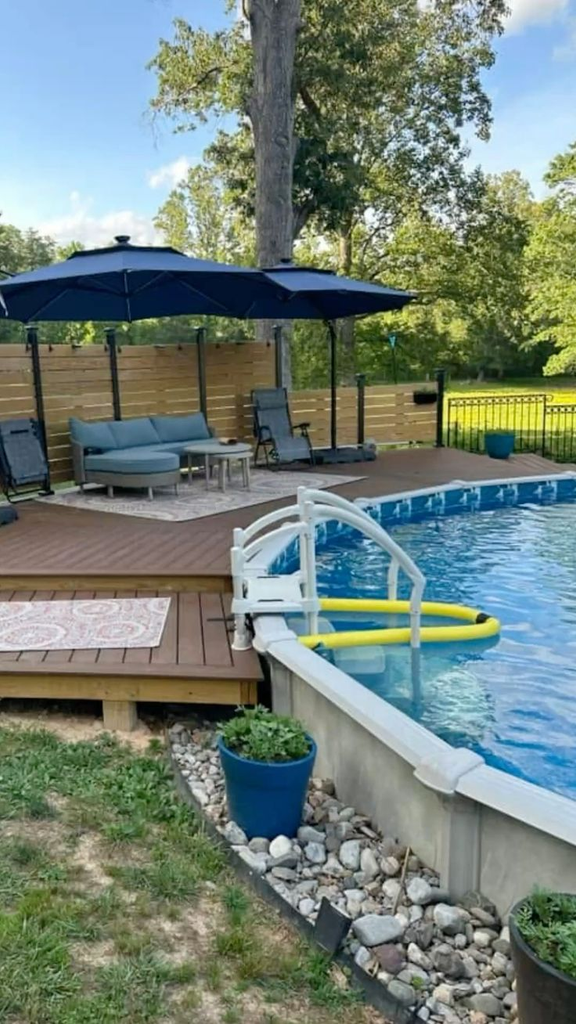
Pool areas sometimes need privacy specifically at seated or lounging eye level rather than full standing height, so a shorter screen or hedge at 4-5 feet along the specific sightline can solve the problem without the cost or code complications of a full-height fence.
24. Exterior shutters or a pergola specifically over a hot tub or spa

A dedicated small structure — even just a simple slatted roof — over a hot tub does double duty, giving privacy from above (a real issue for anyone with two-story neighbors) while also protecting the tub cover from sun damage.
25. Strategic exterior lighting to reduce visibility into windows at night

This one surprises people: brighter lighting immediately outside a window that faces a neighbor’s line of sight actually reduces how visible your interior is after dark, because it evens out the contrast between inside and outside light levels — the opposite of what most people assume.
Pro tip: For any situational privacy problem, actually go stand at the sightline in question — a neighbor’s upstairs window, their deck, their kitchen sink — before buying anything, because the exact height and angle needed is almost never what people assume from just standing in their own yard.
Outdoor Privacy Solutions Compared
| Solution Type | Typical Cost | Installation Effort | Rental-Friendly | Time to Full Effect |
|---|---|---|---|---|
| Permanent fencing | $1,500-6,000+ | High (often contractor) | No | Immediate |
| Living hedge/privacy plants | $150-800 | Medium (planting only) | Depends on lease | 1-4 years |
| Freestanding screens/panels | $40-300 | Low | Yes | Immediate |
| Structural (pergola, screen wall) | $800-4,000+ | High | No | Immediate |
| Balcony-specific solutions | $20-150 | Low | Yes | Immediate |
| Situational (hot tub, pool, lighting) | $50-500 | Low-medium | Usually yes | Immediate |
Where I’d Actually Start
If I still had that dinner-facing-the-neighbor’s-window problem today, I’d start with the cheapest fix that solves the exact sightline, not the biggest project that solves everything — which for me would’ve been a single trellis panel with a fast climbing vine, not a full fence I didn’t actually need for the rest of the yard.
Most people jump straight to “I need a fence” when the real problem is one specific window, one specific angle, one specific evening activity.
Figure out exactly which sightline is bothering you and at what time of day before you spend money on anything, because the solution for “my whole yard is visible” and “one neighbor can see my hot tub after dark” are genuinely different problems with different price tags.


Leave a Reply