
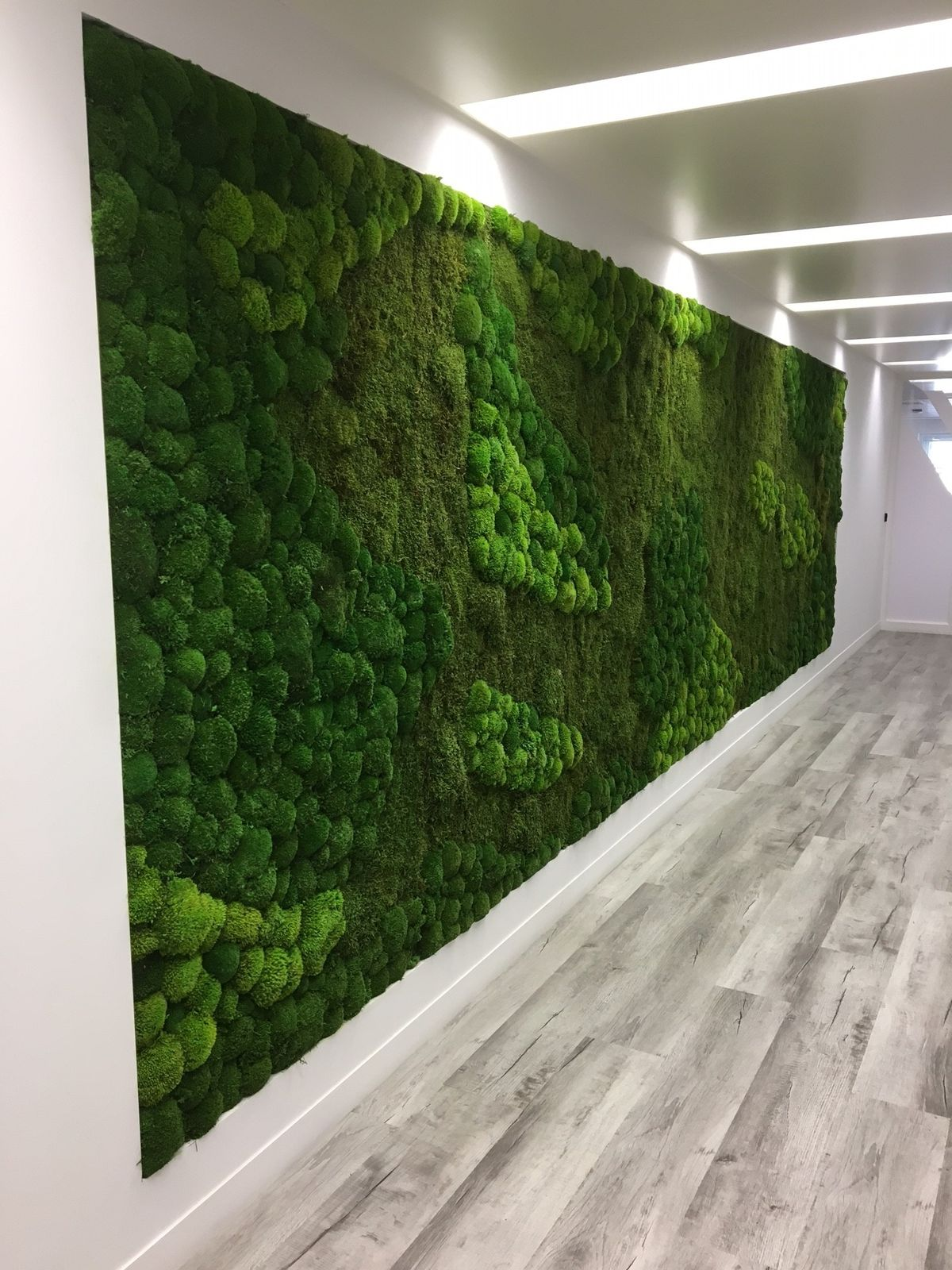
I bought my first moss wall panel because I was convinced it would fix the dead corner behind my couch, and then I spent way too long wondering why it looked slightly off — turns out I’d hung real preserved moss under a grow light meant for my pothos, and preserved moss doesn’t need light at all, it just needs to be left alone.
That one mistake cost me a panel and taught me more about moss walls than any of the twelve articles I’d read beforehand.
That’s really the gap with moss wall content right now — most of it is styled photos with zero information about which type of moss you’re even looking at, whether it needs maintenance, or what it actually costs to do properly instead of the $15 IKEA version that looks nothing like the inspo photo.
Moss walls are having a real moment in home offices and plant-heavy apartments right now, and for good reason — they add texture and a genuine acoustic dampening effect that most wall decor can’t touch.
I’m splitting these moss wall ideas into preserved (no maintenance, no light needed) versus living (real upkeep, real light requirements), plus a bunch of application styles — full accent walls, geometric shapes, moss art, and functional pieces like sound panels — so you can figure out which category actually fits your space and your patience level before you drop money on one.
Preserved Moss Wall Ideas (Zero Maintenance)

Preserved moss is real moss that’s been treated with a glycerin solution to keep it soft and green indefinitely without water, soil, or light.
This is the category I’d point almost anyone toward for a first moss wall, because “zero maintenance” is not an exaggeration — no watering schedule, no grow lights, nothing to kill.
1. The Full Accent Wall
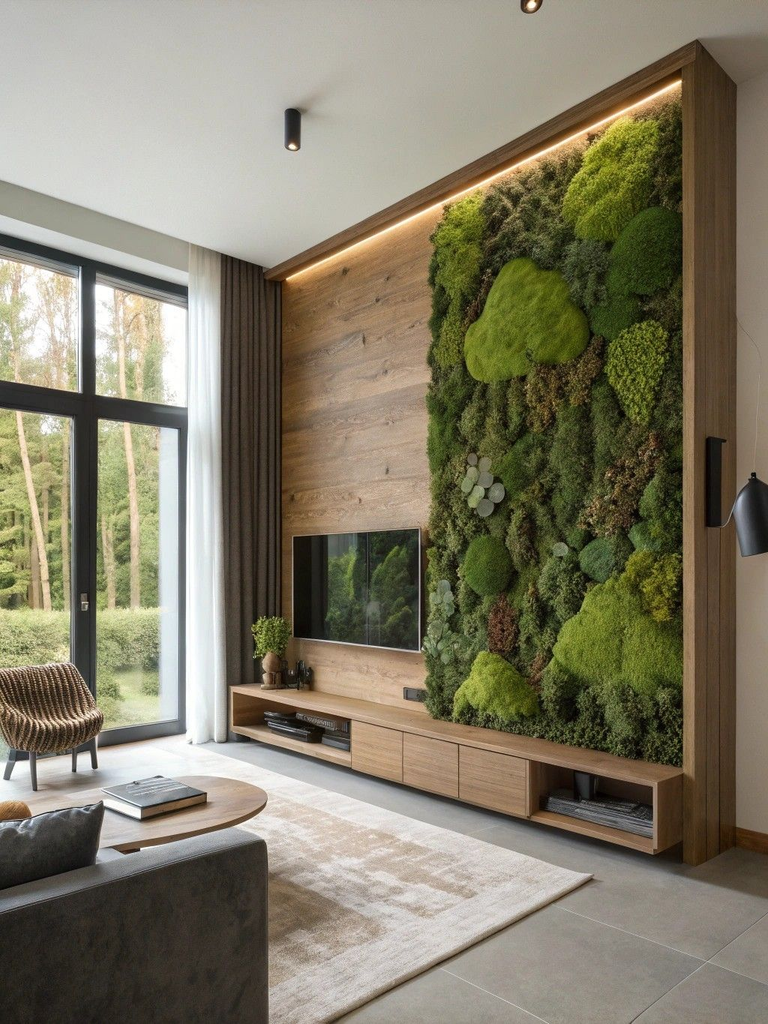
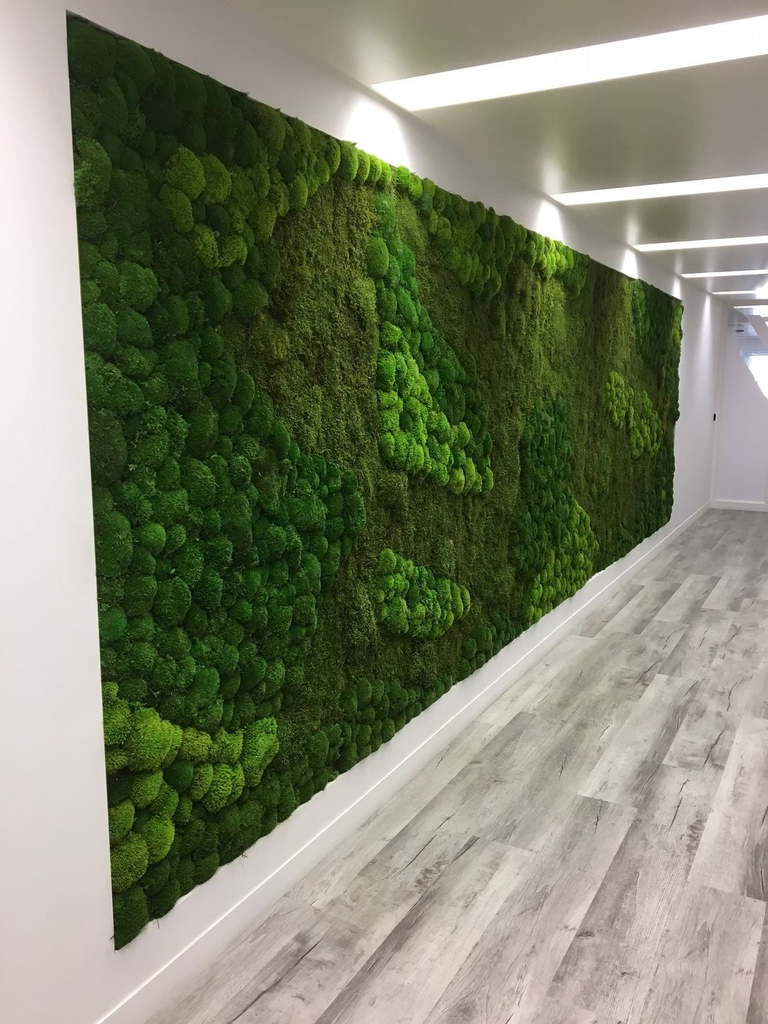
Covering one full wall — or a large section of it — in preserved moss panels is the boldest version of this idea, and it’s genuinely one of the better ways to add texture to a room without adding any color, since most preserved moss comes in shades of green, gray-green, or a bleached white/cream option.
The catch is cost: a full wall adds up fast per square foot compared to a smaller accent piece, so this is usually where people start with one wall section rather than an entire room.
2. The Moss Wall Behind a Headboard

Instead of a traditional headboard, a section of preserved moss mounted directly to the wall behind the bed does double duty as a visual anchor and a small amount of sound absorption, which actually matters more than people expect in a bedroom with hard floors and bare walls.
My cousin did this in her rental using a removable mounting method rather than adhesive, since preserved moss is light enough that Command strips or a mounted plywood backing screwed into studs both work without damaging the wall.
Pro tip: Preserved moss will fade over years if it gets consistent direct sunlight, even though it doesn’t need light to survive. Keep it out of a window’s direct path if you want the color to hold — north or east-facing walls with indirect light only are the safest bet.
3. Geometric Moss Wall Panels
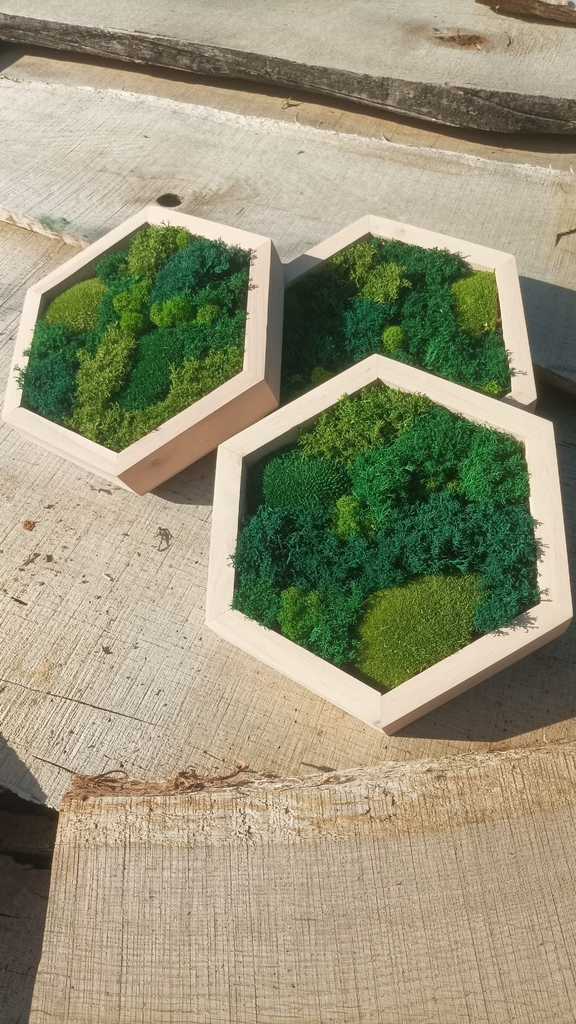
Rather than a solid rectangular block, cutting preserved moss into geometric shapes — hexagons, circles, or an arranged cluster of different sizes — turns it into more of a wall art piece than a texture wall.
This is the version I see get the most saves on my own Pinterest board, specifically the hexagon-cluster layout, probably because it reads as intentional art rather than “I covered my wall in moss.”
4. The Moss Wall Logo or Word Art
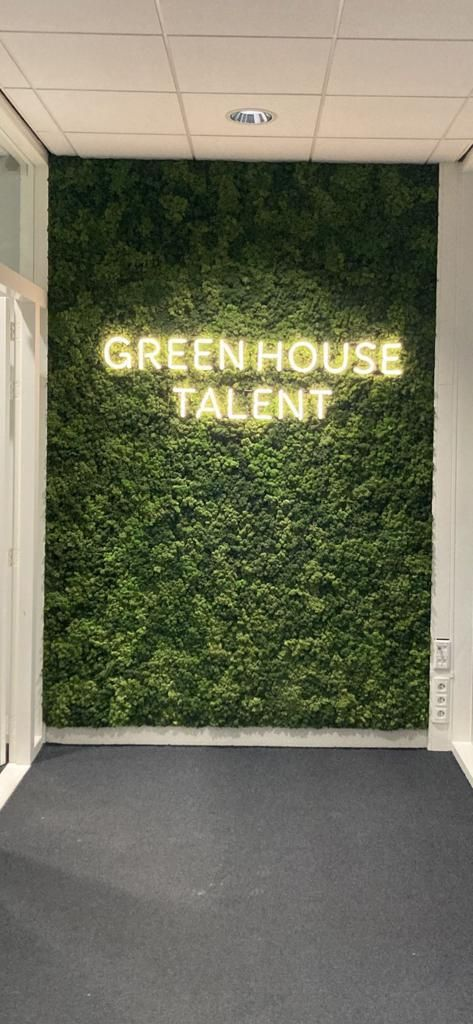
Cutting preserved moss to spell out a word or form a company logo is common in office spaces and retail, but it works just as well at home for a name, a house number, or a simple shape over a mantel.
The trade-off here is precision — cutting clean letter shapes from moss sheets is genuinely fiddly work, and I’d recommend having a template printed to the exact size before you touch a blade, because eyeballing letters directly onto moss sheets goes wrong fast.
5. The Moss Wall Map or Silhouette
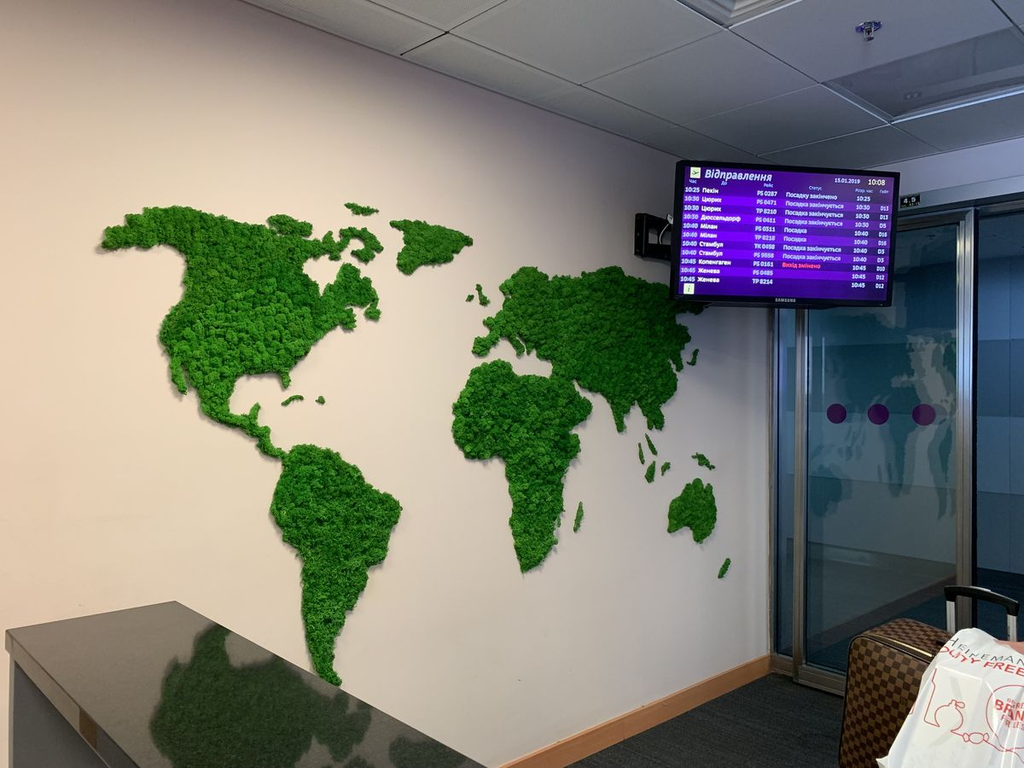
A city skyline, a country outline, or a mountain range silhouette cut from preserved moss and mounted on a plain or wood-backed panel makes for a more personal statement piece than a plain accent wall, especially for a home office or a piece with real sentimental meaning (a hometown skyline, for instance).
It’s a similar cutting challenge to the word art above, so budget the same patience for it.
6. The Framed Moss Art Panel

Smaller framed pieces — moss mounted inside a shadow box or a deep picture frame — are the lowest-commitment way to try preserved moss before covering an actual wall section.
These run cheap enough to treat like regular wall art, and because they’re self-contained, they’re one of the few moss wall ideas that genuinely works for renters who can’t mount anything larger.
7. The Moss and Wood Slat Combination

Alternating preserved moss panels with vertical wood slats (or framing moss sections within a slat wall) gives you the acoustic and textural benefit of moss without committing an entire wall to green.
It’s a popular combination in home offices right now specifically because the wood slats add warmth that plain moss alone can read as slightly cold or sterile.
| Moss Wall Type | Maintenance | Light Needed | Typical Cost (per sq ft) | Lifespan |
|---|---|---|---|---|
| Preserved moss panel | None | None (avoid direct sun) | $25–60 | 3–7 years indoors |
| Living moss wall (framed) | Weekly misting | Indirect/filtered light | $40–100 | Ongoing, needs upkeep |
| Living moss terrarium wall | Occasional misting | Bright indirect light | $50–120 | Ongoing, needs upkeep |
| DIY reindeer moss craft piece | None | None | $10–30 | 2–5 years |
| Moss + wood slat panel | None (moss portion) | None | $35–80 | 3–7 years |
Living Moss Wall Ideas (Real Maintenance Required)
Living moss walls use actual growing moss, which means real humidity requirements, indirect light, and regular misting. I want to be upfront that this category is a genuine commitment, not a decor purchase — treat it like a plant, because that’s exactly what it is.
8. The Framed Living Moss Garden
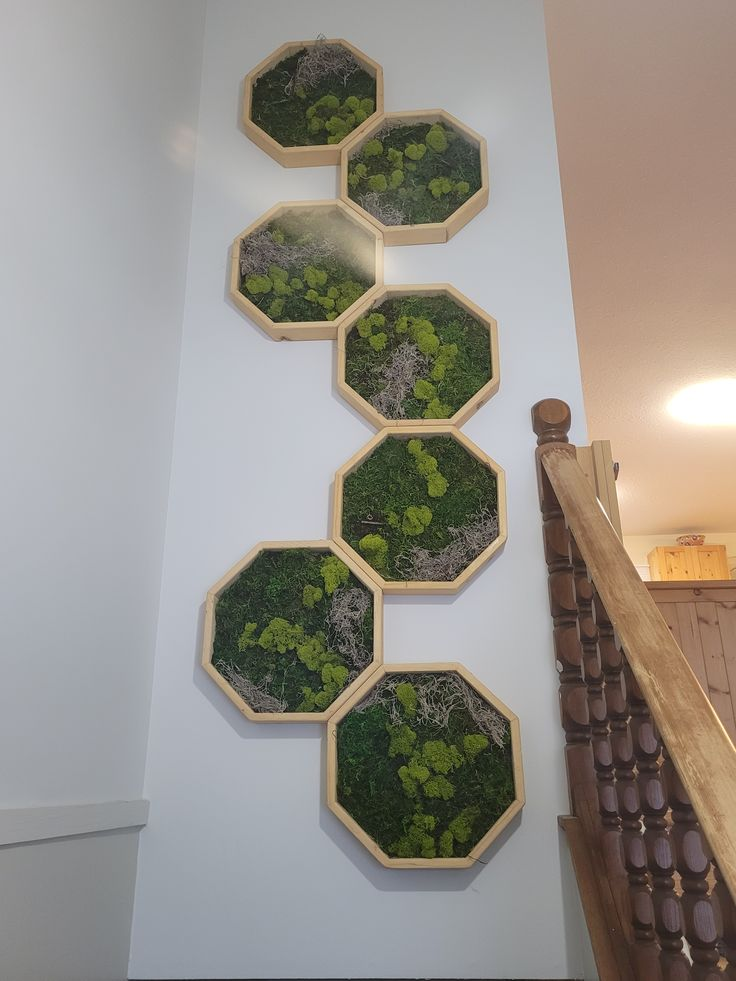
A shallow frame or shadow box housing living moss species (usually sheet moss or cushion moss) mounted with a small amount of substrate behind glass or an open front creates something closer to a living terrarium than a static wall piece.
This needs a genuinely humid environment to survive long-term — a bathroom with a window, or a spot near a humidifier — and it’s one I’d skip entirely if your home runs dry, since living moss browns and crumbles fast in low humidity no matter how often you mist it.
9. The Vertical Moss & Fern Combination Wall
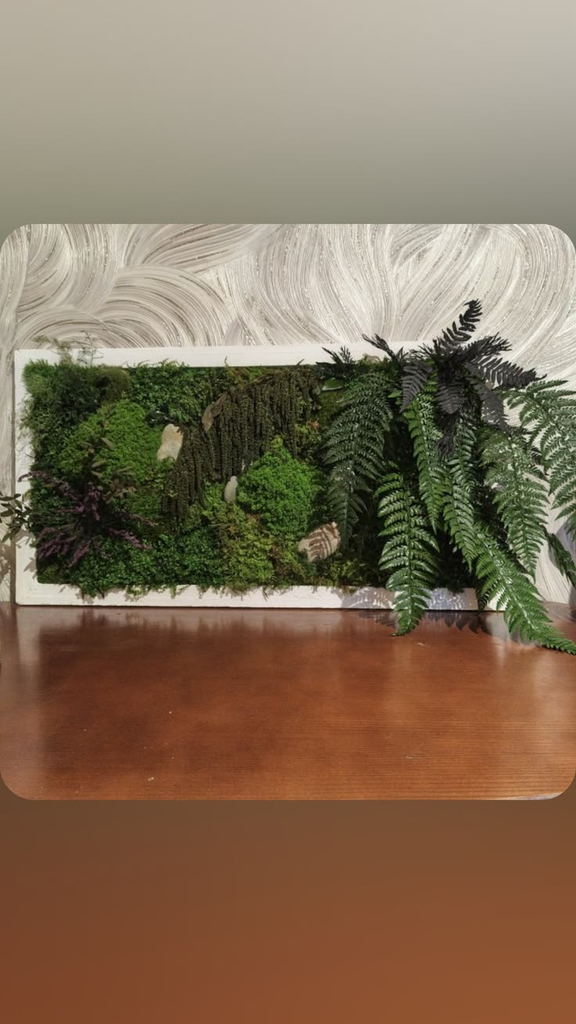
Pairing living moss with small ferns in a vertical planting system gives you more visual variety than moss alone and both plants share similar humidity and light needs, so they’re not fighting each other environmentally the way moss and a succulent would.
This is a bigger build than a simple moss panel — usually a proper vertical planter frame with irrigation — so it’s really only worth it if you’re already set up for other living wall plants.
10. The Living Moss Wall Behind a Fish Tank or Terrarium
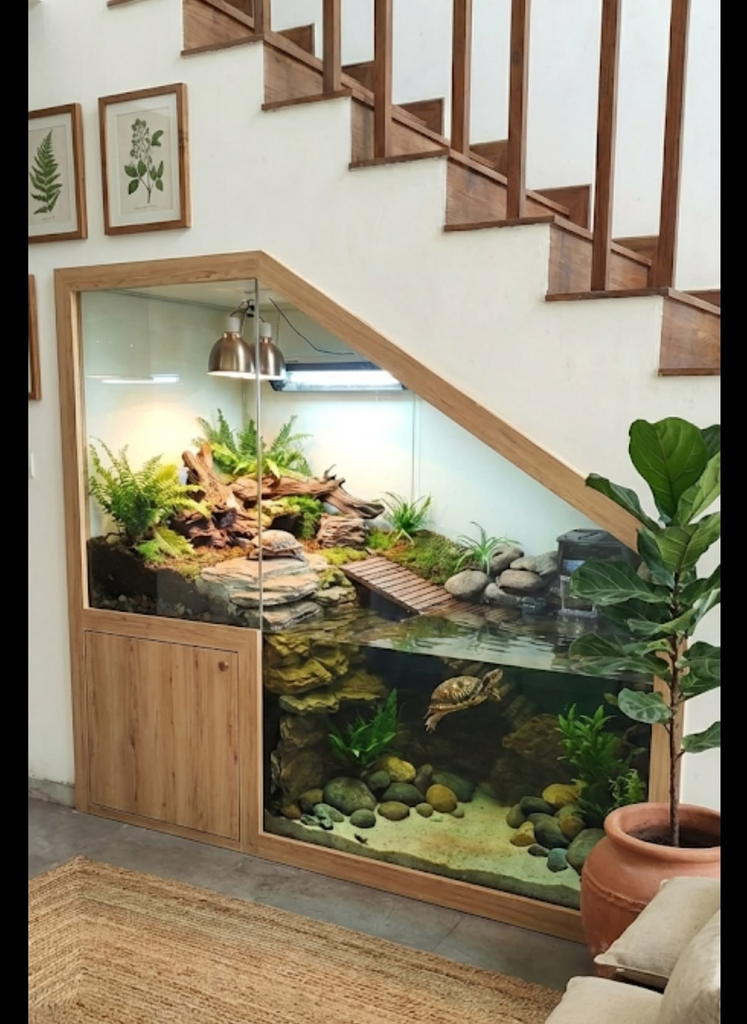
If you already have an aquarium or large terrarium, extending a small living moss section onto the wall behind or around it takes advantage of the ambient humidity that setup is already producing, which solves the biggest problem with living moss (keeping humidity consistent) almost for free.
It’s a niche idea, but it’s the one situation where living moss is actually easier than the preserved version, since the environment is already doing the maintenance for you.
Pro tip: Never use spring water or straight tap water for misting living moss if your tap water is heavily chlorinated or very hard — the minerals build up on the moss surface over months and slowly kill it. Distilled or rainwater is worth the extra step here.
DIY Moss Wall Craft Ideas
These are smaller, cheaper projects using reindeer moss or dried moss rather than full preserved sheet moss, and they’re the category I’d hand to someone who wants to try a moss project this weekend without a real budget.
11. The Reindeer Moss Wreath or Wall Cluster
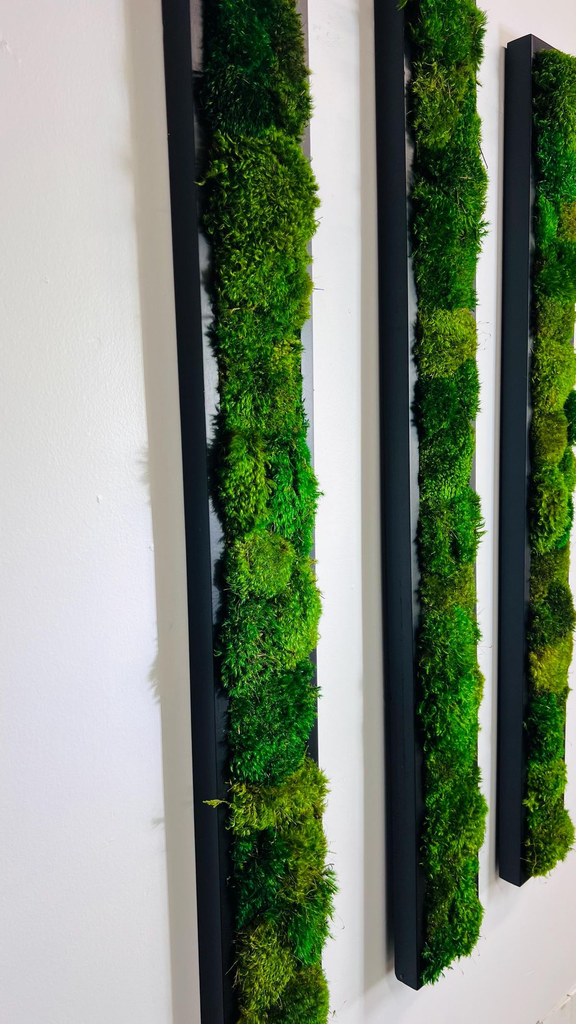
Reindeer moss (a lichen, technically, not true moss, but it’s sold and used the same way) glued in clusters onto a wood round or directly to a wall in an organic shape is one of the cheapest moss wall ideas here — a bag of dried reindeer moss runs a few dollars and covers more area than you’d expect.
I used this exact method to fill a bare spot above a bookshelf for under $20 total, glue included.
12. The Moss Monogram
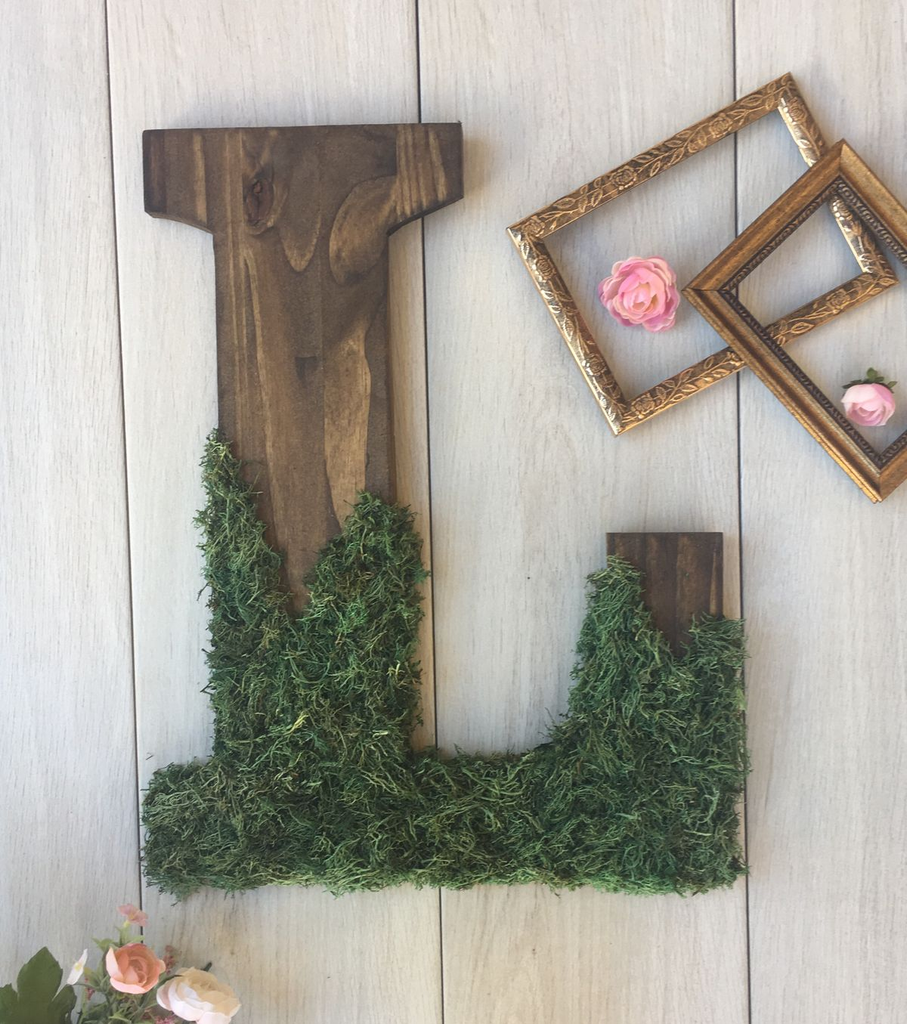
A wooden letter cutout covered in reindeer or preserved moss, mounted on its own, works as a smaller statement piece for a nursery, entryway, or dorm room wall — and it’s genuinely one of the more dorm-friendly moss wall ideas on this list since it hangs with a single Command hook and needs zero maintenance.
13. The Moss-Covered Shelf Ledge
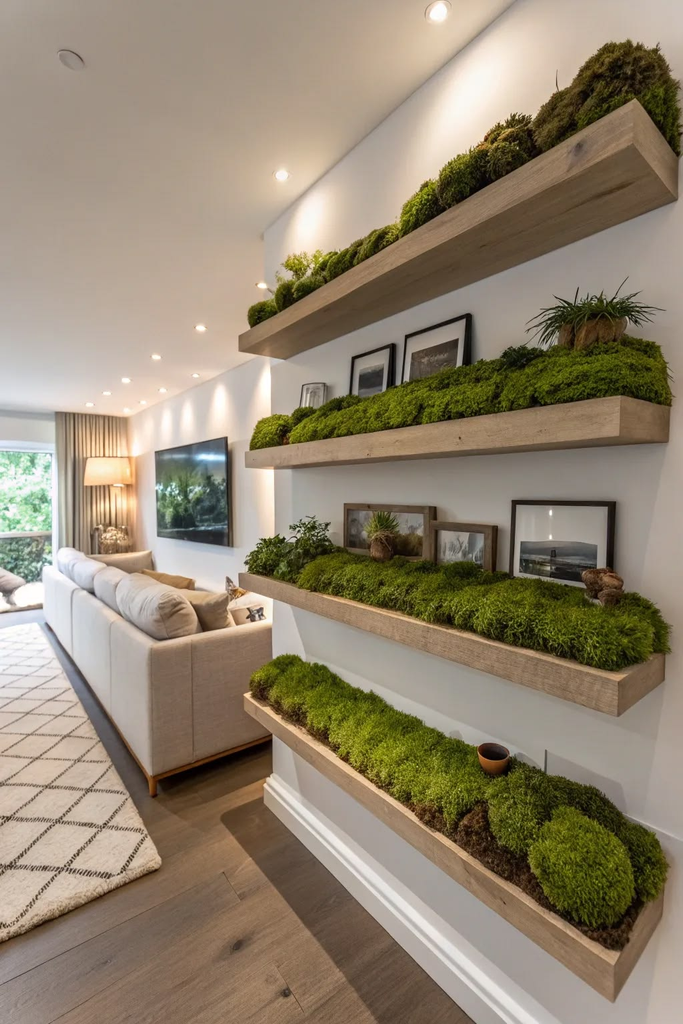
Rather than a wall panel, gluing a thin strip of preserved or reindeer moss along the front edge of a floating shelf gives you a moss accent without covering wall space at all — a good option if you like the texture but don’t want a full panel commitment.
14. The Moss Table Runner (Wall-Mounted Version)
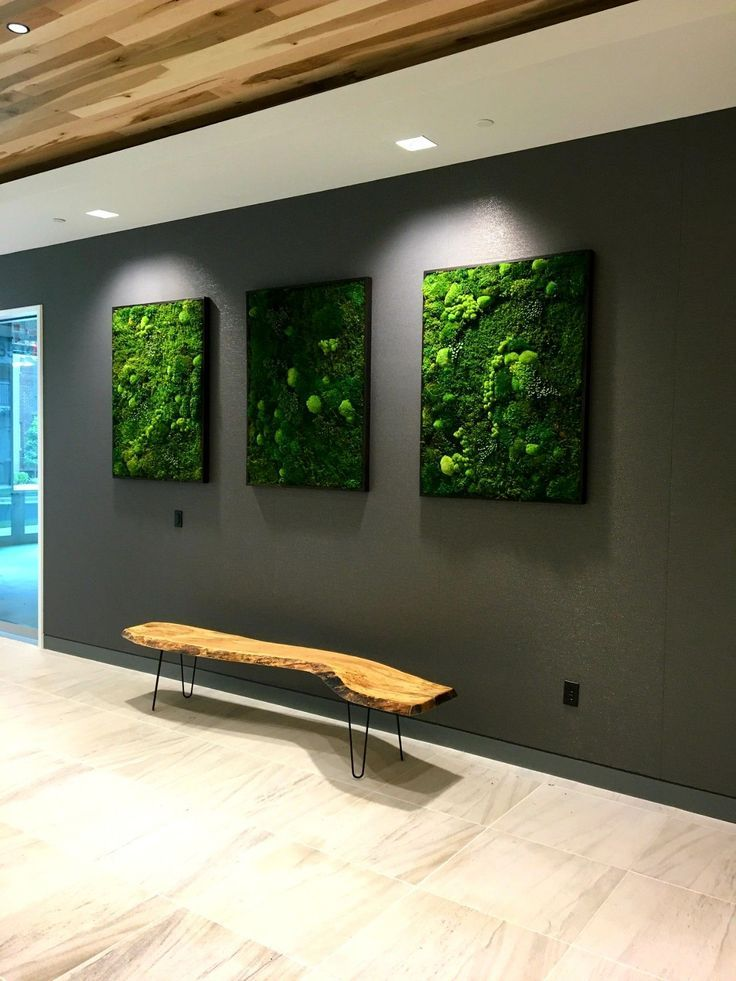
A long, narrow strip of preserved moss mounted horizontally rather than in a large block reads more like a design line than a texture wall, and it’s a genuinely underused option for above a console table or along a stairwell where a full panel would feel heavy.
15. The Moss Picture Frame Border
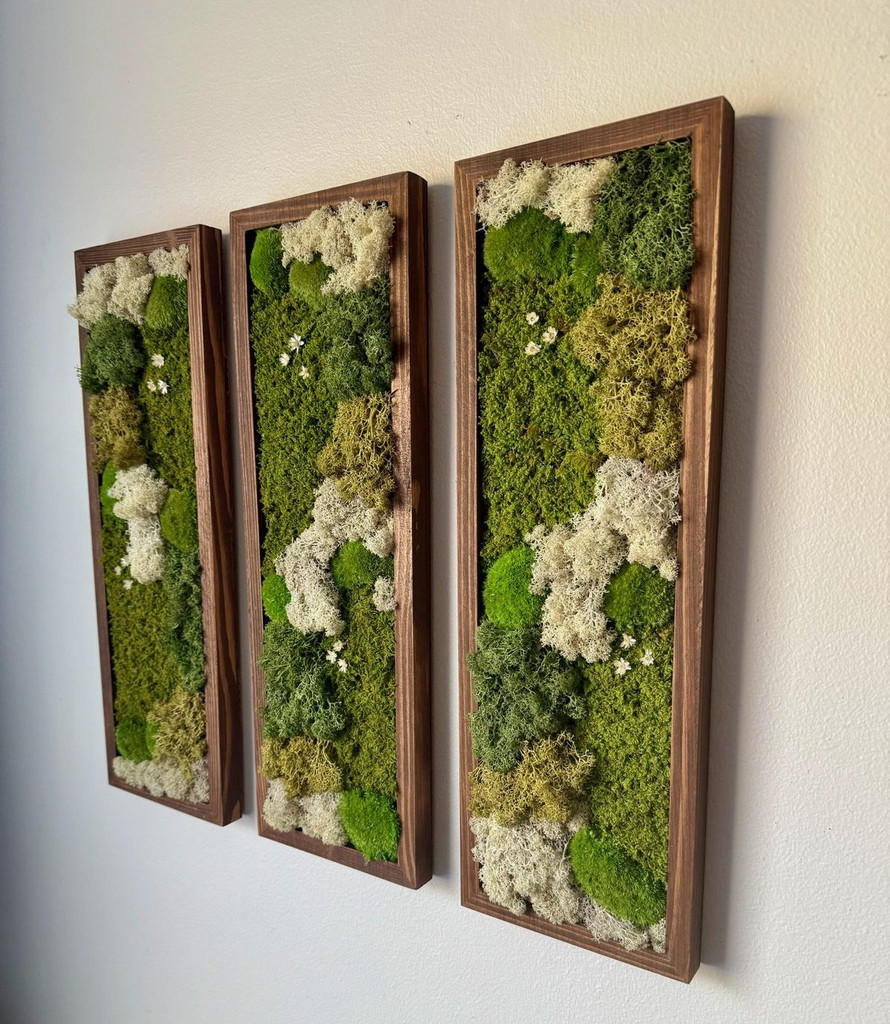
Instead of moss as the art itself, gluing reindeer moss around the outer edge of an empty or mirrored frame creates a border effect that’s cheap, fast, and works well grouped in a gallery-wall style cluster with regular framed art.
Room-Specific Moss Wall Applications
Where a moss wall actually makes sense changes a lot depending on the room, mostly because of humidity, light, and how much wear the wall takes.
16. The Home Office Accent Wall
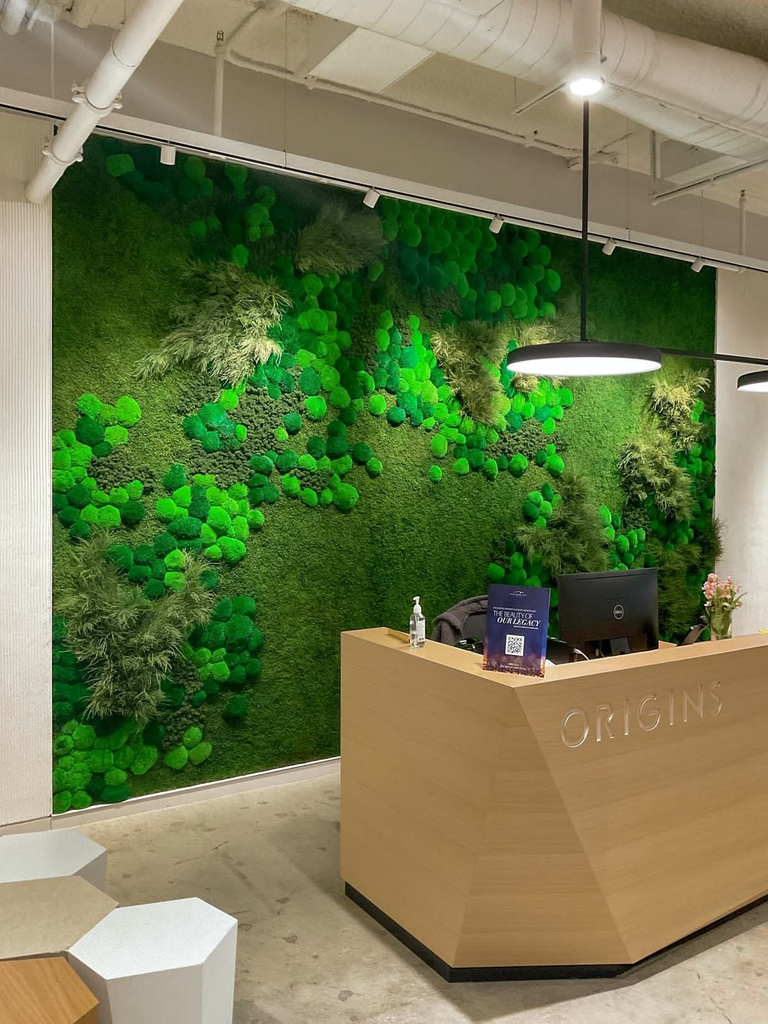
This is genuinely one of the best rooms for a moss wall, and not just aesthetically — preserved moss has a real (if modest) acoustic dampening effect, which is useful behind a desk if you’re on video calls all day and dealing with an echo-y room.
I’d stick to preserved moss here specifically since home offices rarely have the humidity a living wall needs.
17. The Nursery Moss Wall

A soft, rounded moss shape — a cloud, a simple arch, or a monogram — works well in a nursery both for the texture and because preserved moss (properly sealed and out of reach) doesn’t off-gas the way some synthetic wall textures do.
Skip living moss here entirely; it’s not worth the mold or mildew risk in a room where humidity control matters for other reasons too.
18. The Bathroom Moss Wall
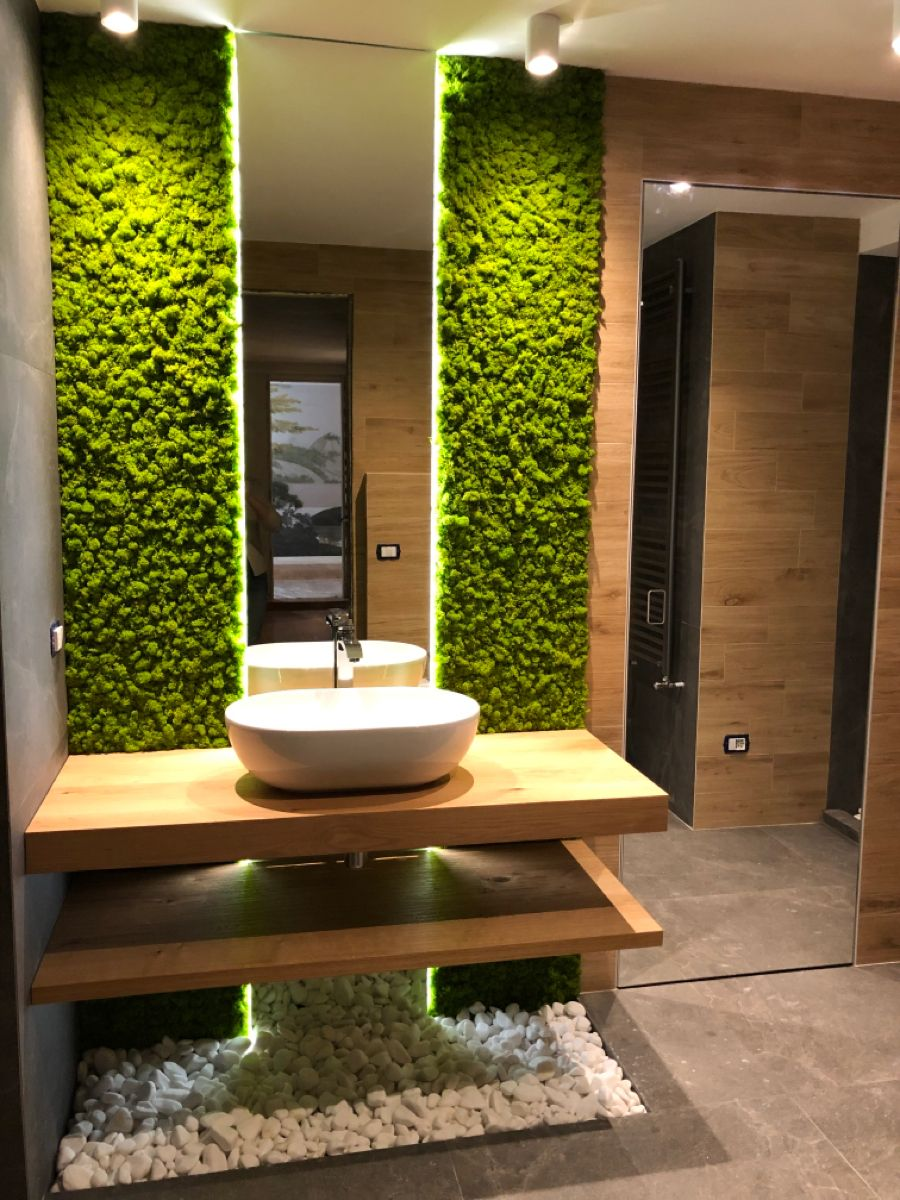
Bathrooms are actually one of the only rooms where a living moss wall has a real shot at surviving without extra humidification, since showers naturally create the moisture living moss wants.
That said, ventilation matters — a bathroom with no window and a weak exhaust fan will grow mold on the surrounding drywall faster than the moss will thrive, so this only works in a genuinely well-ventilated bathroom.
19. The Entryway Statement Wall
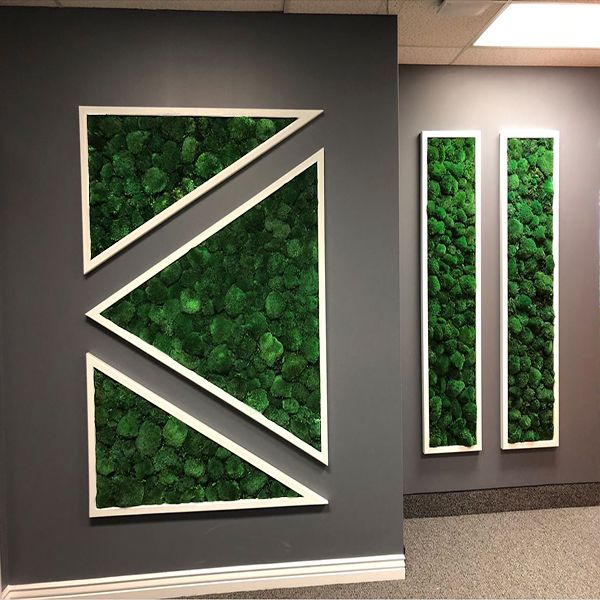
A moss accent right inside the front door creates a strong first impression and it’s one of the few spots in a home where guests will actually stop and look closely at a wall, which makes it worth spending a little more on a well-cut geometric or shaped panel rather than a plain rectangle.
20. The Restaurant-Style Moss Booth Backdrop

Borrowed from commercial spaces, mounting moss panels behind a dining nook or breakfast booth at home gives that “we hired a designer” look for less than people expect, since it’s just a preserved moss panel sized to the booth width rather than a custom build.
21. The Outdoor-Adjacent Covered Patio Wall
Preserved moss doesn’t hold up to real outdoor weather (rain and UV both degrade it fast), but on a fully covered patio or sunroom with indirect light and no direct rain exposure, it can work as an outdoor-feeling accent — just don’t expect the same lifespan as an interior wall, since even indirect humidity swings outside are harder on it.
What Moss Walls Actually Cost
Since this comes up constantly: a small framed preserved moss piece runs $30–80 depending on size and where you buy it. A single accent wall section (think 4×6 feet) using preserved panels typically lands in the $600–1,500 range once you account for backing material and mounting, though DIY kits bought in bulk sheet form can bring that down significantly if you’re willing to cut and mount it yourself. Living moss walls cost more upfront for the framing and irrigation setup, and then keep costing you in replacement moss when sections inevitably brown out, so budget for ongoing maintenance, not just the install.
Where I’d Start
If I were doing this over, I’d start small — a single framed preserved moss piece or a reindeer moss cluster above a shelf — before committing to a full accent wall, because it’s the cheapest way to find out whether you actually like living with moss on your wall day to day, not just in a photo.
Once I knew I liked mine, going bigger with a proper preserved panel wall was an easy call.
I’d still skip living moss entirely unless your home already runs humid, because no amount of enthusiasm makes up for the wrong environment.


Leave a Reply