
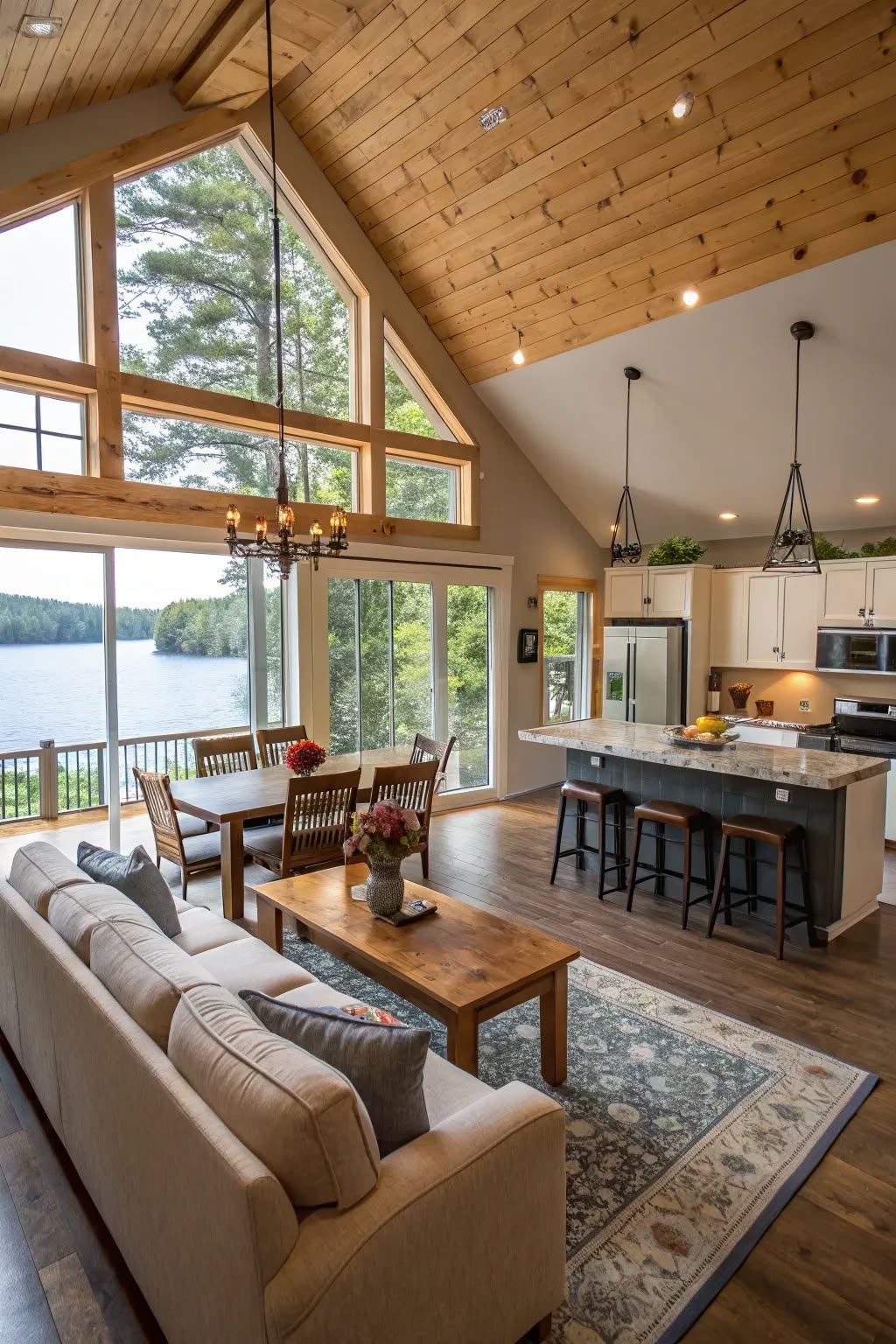
The first summer we had the lake house, I put in an open shelving display with my grandmother’s china on it because it looked so good in the photos I’d saved.
By July 4th weekend, with fourteen people cycling through that kitchen over three days, two plates were broken, everything was covered in a film of sunscreen and bug spray residue, and I was hand-washing china at 11pm instead of being outside with everyone else.
That kitchen taught me the hard way that a lake house kitchen and a regular kitchen are not the same design problem, even though most kitchen inspiration treats them like they are.
If you’re planning a lake house kitchen, you’re really solving for three things at once: it needs to look like the relaxed, gathering-focused space you picture, it needs to handle way more traffic and mess than your everyday kitchen at home, and depending on your setup, it might need to survive a closed-up off-season with nobody checking on it for months.
A lot of “lake house kitchen ideas” lists skip straight to the pretty stuff — shiplap, open shelving, a farmhouse sink — without addressing any of that, and you end up like me, hand-washing china during the one weekend you were supposed to be relaxing.
This list covers layout choices that hold up to a full house, materials that don’t mind sand and sunscreen, storage that keeps the chaos contained, and a handful of design ideas that genuinely earn their spot instead of just looking nice in a listing.
I’ll flag the ones that need real budget and the ones you can knock out in a weekend.
1. Choose a Kitchen Layout That Lets More Than One Person Cook

Regular kitchens are usually designed around one or two cooks. A lake house kitchen, especially in high season, often has three generations trying to make breakfast at the same time.
If you’re doing any kind of renovation, prioritize a layout with two clear work zones — even something as simple as an island with prep space on one side and the stove on the other — over a single-galley setup that forces everyone into one lane.
If a full layout change isn’t in the cards, a rolling kitchen cart can act as a second prep station during peak weekends and get pushed out of the way the rest of the time, which is the cheaper version of the same idea.
Pro tip: Put the coffee maker and mugs somewhere that isn’t directly in the main cooking path. It sounds small, but when six people are trying to get coffee while someone else is trying to cook eggs, that’s usually the actual bottleneck, not the stove.
2. Pick Countertops That Don’t Stain From Fish, Berries, or Wine
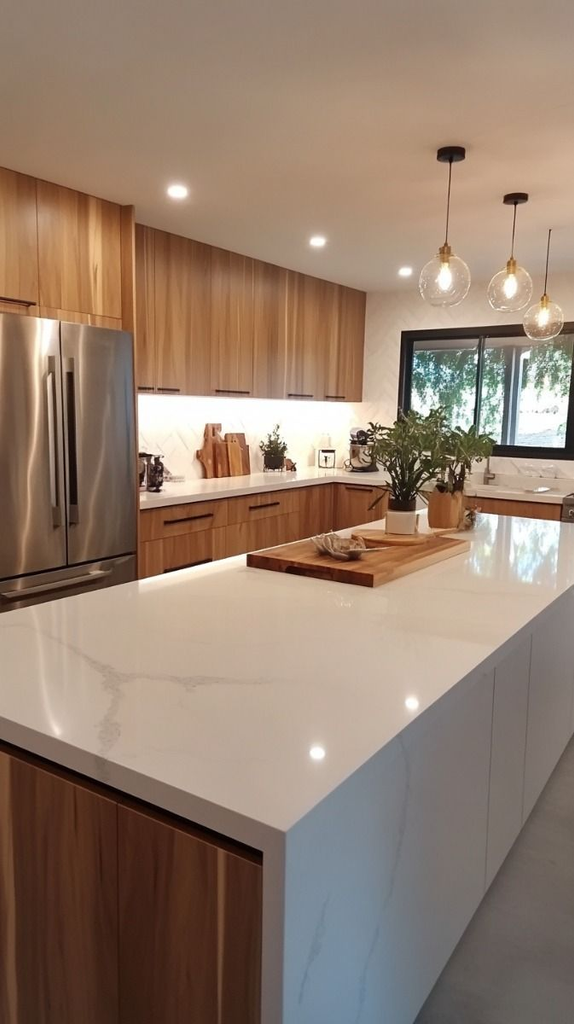
Lake house counters see more staining agents in one summer than a normal kitchen sees in five years — cleaned fish, blueberries from the farm stand down the road, red wine at 9pm on a Friday.
Quartz is the practical pick here because it’s non-porous and doesn’t need sealing, unlike granite or butcher block, both of which can stain if something sits too long before you get to it.
If you love the look of butcher block (and I get it, it’s warm and fits the aesthetic), consider it only for an island top that’s mostly decorative, and keep the actual working prep surface in quartz or a sealed composite.
| Countertop Material | Stain Resistance | Maintenance | Heat Resistance | Look |
|---|---|---|---|---|
| Quartz | Excellent | None (no sealing) | Good | Clean, consistent |
| Granite | Good (needs sealing) | Annual resealing | Excellent | Natural, varied |
| Butcher block | Poor-fair | Regular oiling | Poor | Warm, classic |
| Soapstone | Good | Occasional mineral oil | Excellent | Moody, matte |
3. Add an Extra-Deep Farmhouse Sink for Actual Lake House Use
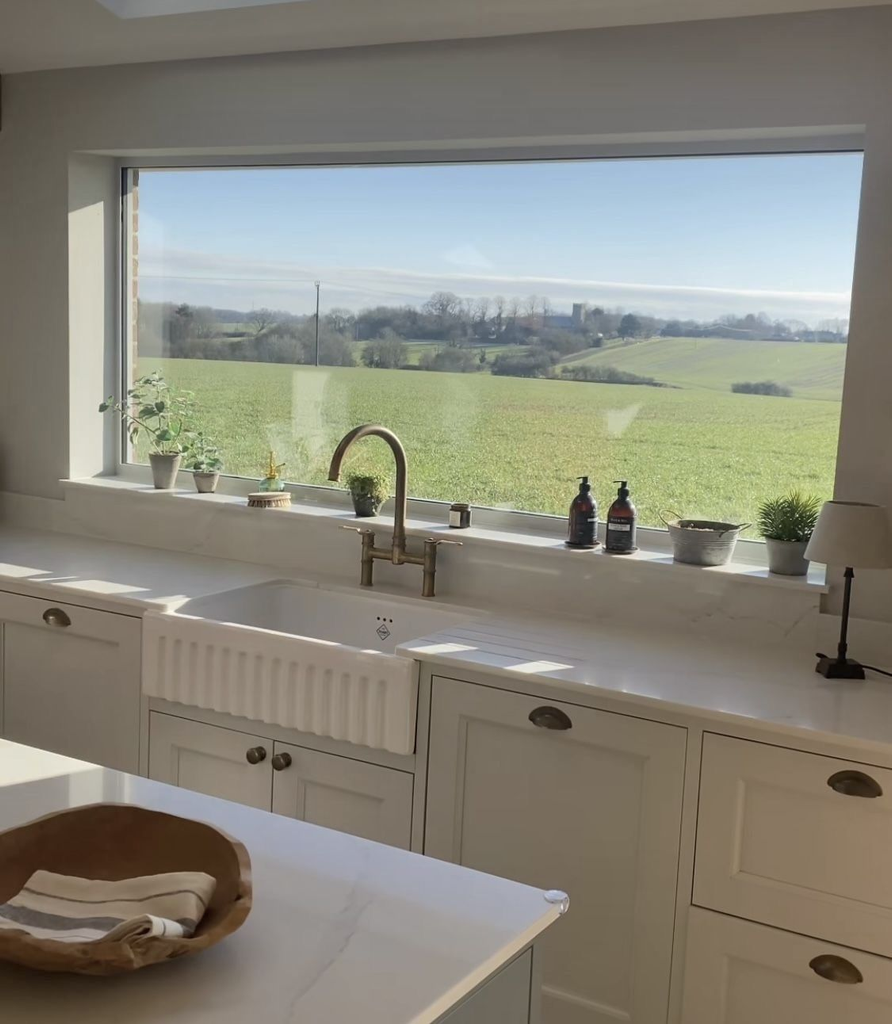
A farmhouse sink isn’t just an aesthetic choice here — the extra depth genuinely matters when you’re cleaning fish, washing sandy beach toys, or soaking a stockpot big enough to feed everyone. A standard sink basin gets cramped fast when it’s doing more than dinner dishes.
Go with a fireclay or stainless option over enamel cast iron if you’re worried about chipping — enamel can chip if something heavy gets dropped in it, and a lake house sink takes more drops than a normal one.
4. Skip Open Shelving for Anything You Actually Care About
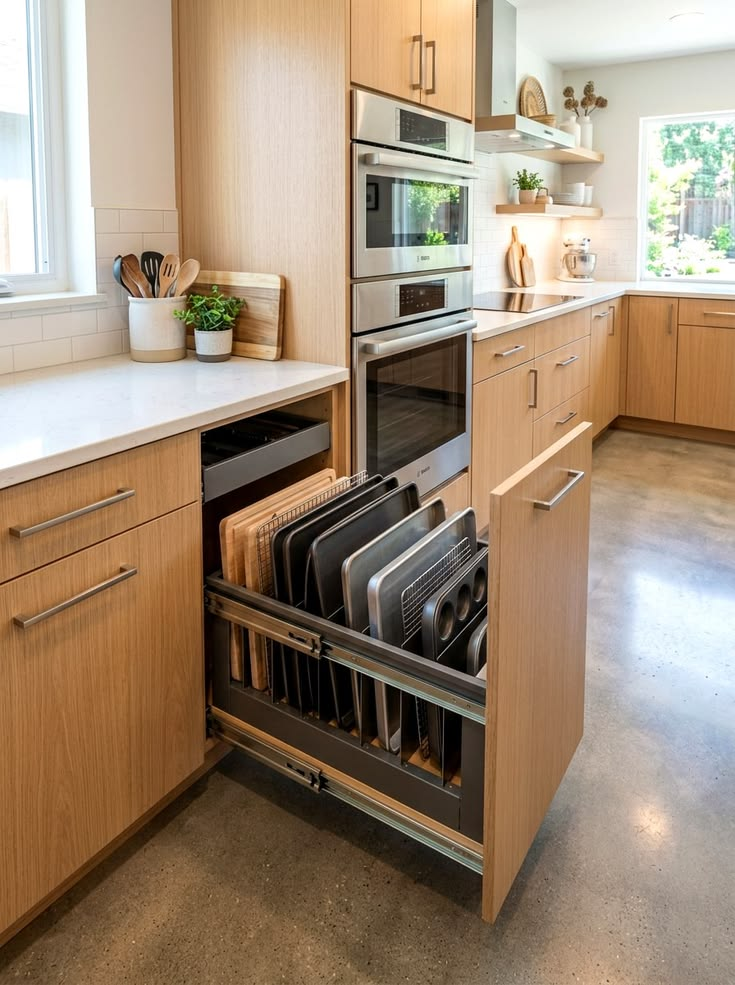
I already told you how this went for me. Open shelving looks incredible in photos, but a busy lake house kitchen means dust, cooking splatter, and a much higher chance of something getting knocked off by a kid or an overserved uncle reaching past it.
If you want the open, airy look, use it for everyday, replaceable items — mugs, water glasses, cookbooks — and keep anything with sentimental or real value behind a closed cabinet.
Pro tip: A half-and-half approach works well — open shelving on one wall for the everyday stuff, closed upper cabinets on the other side for things you’d actually be upset to lose.
5. Build In a Real Snack and Drink Station Away From the Main Counter

With a rotating cast of house guests, kids, and people just grabbing something between activities, a dedicated snack and drink zone — even a repurposed cabinet with a mini fridge underneath — keeps the main kitchen from turning into a thoroughfare every fifteen minutes. This is one of the cheapest, highest-impact changes on this whole list.
A friend of mine, Dana, converted an awkward corner cabinet nobody used into exactly this — cups, a water dispenser, snacks at kid height — and said it cut the number of times someone interrupted actual meal prep by more than half over a weekend.
6. Choose Cabinet Hardware That Won’t Corrode From Humidity
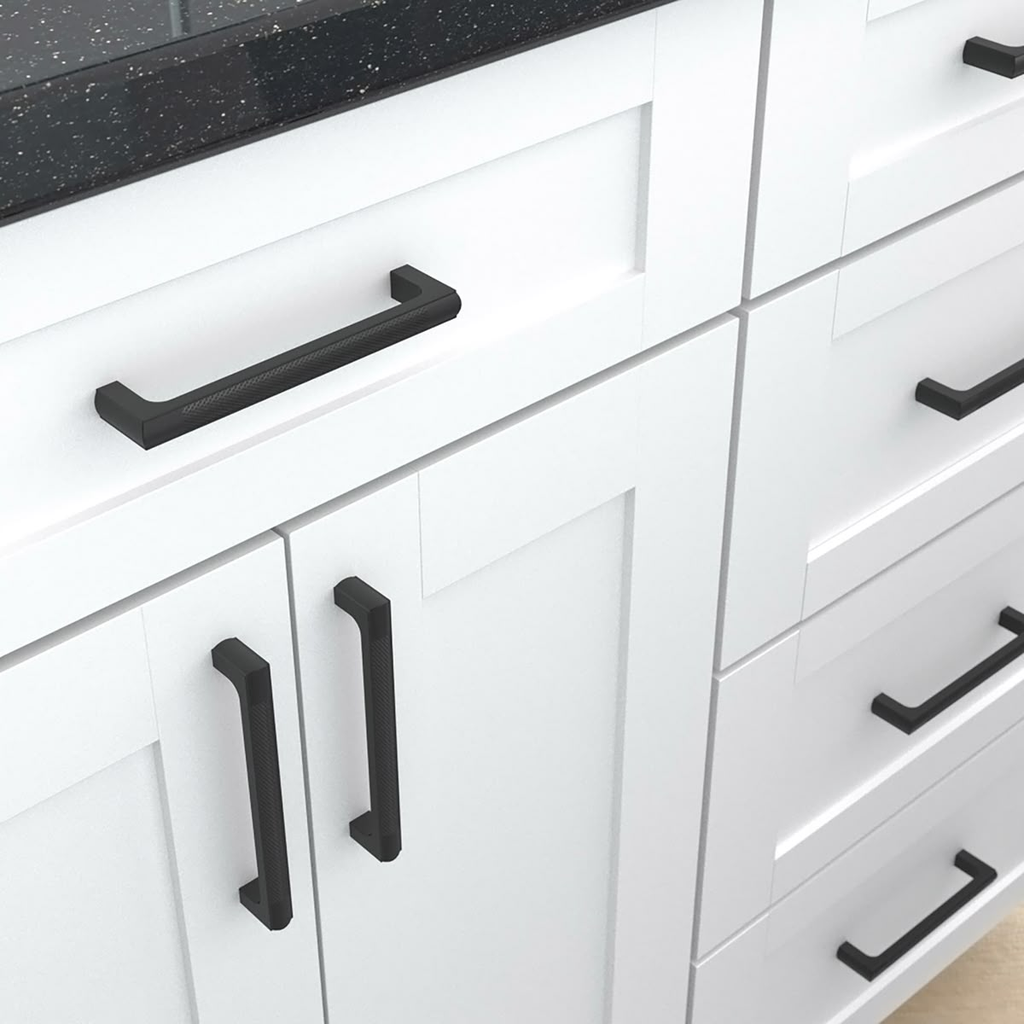
Lakefront humidity is harder on metal finishes than people expect, and cheaper plated hardware can start pitting or discoloring within a couple of seasons.
Solid brass, stainless steel, or a genuinely humidity-rated black matte finish holds up significantly better than a budget chrome-plated pull that looks fine in the store but not three summers in.
7. Go With a Vented Range Hood, Even in a Small Kitchen
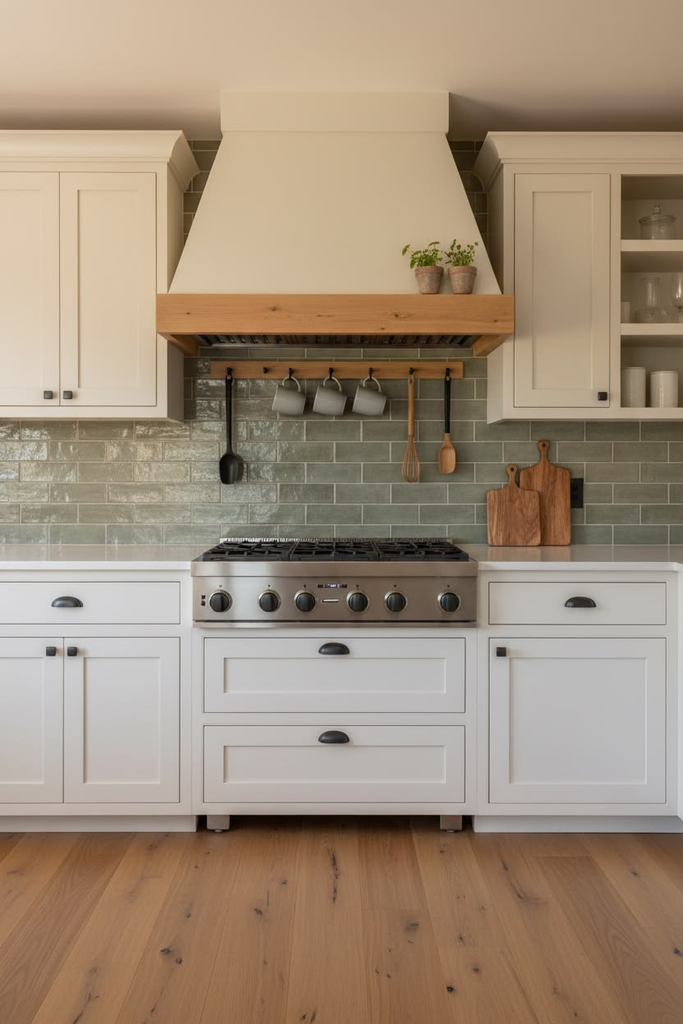
A lot of older lake cabins were built without real ventilation over the stove, which becomes a bigger problem than it sounds like once you’re cooking fish or bacon for a full house in a smaller, less airflow-friendly space.
Even a modest, inexpensive range hood makes a noticeable difference to how the whole house smells and feels by day two of a busy weekend.
8. Use a Durable, Easy-to-Mop Flooring Material
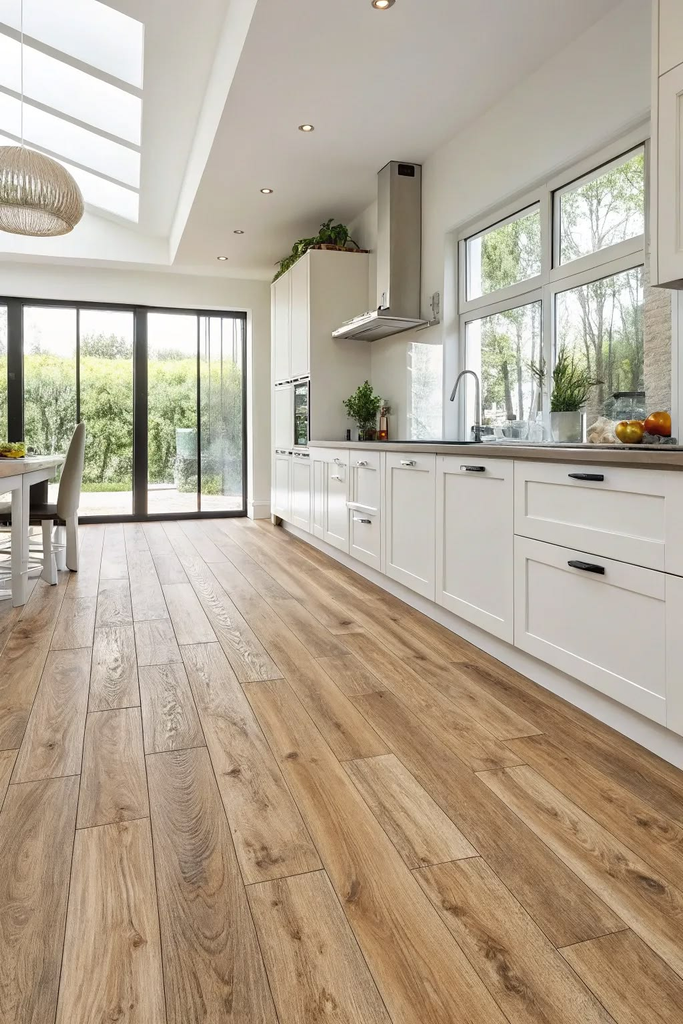
Sand, water, dropped food, and bare wet feet are a daily reality in a lake house kitchen, and hardwood shows every bit of that wear fast, plus it can warp if water sits on it. LVP (luxury vinyl plank) or tile both hold up dramatically better, and modern LVP options genuinely look like wood grain now without the maintenance headache.
What it actually costs: Budget LVP runs a modest per-square-foot cost installed, considerably less than what you’d spend refinishing hardwood floors that took on water damage from a summer of wet feet — which is the real comparison, not new-hardwood-versus-LVP.
9. Add a Built-In Bench or Banquette for Casual Meals
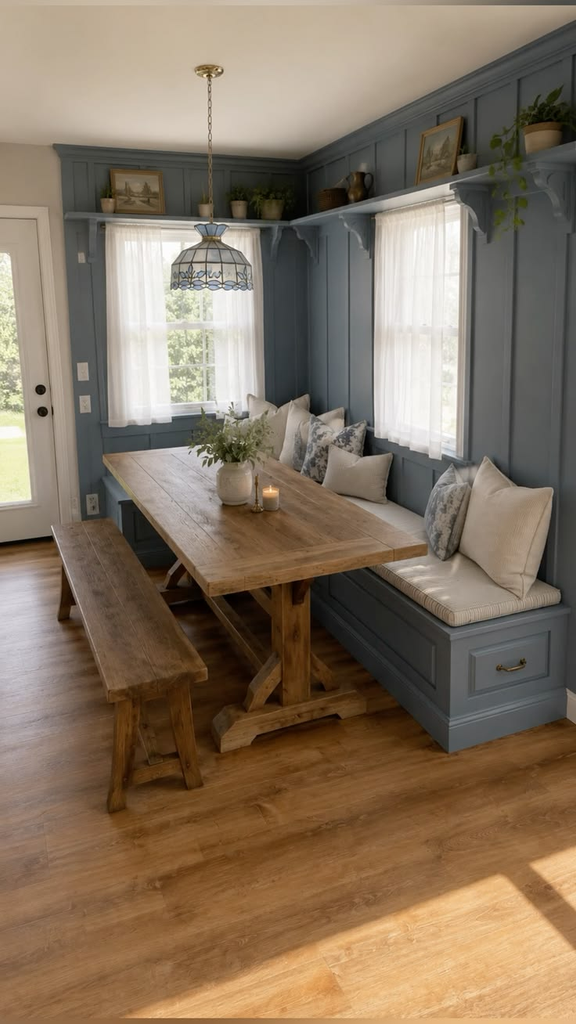
A banquette with built-in storage underneath solves two lake house problems at once: it seats more people in less floor space than individual chairs, and the storage underneath is a genuinely good spot for things like extra linens, board games, or off-season serving pieces that would otherwise clutter a cabinet.
10. Choose Bar Stools That Can Handle Wet Swimsuits
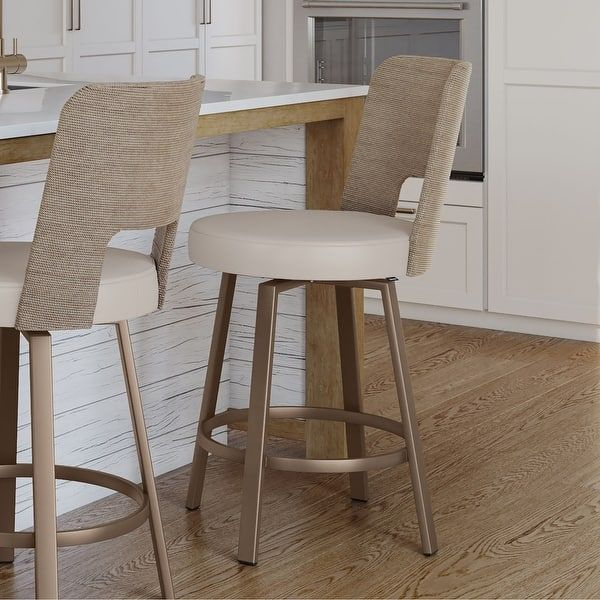
If your island or peninsula has seating, pick stools in a wipeable material — a performance vinyl, a sealed wood, or a powder-coated metal — over an upholstered fabric stool that’ll show every wet-swimsuit mark within the first week. This is a small detail that ends up mattering constantly once the house is actually in use.
11. Install Open-and-Airy Windows Over the Sink
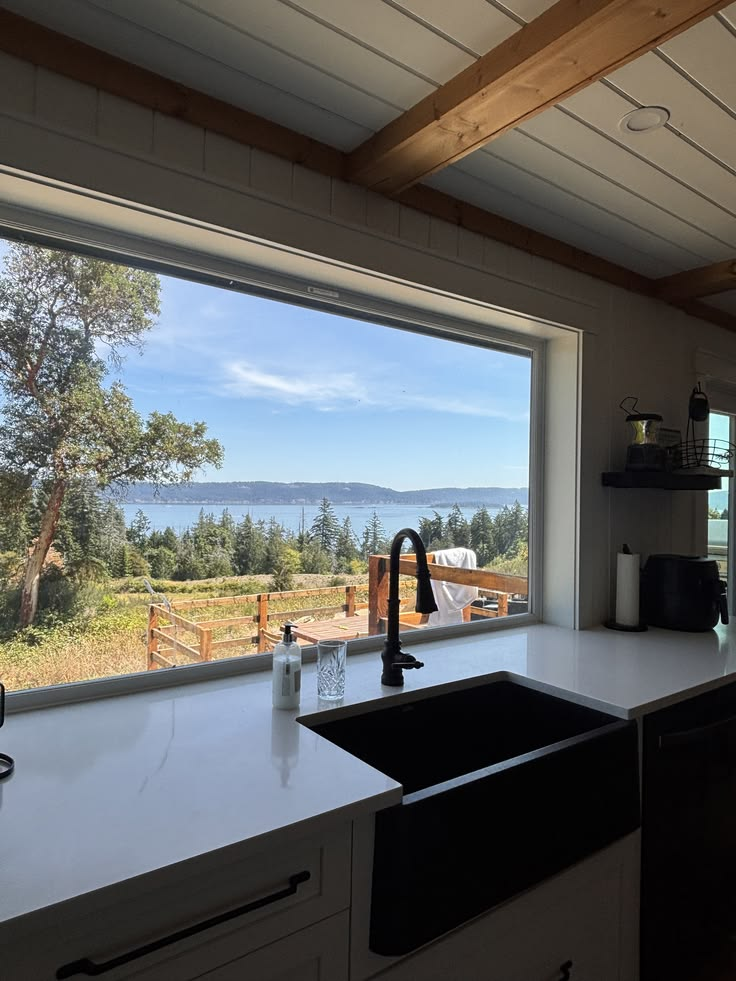
If your kitchen renovation allows for it, a window over the sink that actually faces the water turns dish duty into one of the better parts of being at the lake house instead of the worst. It’s a genuinely low-cost design choice if the plumbing and layout allow for it, and it’s the kind of detail that pays off every single day you’re there, not just on the days with company.
12. Add a Chalkboard or Whiteboard Wall for House Logistics
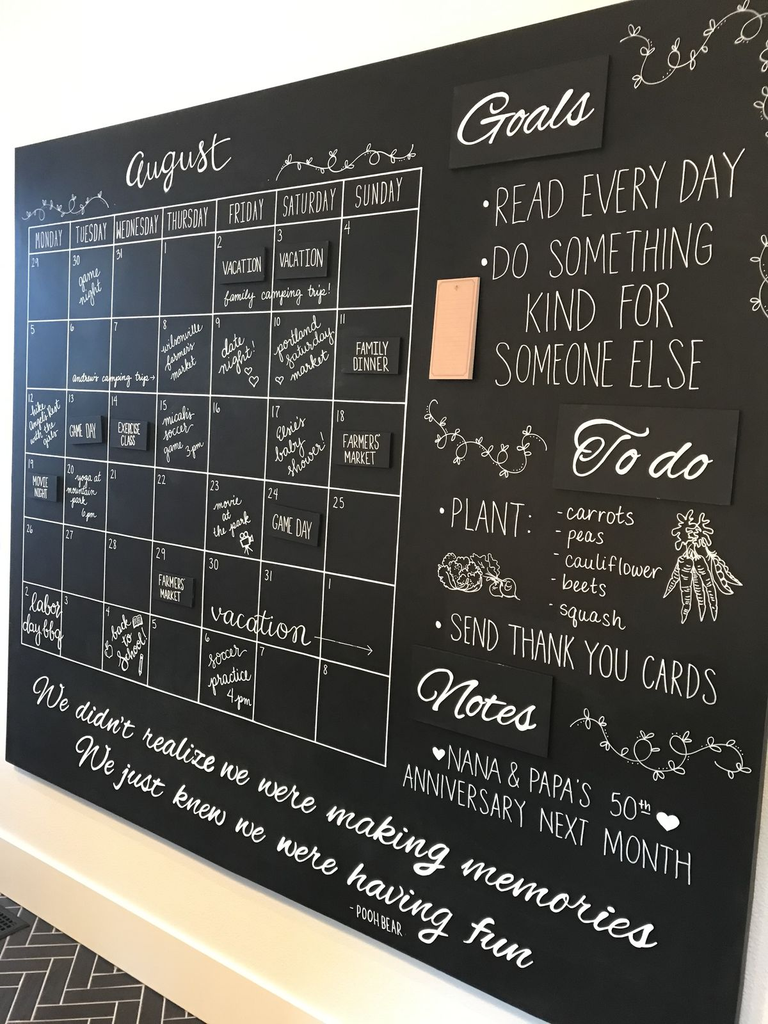
Lake houses tend to have shifting schedules — who’s driving to town, what’s for dinner, whose turn it is to do dishes. A small chalkboard or whiteboard section near the kitchen becomes the de facto house bulletin board, and it’s a genuinely cheap addition compared to almost anything else on this list.
13. Pick a Backsplash That Wipes Clean in Seconds
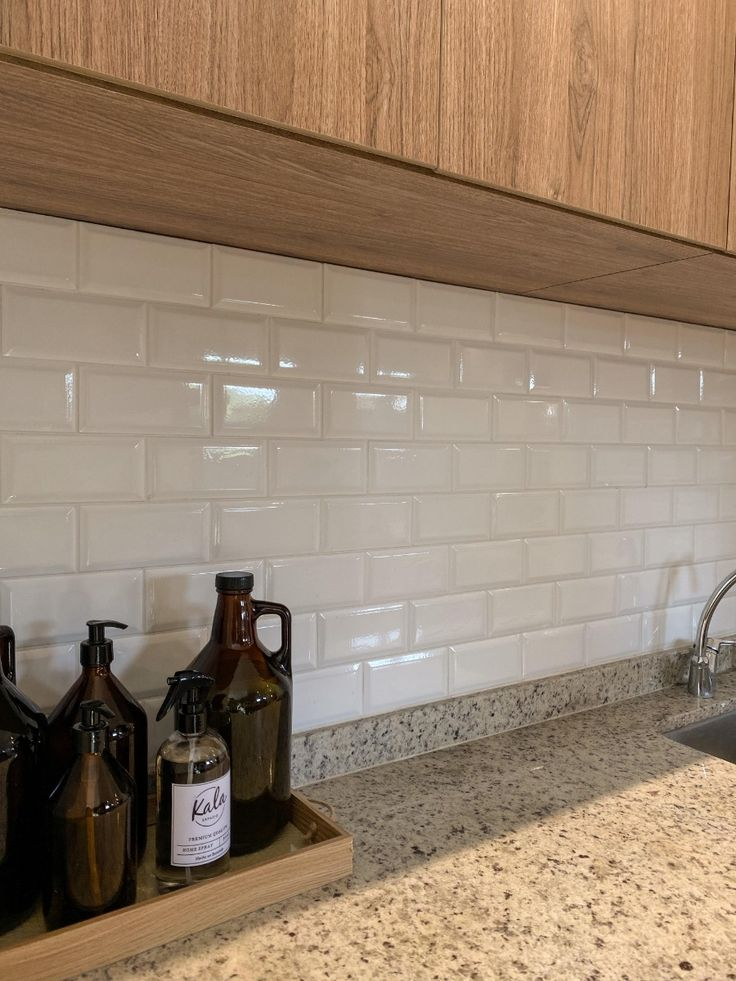
Between fish prep, more cooking overall, and kids “helping,” a busy lake house kitchen backsplash needs to be low-maintenance above almost anything else.
Subway tile with well-sealed grout or a single slab of quartz or solid surface both outperform an intricate mosaic that looks beautiful but has dozens of grout lines to keep clean.
Pro tip: If you already have a detailed tile backsplash you don’t want to redo, a penetrating grout sealer reapplied once a year cuts down on staining dramatically — it’s a fraction of the cost of retiling.
14. Use a Farmhouse or Lake-Themed Runner, Not Wall-to-Wall Carpet
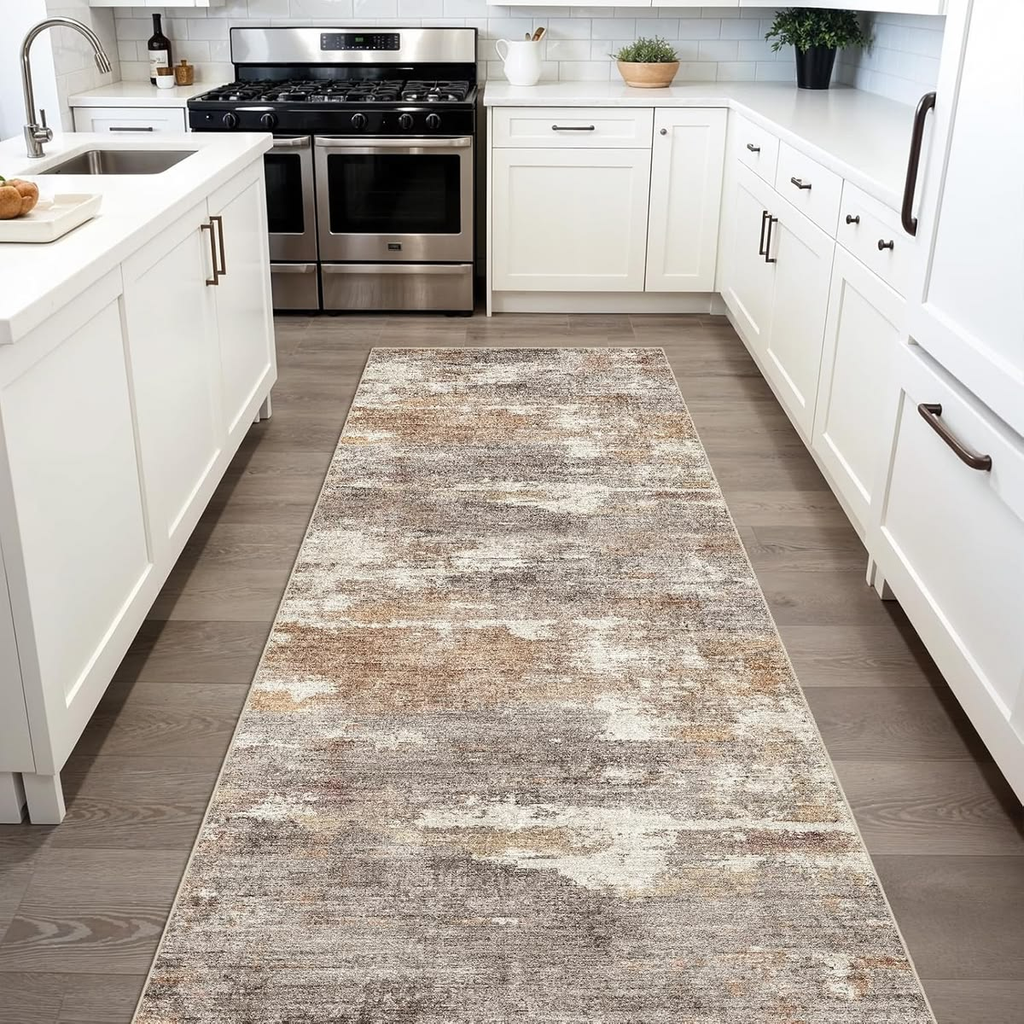
Kitchen carpet at a lake house is asking for trouble — it holds onto moisture and odors in a way that’s hard to reverse.
A washable runner in front of the sink and stove gives you the softness underfoot without the long-term maintenance problem, and you can throw it in the wash the same way you would a bathroom rug.
15. Choose Open Storage for Everyday Dishware, Closed for Everything Else
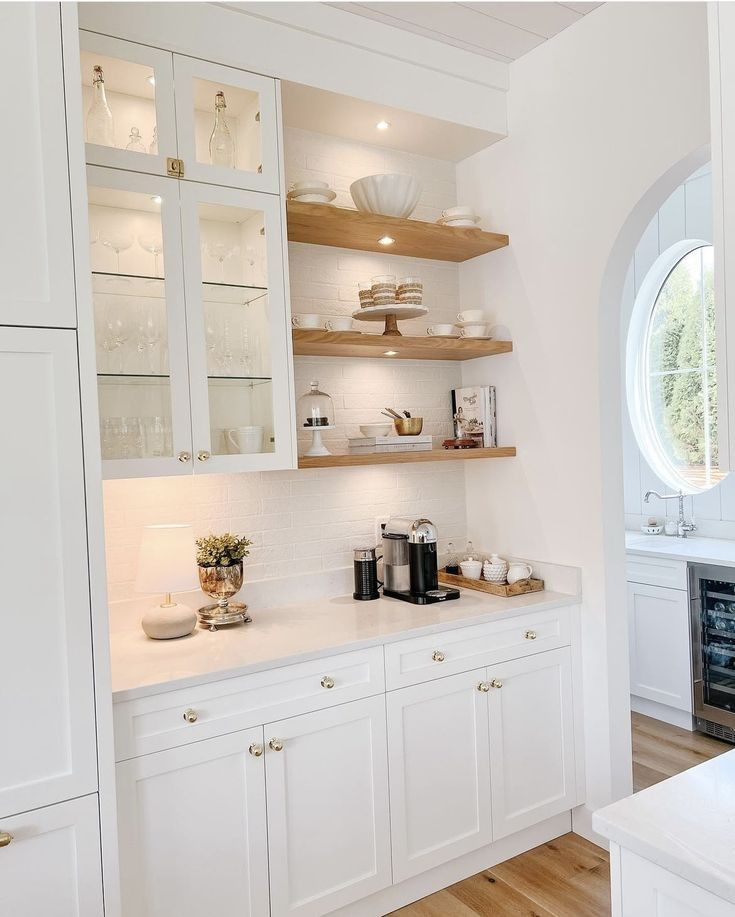
This connects back to the open-shelving point, but it’s worth calling out as its own storage strategy: keep the dishes you use every single day (plain glasses, everyday plates, mugs) in the most accessible, even open, storage, and put anything more delicate or occasion-specific behind closed doors.
It keeps the kitchen functional for a big group without exposing the stuff you’d actually be upset about breaking.
16. Add a Deep Pantry for Bulk and Off-Season Storage

More people eating more meals means you’re buying in bulk more often than at your regular house, and a proper pantry — even a repurposed closet with sturdy shelving — keeps that bulk buying from spilling onto the counters.
If the house sits empty part of the year, a pantry also gives you a dedicated spot for shelf-stable goods that won’t need to be hauled in fresh every single visit.
17. Pick a Faucet With a Pull-Down Sprayer, Not a Fixed Spout
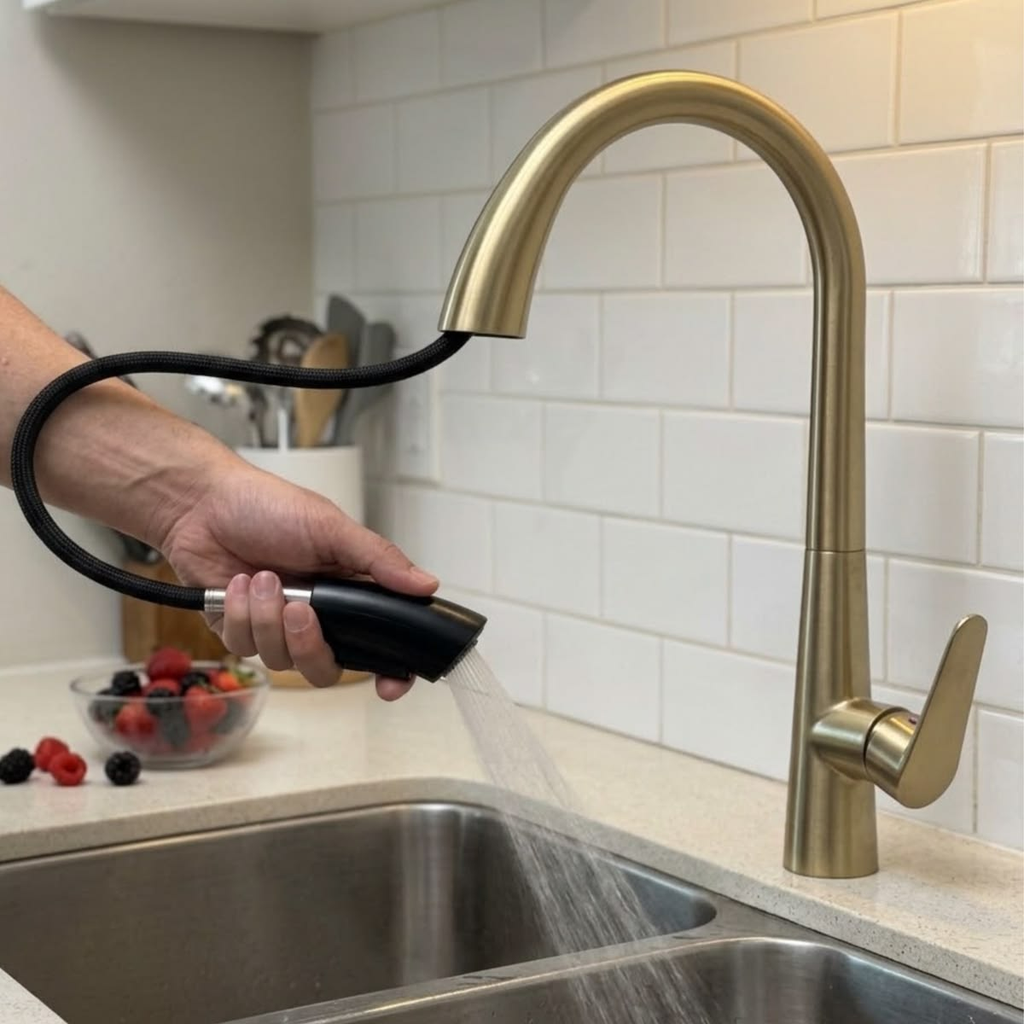
Between fish cleaning, rinsing sandy produce, and washing oversized pots, a pull-down or pull-out sprayer faucet earns its keep at a lake house far more than it does in a typical home kitchen. It’s a relatively small upgrade cost-wise compared to most things on this list, and it’s one of those details you’ll use dozens of times a day without thinking about it.
18. Go With Warm Wood Tones to Balance Practical Materials
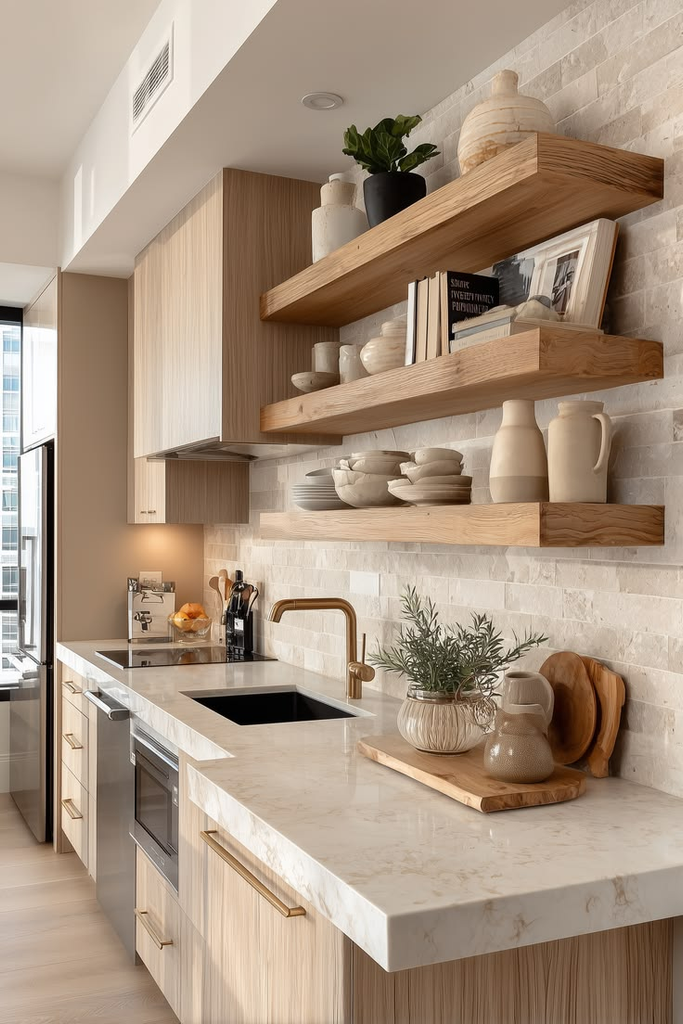
Because so many of the practical choices here — quartz counters, LVP flooring, vinyl stools — lean cool and utilitarian, bringing in warm wood tones through open shelving, a wood island, or exposed beams keeps the kitchen from feeling clinical.
It’s the same balancing act as the rest of the house: durable materials doing the heavy lifting, warmth layered on top.
19. Add a Dedicated Fish-Cleaning or Outdoor Prep Station If You Fish

If fishing is a regular activity at your lake house, an outdoor sink or a dedicated fish-cleaning station keeps the mess, and the smell, out of the main kitchen entirely. Even a simple outdoor sink hookup near the dock path saves your indoor kitchen from a task it really wasn’t built for.
20. Choose Appliances With a Simple, Serviceable Design
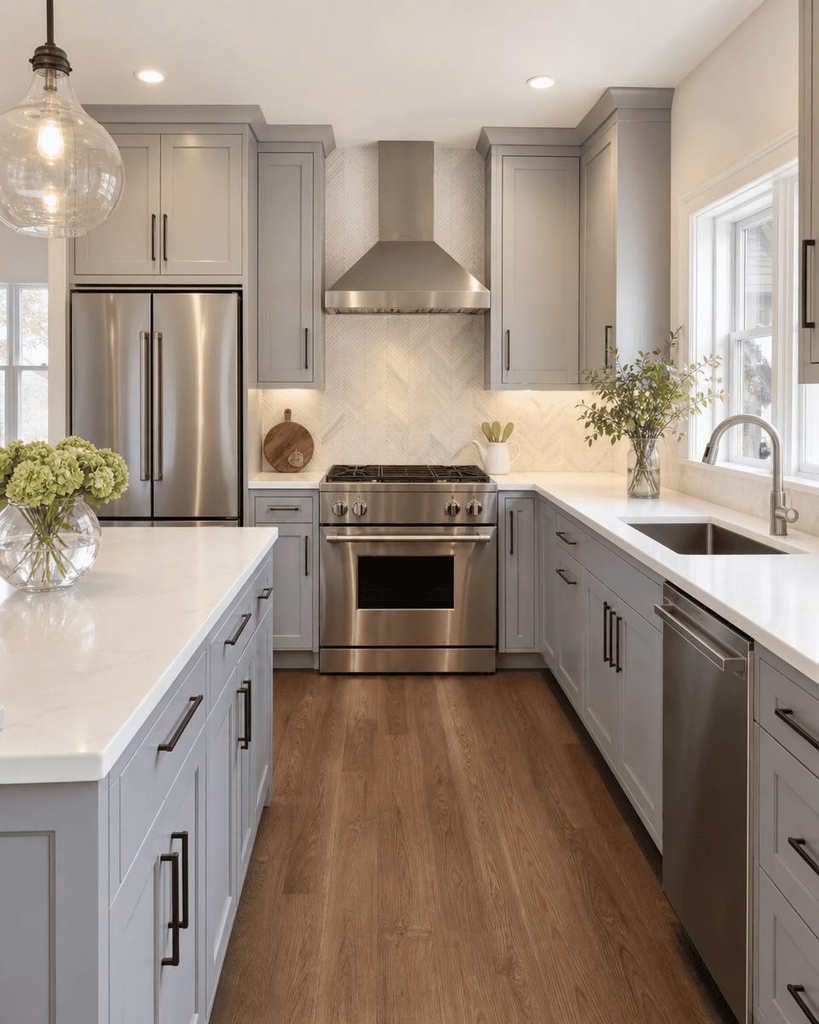
If the lake house sits unused for stretches of the year, appliances with simpler mechanical designs (rather than heavily digital, app-connected ones) tend to be easier to service or repair if something goes wrong while nobody’s around to catch it early.
This isn’t the flashiest advice, but it’s saved more than one lake house owner I know from a surprise repair bill discovered three months into the off-season.
21. Add Task Lighting Under Cabinets
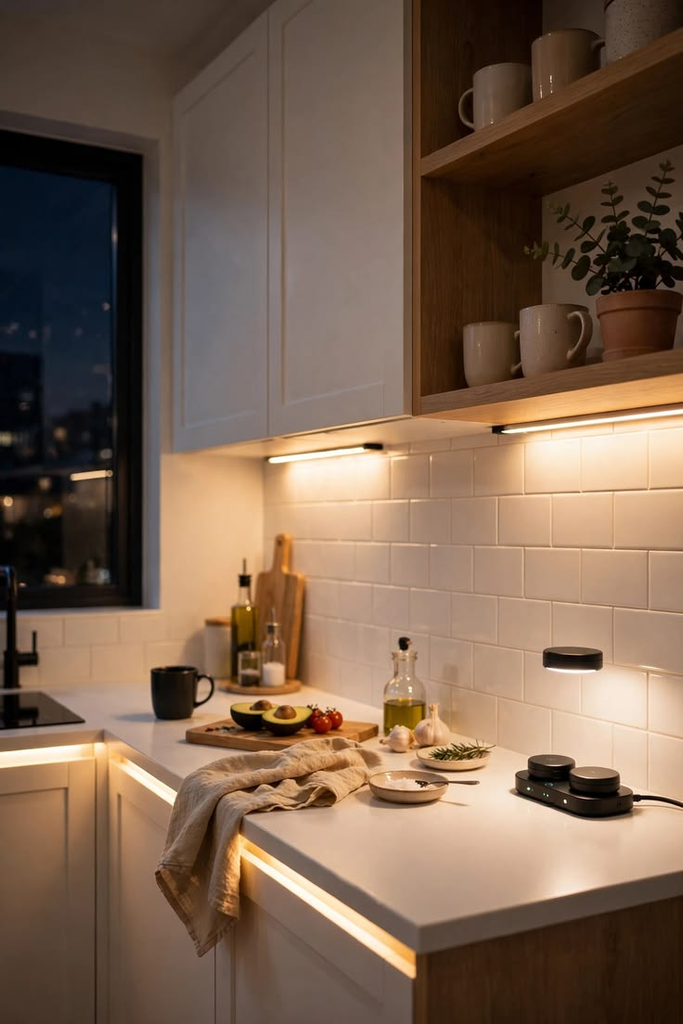
With more cooking happening and more hands in the kitchen at once, under-cabinet lighting makes prep space genuinely more usable, especially in older lake cabins that weren’t built with much overhead lighting to begin with.
It’s a straightforward weekend project if you’re comfortable with basic electrical work, or a modest cost for a professional install.
22. Use a Large Format Table Runner or Table for Big Group Meals
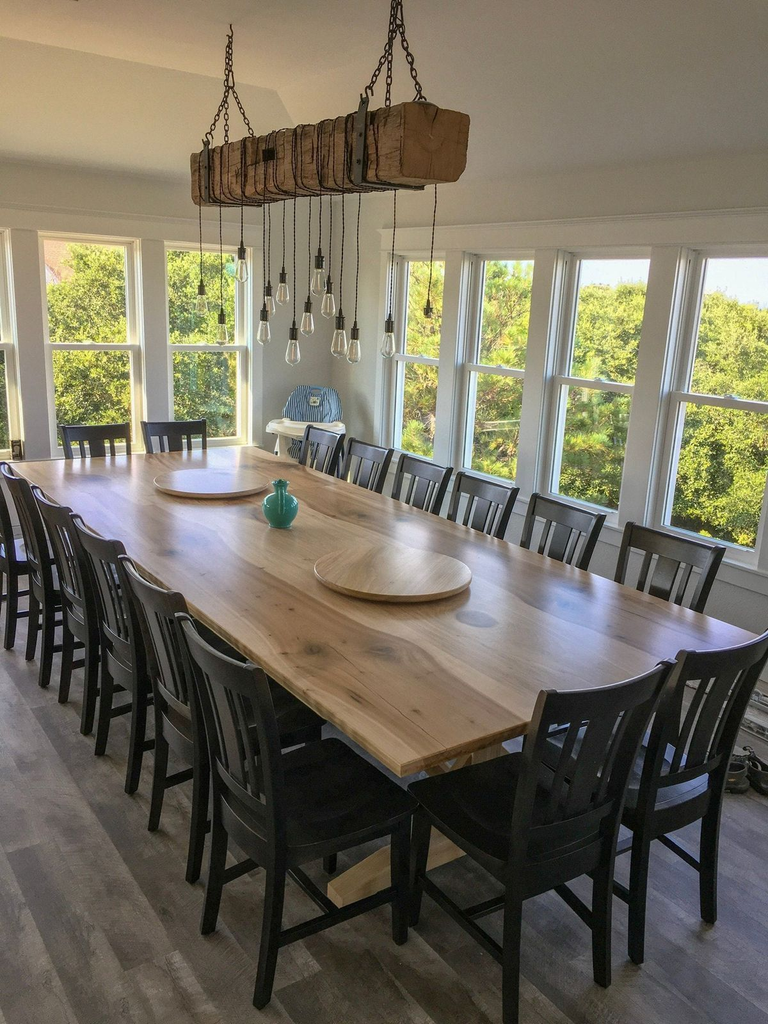
If your kitchen opens into a dining area, prioritize a table that can extend or seat more than your everyday household size — lake house meals tend to run bigger than expected once the extended family and the neighbors show up.
A table with a removable leaf gives you flexibility without permanently taking up the extra floor space when it’s just your immediate family there.
23. Bring in One Local or Personal Detail Instead of Generic Lake Decor
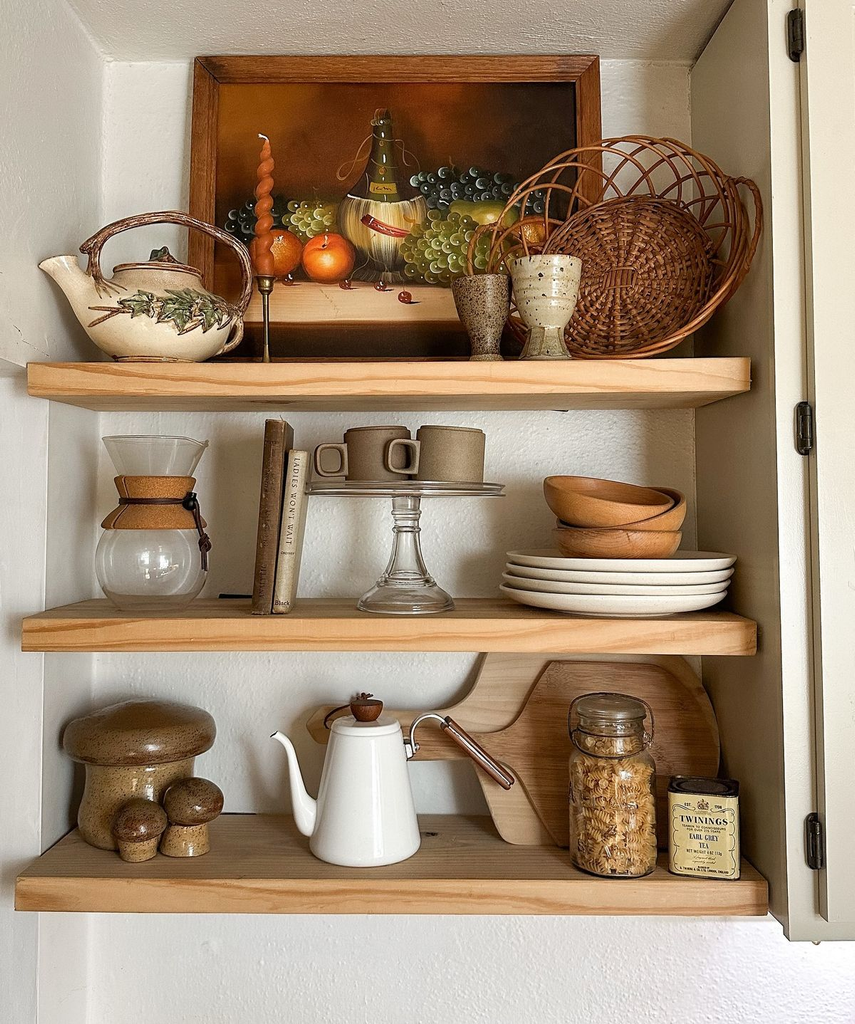
Skip the mass-produced “Gone Fishing” sign if you want the kitchen to feel like an actual home instead of a themed rental.
A piece of local pottery, a framed photo of the lake from years ago, or even a shelf of mismatched vintage glasses picked up at estate sales does more for the space than anything ordered off a big-box decor site — and it usually costs less too.
If I Were Redoing Our Kitchen From Scratch
I’d start with the sink and the counters, honestly — not because they’re exciting, but because they’re the two things that touch every single meal, every single day, all season.
The pretty stuff (the open shelving, the runner, the local pottery) is what makes it feel like your kitchen, but it’s the boring, durable choices underneath that determine whether you’re actually enjoying the summer or spending it hand-washing your grandmother’s china at 11pm like I was.


Leave a Reply