
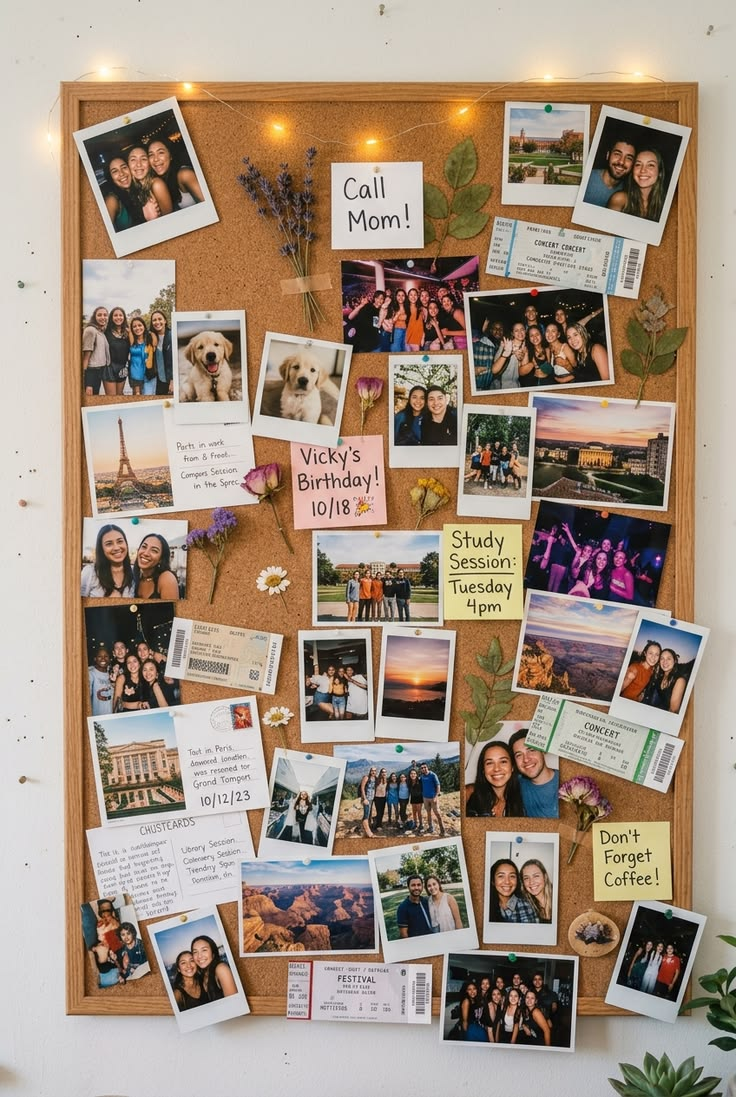
My freshman year cork board was just a plain beige rectangle with three thumbtacks holding up a syllabus I never looked at again after week two. It took me until sophomore year, watching my roommate turn hers into an actual command center with color-coded sections and a photo strip running along the top, to realize a cork board could be doing so much more than holding up one crumpled flyer for a club I never joined.
That’s really the appeal of college cork board ideas — in a dorm room where you can’t paint the walls, can’t drill anything, and are working with maybe 130 square feet total, a cork board is one of the few surfaces you’re actually allowed to fully customize.
It’s decor, organization, and a little bit of self-expression, all on a $12 piece of cork you were probably going to buy anyway for your class schedule.
I’ve broken these into three groups — aesthetic boards that are mostly about how your side of the room looks, functional boards that are doing real organizational work, and a few DIY customization ideas for changing up the cork board itself rather than just what’s pinned to it. Mix and match across categories; the best dorm cork board setups I’ve seen usually borrow from all three.
Aesthetic Cork Board Ideas for Your Dorm Wall
1. A fabric-covered cork board backdrop
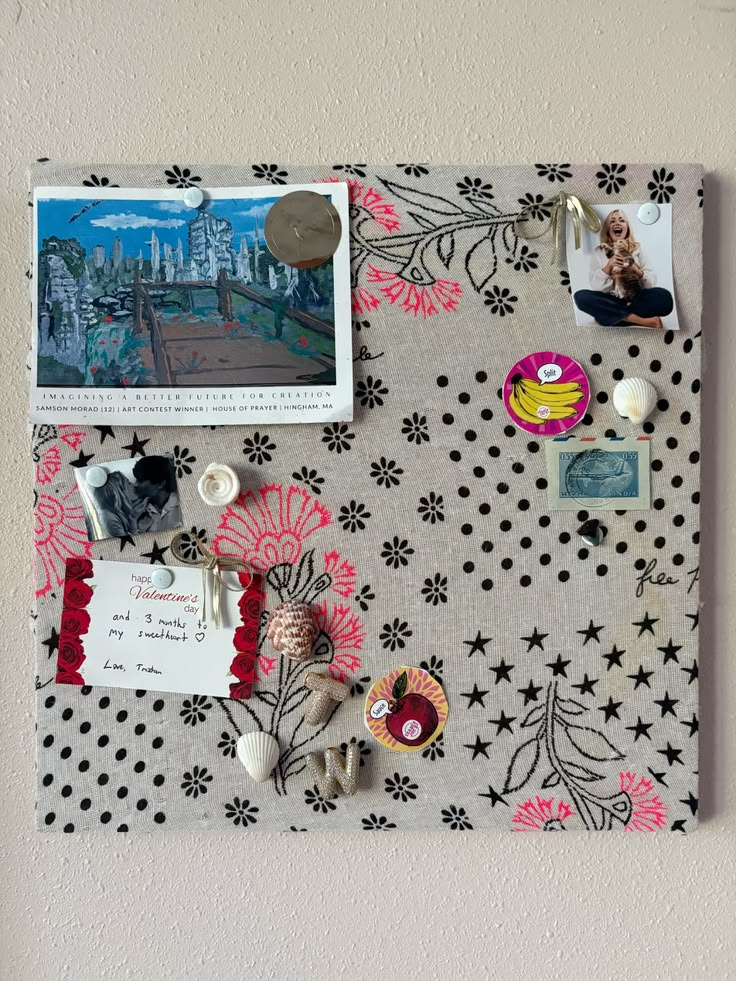
Stapling or hot-gluing fabric over your cork board before you pin anything to it instantly makes it look less like a school supply and more like an actual decor piece.
It also means your pin holes disappear into a pattern instead of leaving visible tiny holes in bare cork, which matters more than you’d think once you’ve repinned things a few dozen times over a semester.
The trade-off is that thicker fabrics can make pins harder to push in — a lightweight cotton or linen works better than anything with real texture or weight, like burlap or canvas.
Pro tip: Wrap the fabric around the back and staple it there rather than trying to glue the edges flat on the front — it looks noticeably more finished and hides any uneven cutting you did along the edges.
2. A polaroid or Instax photo wall
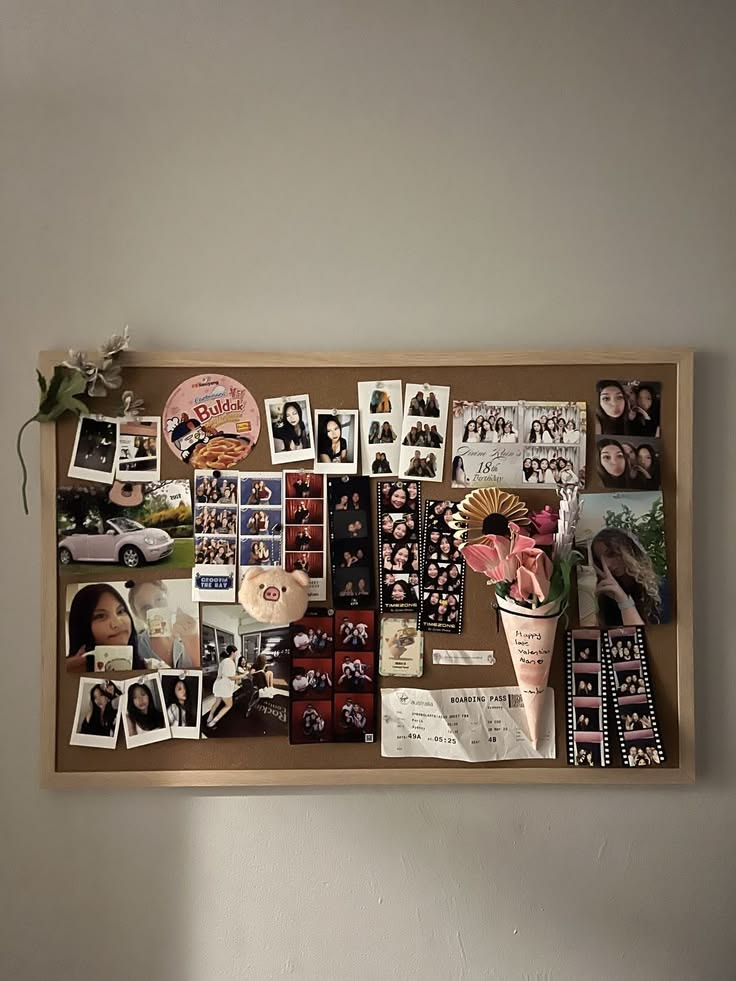
Rather than pinning a few photos loosely, a grid of instant-camera photos gives your cork board a cohesive, gallery-style look, and it’s one of the few dorm decor trends that’s genuinely more affordable in real life than it looks in photos, since instant film photos cost less than framing regular prints.
My roommate’s board had over 60 saves on my own Pinterest board once I posted a photo of it, which honestly surprised me for something that simple.
Pro tip: Leave slightly uneven gaps between photos instead of a perfectly even grid — a too-precise grid actually reads as more staged and less like an organic collection of memories, which is the whole point of this look.
3. A washi tape grid or border
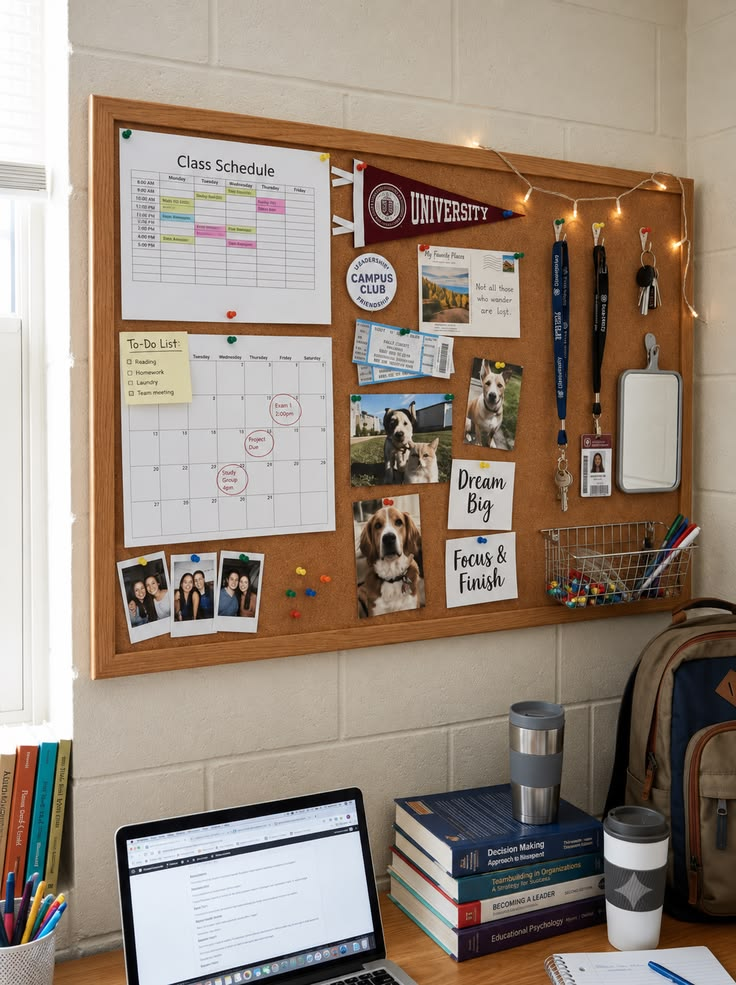
Washi tape in a coordinating color scheme, either as a border frame or as grid lines dividing your board into sections, adds color and structure without any real cost — a roll is a few dollars and lasts multiple boards.
It’s the easiest starting point if you’re not ready to commit to fabric or paint but still want your board to look intentional rather than bare cork.
4. A pressed flower or botanical board
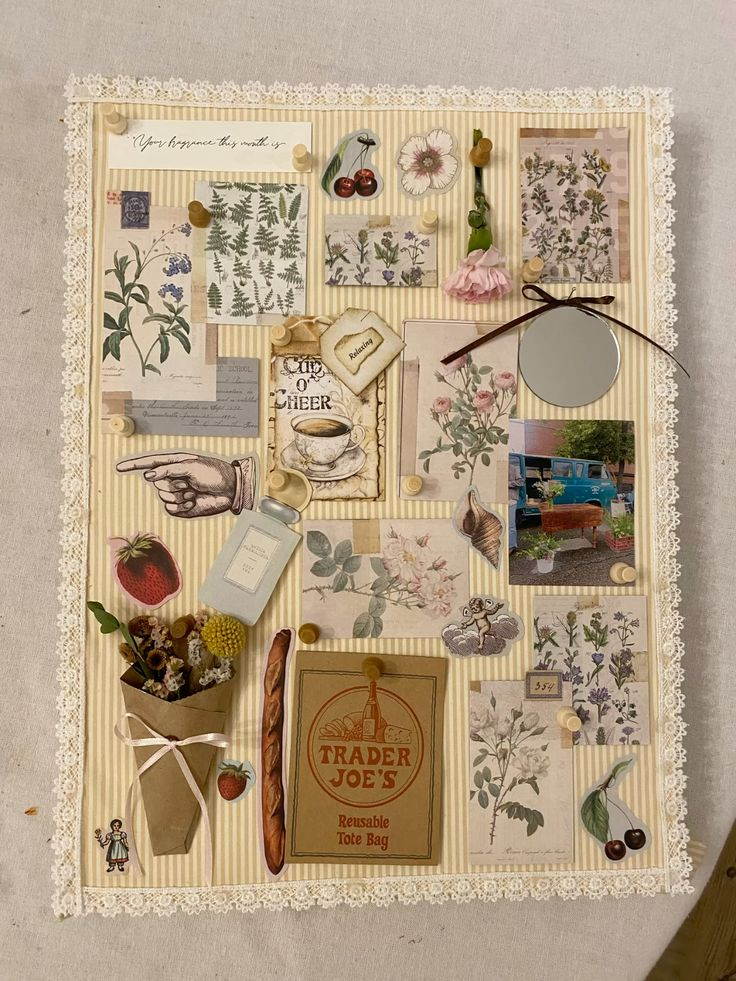
Pinning dried, pressed flowers directly to cork, sometimes layered with small pieces of washi tape to hold delicate stems in place, creates a soft, textured look that’s genuinely different from the photo-heavy boards most people default to.
It works especially well if you’re someone who’s already collecting flowers from occasions throughout the semester — a corsage, a bouquet from a visit home — instead of buying flowers specifically for this.
Pro tip: Press flowers between the pages of a heavy textbook for at least a week before pinning them — flowers that aren’t fully dried will mold on the board, which is a genuinely gross surprise to discover a month later.
5. A travel postcard or ticket stub collage
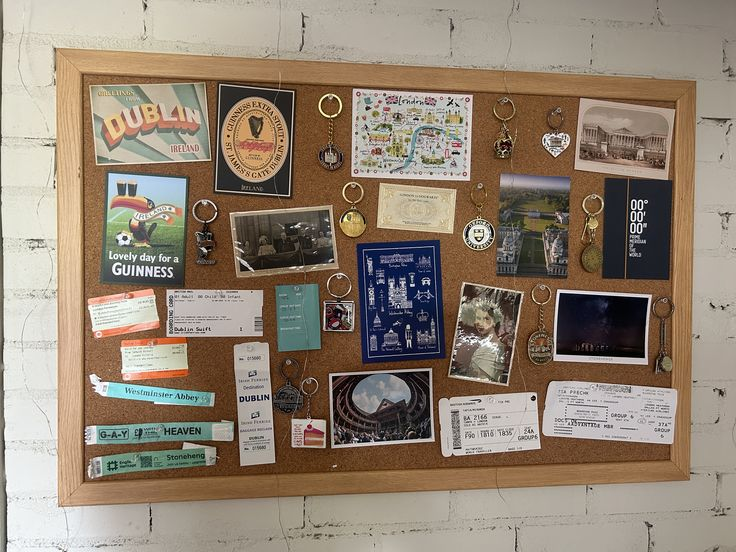
Postcards, concert tickets, and museum stubs pinned in an overlapping, scrapbook-style layout turn your cork board into a visual record of the semester instead of a static piece of decor you set up once in August and never touch again.
This is the board style that ages the best over a full year, since it’s meant to keep growing.
Pro tip: Leave one corner of the board intentionally empty at move-in — a board that starts completely full has nowhere to grow, and the empty corner is oddly motivating to fill in as the semester goes on.
6. A magazine cutout vision or mood board
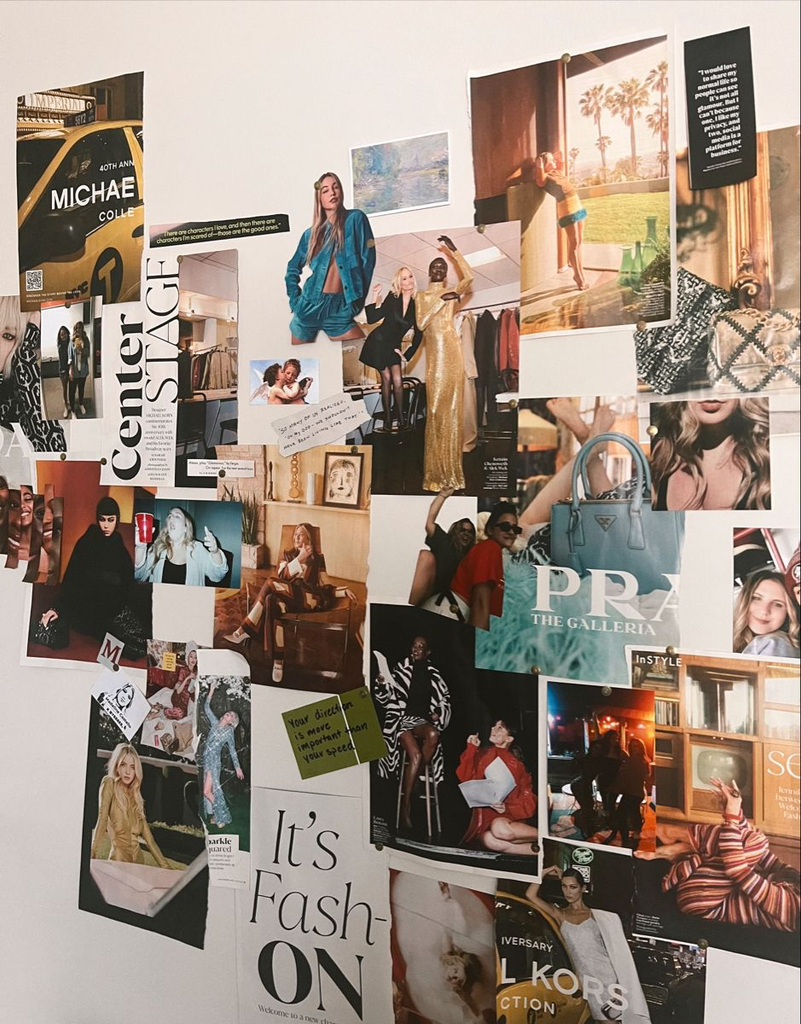
Cut images and words from magazines, arranged loosely around a theme — a goal, an aesthetic, a mood for the semester — makes for a board that’s part decor, part motivation.
It’s a genuinely low-cost project if you’re pulling from magazines you already have or ones a campus library or thrift store sells for cents.
7. A color-blocked ribbon board
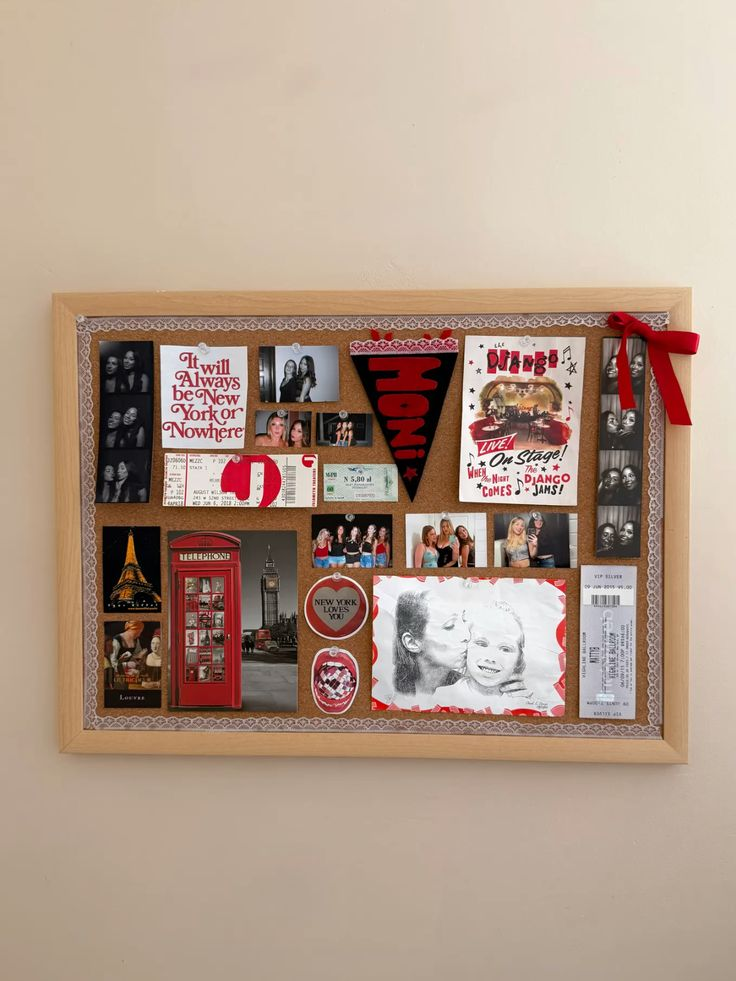
Ribbon stretched diagonally across the cork in a crisscross grid, in two or three coordinating colors, gives you built-in slots to tuck photos and notes into without pins at all, and doubles as a decorative pattern on its own even before you add anything to it.
It’s one of the more Pinterest-searched cork board formats because it photographs well, but it’s genuinely functional too — sliding a photo under a ribbon intersection is faster than repositioning a pin every time.
Pro tip: Use a stapler on the back of the board for the ribbon ends rather than pins or tape on the front — it holds tension far better, so the ribbon doesn’t sag within a few weeks of use.
8. A string light border
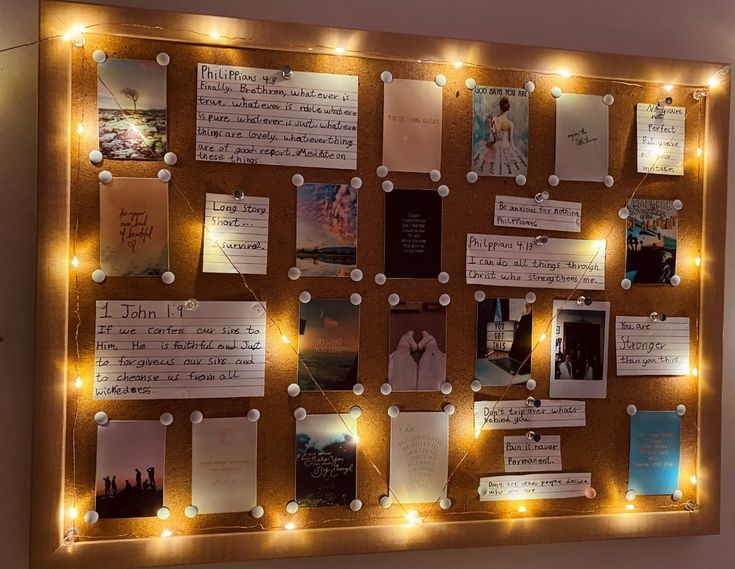
Mini string lights pinned along the outer edge of your cork board add warm, ambient light to your side of the room and make the whole setup feel more finished at night, when a plain cork board just disappears into the dark.
Battery-powered or USB versions are the move for dorms, since most schools don’t allow anything plugged in unattended overnight through a wall outlet timer, but a USB strand plugged into a power strip is usually fine.
Pro tip: Route the light strand’s wire along the back of the board using small adhesive clips, not just draped over the front edge — a wire crossing the front is a small thing, but it’s the difference between the board looking styled and looking like you just draped lights over it as an afterthought.
9. A friend collage with mixed materials
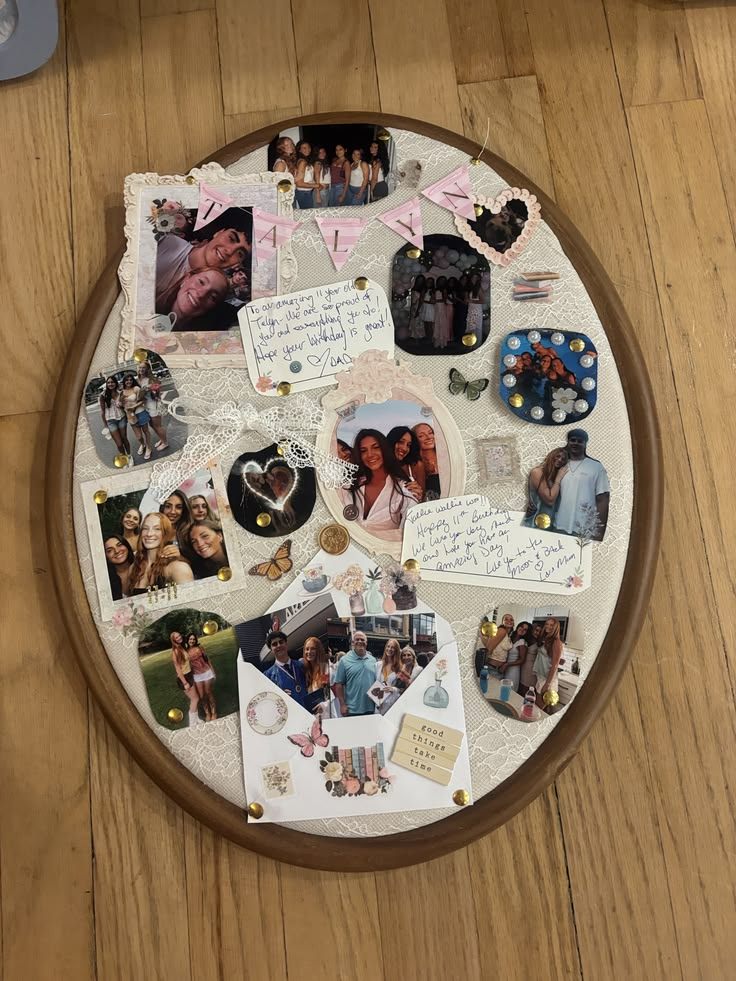
Combining photos, handwritten notes, ticket stubs, and small trinkets from friends — not just photos alone — creates a board with more visual texture and, honestly, more sentimental value than a photo-only wall.
This is a good format if you’re someone who keeps physical mementos anyway and wants somewhere to actually display them instead of storing them in a drawer.
10. An ombre or color-graduated photo layout

Arranging photos or paper backgrounds in a gradient — light to dark, or one color transitioning to another — gives a photo-heavy board a more designed look without much extra effort beyond sorting your photos by color before pinning them up.
It’s a small styling choice that makes a big visual difference for very little extra time investment.
Functional Cork Board Ideas That Actually Organize Your Semester
11. A full command center with calendar, mail, and keys
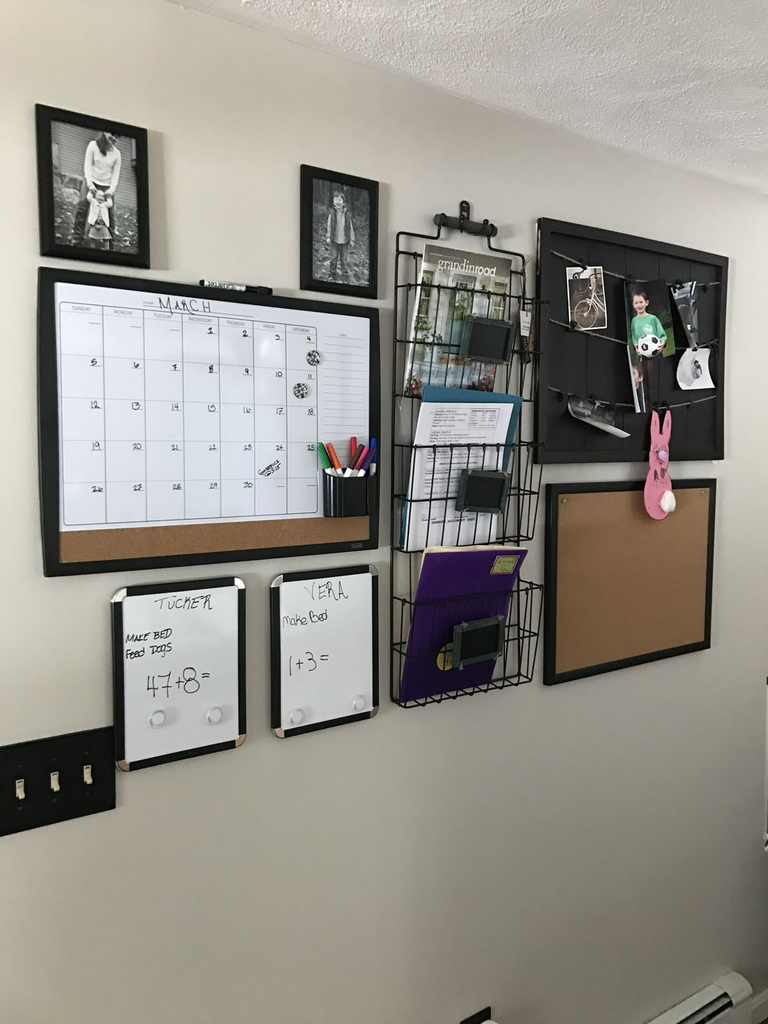
Turning one cork board into your actual organizational hub — a small monthly calendar pinned at the top, a spot for mail or important papers, and a hook or small pocket for keys — means you have one place you check daily instead of losing track of a syllabus deadline buried in a stack of papers on your desk.
This is the board style that pays for itself the fastest in avoided late fees and missed deadlines.
Pro tip: Put the calendar at eye level and everything else below it — the calendar is the piece you need to glance at daily without searching, so it deserves the prime real estate on the board.
12. A class schedule and assignment tracker

A dedicated section with your weekly class schedule and a rotating list of upcoming assignments keeps deadlines visible in a way a phone calendar app just doesn’t — you see it every time you’re at your desk, not only when you remember to check an app.
My friend Rosa swapped from a phone-only planning system to a pinned assignment tracker after missing a paper deadline freshman year, and she says the visibility alone changed how often she forgot things, not any actual planning skill she gained.
13. Color-coded sections by category
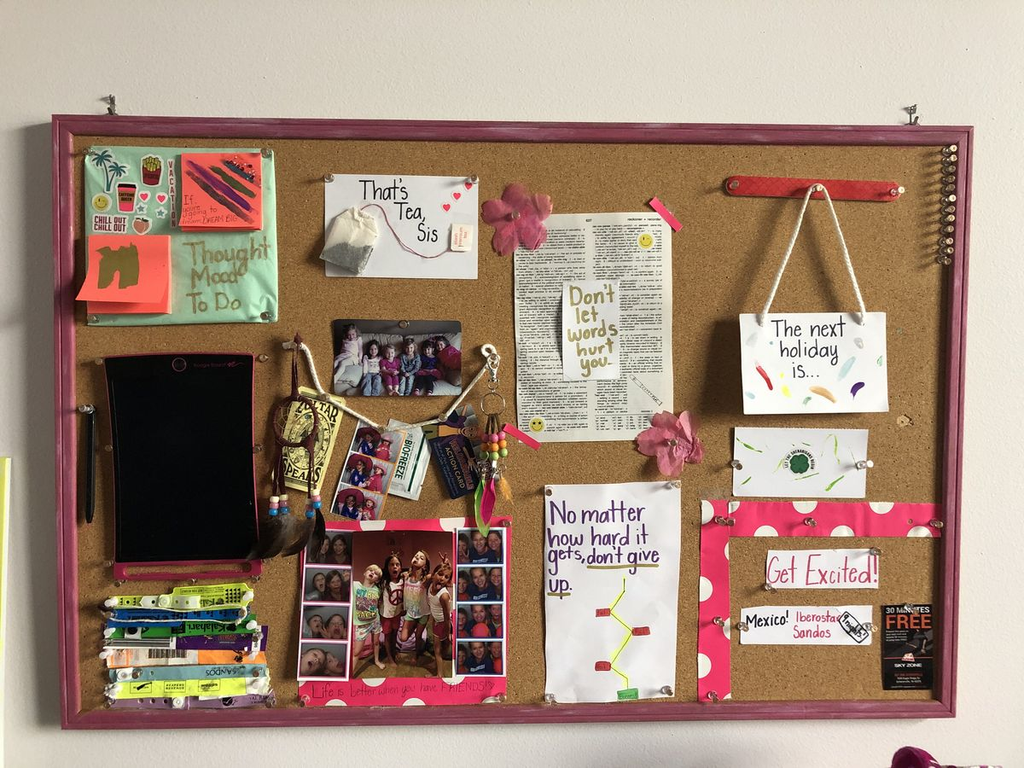
Dividing the board into zones — one color of pin or paper backing for classes, another for social plans, another for personal goals — lets you scan the board and immediately know what kind of information you’re looking at, without reading every single pinned item.
This works especially well combined with the ribbon-grid or washi-tape-grid ideas above, since the grid lines can double as the section dividers.
| Cork Board Style | Approx. Setup Cost | Best For | Upkeep Level |
|---|---|---|---|
| Bare cork + pins | $10-$15 | Minimalists, frequent re-pinning | Low |
| Fabric-covered | $15-$25 | Aesthetic-focused rooms | Low |
| Ribbon grid | $15-$20 | Function + style combined | Medium |
| Full command center | $20-$35 (with calendar, pockets) | Staying on top of deadlines | High |
| Photo/collage wall | $10-$30 (film or printing cost varies) | Sentimental, evolving displays | Medium |
14. A jewelry organizer cork board
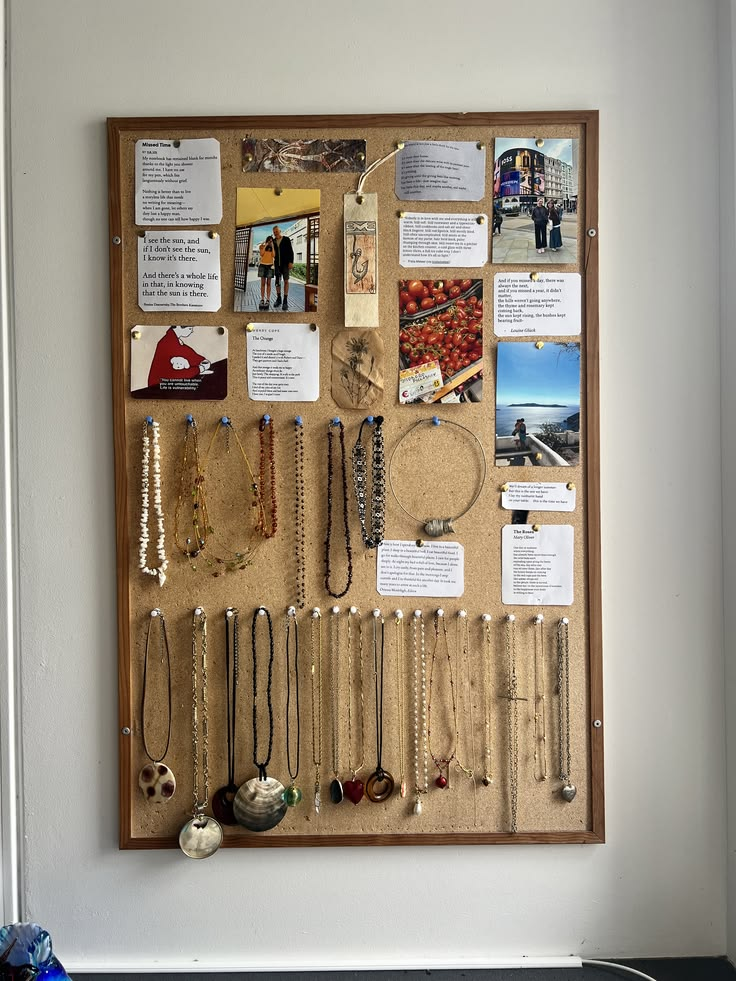
Small hooks or pins arranged in rows give you somewhere to hang earrings and necklaces that otherwise end up tangled in a drawer, and it doubles as a decorative element since jewelry itself is often decorative.
This is a smart use of a smaller, secondary cork board if your main one is already busy with photos or a schedule.
Pro tip: Use small cup hooks screwed into the cork rather than straight pins for anything heavier than stud earrings — pins alone tend to slowly work loose under the weight of a necklace over a few weeks.
15. A push-pin travel or goal map

A small world or US map pinned to cork, with pins marking places you’ve been or want to go, works as both decor and a genuine long-term goal tracker, which is a nice change from a board that’s purely about the current semester.
It’s also a natural conversation starter when people are in your room, in a way a purely aesthetic board sometimes isn’t.
16. A recipe and meal-plan board

For anyone with a kitchen or kitchenette, pinning a rotating set of go-to recipes and a simple weekly meal plan on cork keeps them visible while you’re actually cooking, instead of buried in a phone note you never open mid-recipe.
It’s a smaller niche use case, but genuinely useful for the students who have some cooking setup beyond a microwave.
17. A study motivation and goal board

Pinning a short list of semester goals, a favorite quote, or even just a countdown to a big deadline or break gives you a small daily visual nudge without needing to open an app or a planner.
The key to this one working long-term is keeping it short — three or four things, not a wall of text you’ll start ignoring within a week.
Pro tip: Update this section at the start of each month rather than setting it once in August — a goal board that never changes fades into background noise fast, the same way a poster you’ve had for two years stops registering when you walk past it.
DIY Cork Board Customization Ideas
18. A painted cork board in a custom color
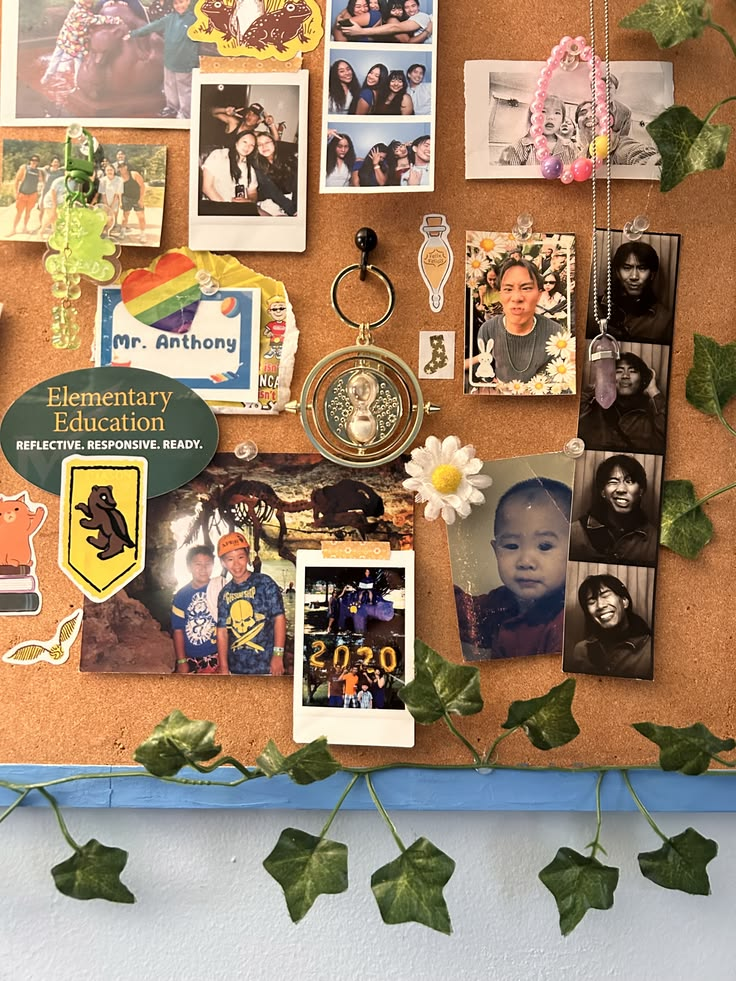
Cork takes acrylic or spray paint reasonably well, so painting your board to match your room’s color scheme, rather than leaving it the default tan, is a simple way to make it look like it was chosen for the room instead of grabbed off a dorm-essentials list at the last minute.
Two thin coats work better than one thick one, since cork can absorb paint unevenly if you go too heavy in one pass.
Pro tip: Seal painted cork with a thin layer of clear spray sealant before pinning anything into it — unsealed painted cork can flake small paint chips off around each pinhole over time, which shows up more than you’d expect on a light-colored paint job.
19. Cork board cut into a custom shape
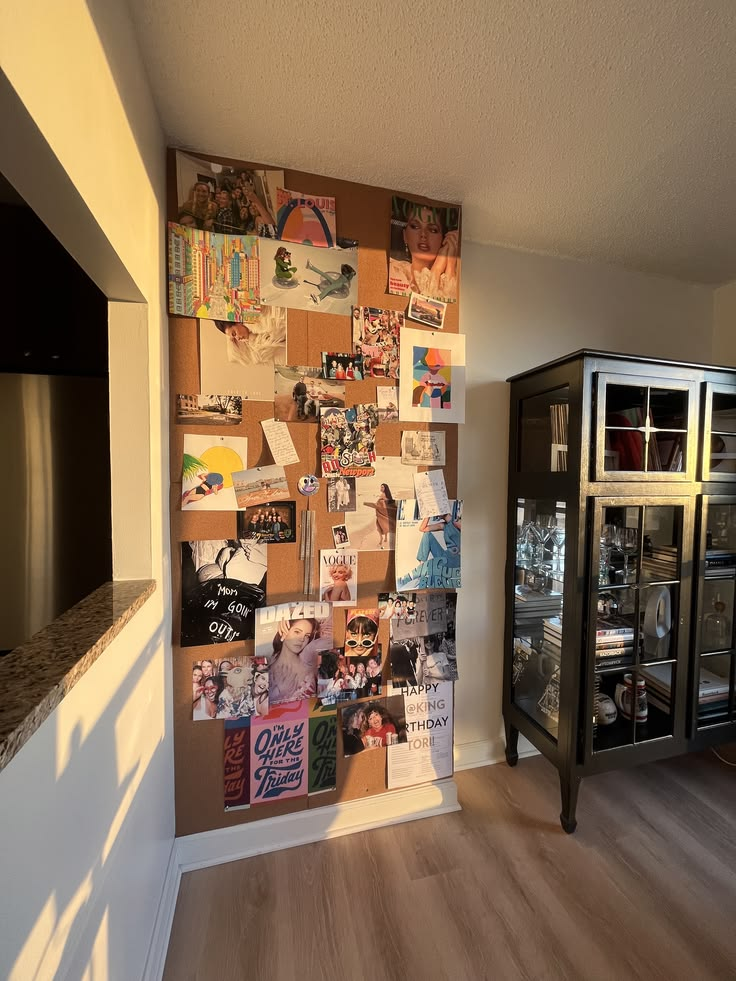
Cutting standard rectangular cork tiles into a circle, an initial letter, or another custom shape with a utility knife turns a purely functional item into an actual piece of wall art, especially as a smaller accent piece alongside a larger, standard-shaped main board.
This takes more effort than most ideas on this list, but it’s a genuinely distinctive look that most dorm rooms don’t have.
Pro tip: Score the cutting line multiple times with light pressure rather than trying to cut all the way through in one pass — cork tears unevenly if you force a single deep cut, and you’ll end up with a rougher edge than a few lighter passes gives you.
20. Layered cork tiles as an accent wall section

Instead of one cork board, several small cork tiles arranged together on the wall, some overlapping slightly or set at slightly different heights, create a larger functional pinboard area that also reads as an intentional gallery-style wall feature.
This is a good option if you have more wall space than one standard board can cover and don’t want a single oversized board dominating the room.
21. A woven ribbon and fairy light combination board
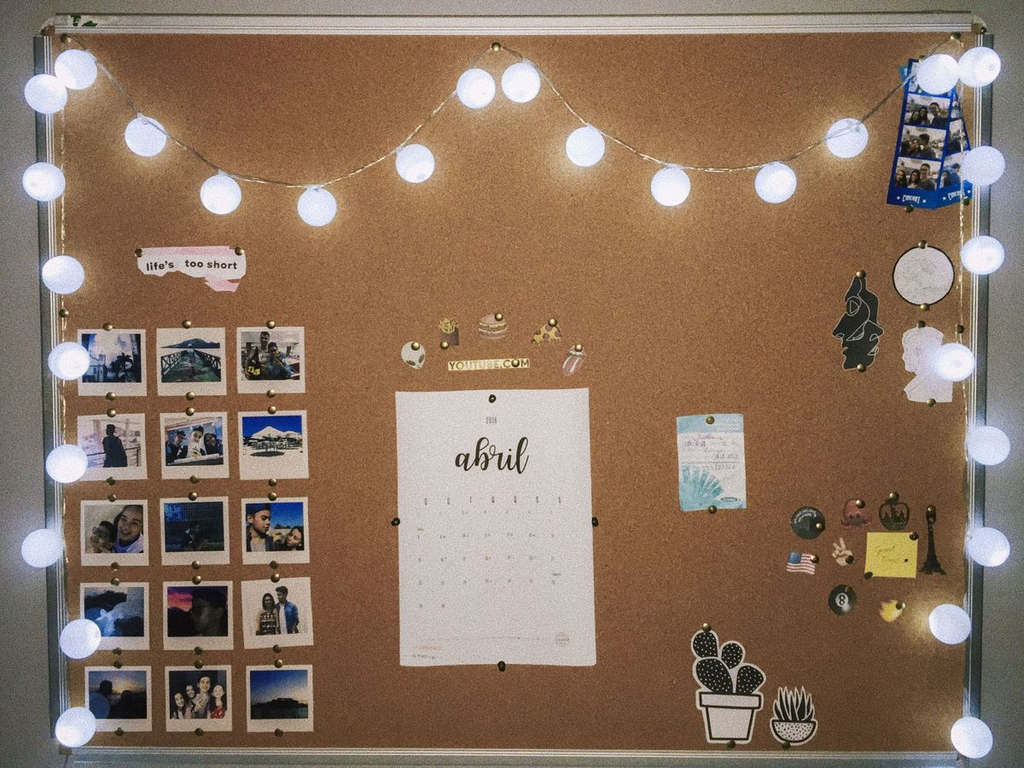
Combining the ribbon-grid technique with a string light border on the same board gives you the organizational slots of the ribbon grid and the warm ambient glow of the lights in one setup, which is more than either idea does on its own.
It takes a bit more planning to route the lights around the ribbon without tangling, but it’s one of the more complete “does everything” cork board builds on this list.
What I’d Actually Build First
If I were setting up a dorm cork board from scratch again, I’d start with a fabric-covered base — since it’s the cheapest single upgrade that changes how the whole board looks — and then layer in a ribbon grid on top of that fabric for the organizational structure.
Everything else, the photos, the goal list, the postcards, can get added in over the semester as you actually accumulate things worth pinning up.
The real lesson from watching my roommate’s board evolve over a full year, versus my own that stayed basically empty after week two, is that the best college cork board ideas are the ones you actually keep adding to.
A board that’s fully “done” on move-in day is usually the one that gets ignored by October. Leave room for it to change.


Leave a Reply