
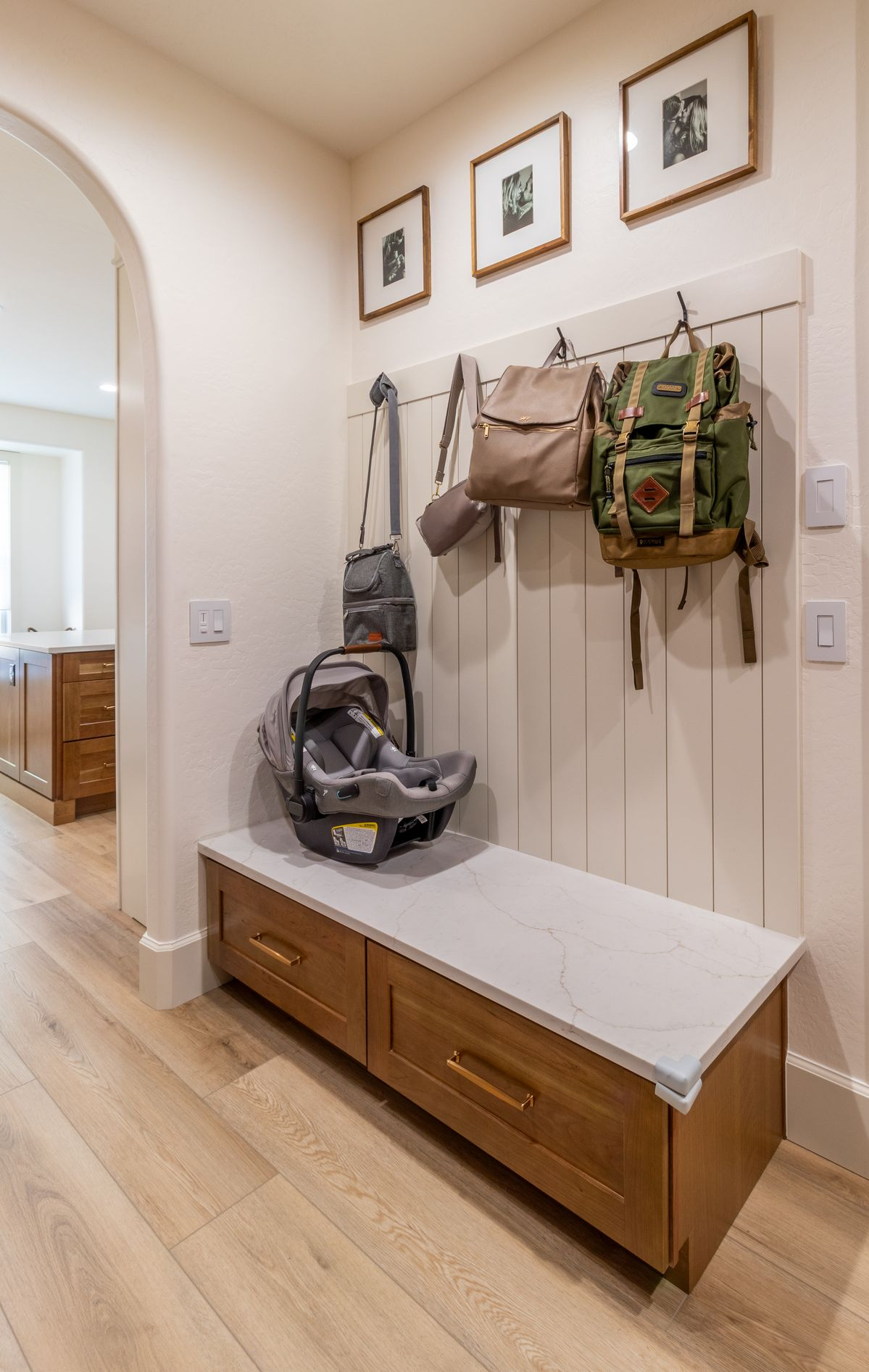
For two years, my kids’ backpacks lived on my kitchen chairs.
Not because I liked it — because every “cute” backpack storage solution I tried either couldn’t hold the weight of a fully-loaded elementary school backpack or required drilling into a rental wall I wasn’t allowed to touch.
The system that finally worked wasn’t the prettiest one on Pinterest; it was the one that survived being slammed onto a hook by an eight-year-old running late.
If you’re dealing with backpacks taking over your entryway, your kids’ room, or your own closet as a college student in a shared dorm, this list is organized by situation because “backpack storage” means something completely different depending on whether you’re managing one adult commuter bag or four kids’ backpacks that all need to be found in the same six minutes every morning.
I’ve tested a chunk of these myself, my sister has three kids and has tested the rest, and a few came from parents in my neighborhood group who’ve clearly been through the same 7:45am scramble I have.
Whatever your setup, the goal here isn’t Pinterest-perfect — it’s a system nobody has to think about by the second week.
For Renters Who Can’t Drill Into Walls
1. Command Hook Rated for Real Backpack Weight

Not all Command hooks are created equal, and this is the mistake that ends most renters’ backpack storage plans. The small decorative ones are rated for maybe 3-5 pounds — a loaded elementary school backpack with a laptop and a water bottle can easily hit 12-15 pounds.
Look specifically for the “Large” or “Utility” rated hooks, which hold up to 7.5 pounds each, and use two hooks per heavy backpack if you’re at all worried.
Pro tip: Command hooks need 24 hours to fully cure before you hang anything heavy — hanging a backpack the same day you stick the hook up is the single most common reason people think Command hooks “don’t work.”
2. Over-the-Door Hook Rack

An over-the-door rack with 4-6 hooks fits on the back of a closet or bedroom door and holds several backpacks without a single hole in the wall.
I tried a cheap wire one first and it bent under the weight of two backpacks within a week — spend the extra $10-15 for one with a solid bar rather than thin wire hooks.
3. Tension Rod Coat Rack in a Closet

A tension rod mounted inside a closet, about a foot below the existing closet rod, gives you a second horizontal bar specifically for backpacks and bags without any hardware at all.
This is one of those ideas that sounds too simple to work, but it holds up fine as long as you buy a rod rated for at least 20-25 pounds total.
4. Freestanding Coat Tree Near the Door

If wall space is the actual constraint (a lot of small entryways just don’t have a clear stretch of wall), a freestanding coat tree with multiple hook levels solves the “renter can’t drill” problem completely, and it moves with you.
Look for one with a weighted base — the lightweight ones tip over the moment a loaded backpack gets hung off-center.
For a Dedicated Entryway or Mudroom
5. Wall-Mounted Backpack Hooks at Kid Height
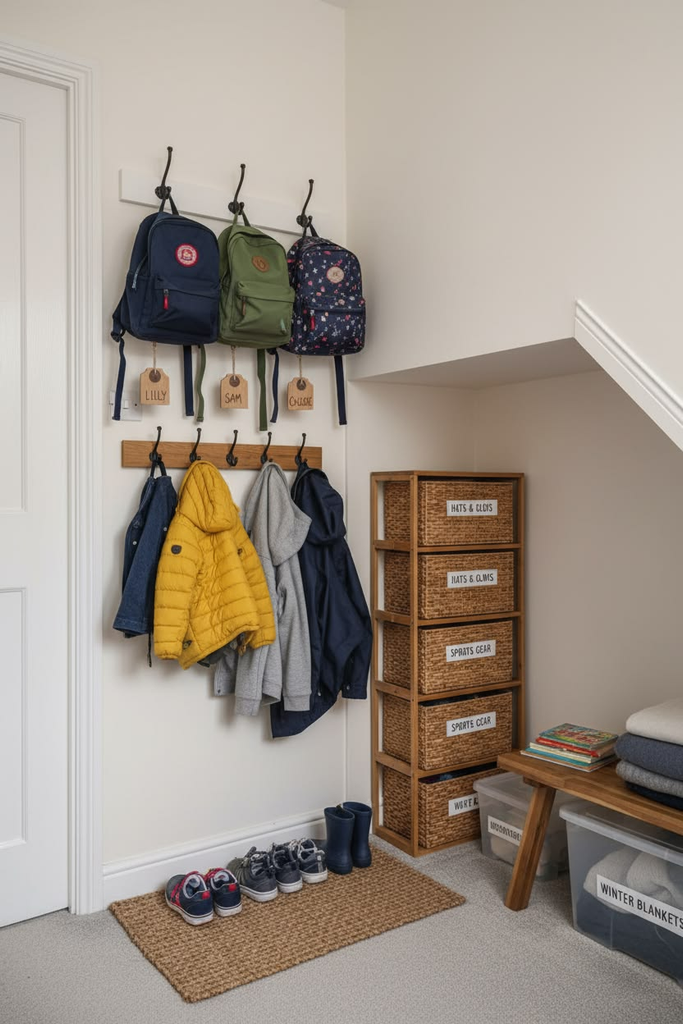
If you have kids and you’re mounting hooks permanently, the single biggest factor in whether they’ll actually use them is height. Mount hooks at a level your kid can reach without help — not at adult shoulder height “so it grows with them.”
My neighbor Teresa told me she remounted her hooks three inches lower after a month of her son just dropping his bag on the floor under a hook he couldn’t quite reach, and it fixed the problem overnight.
6. A Bench With Storage Underneath, Hooks Above
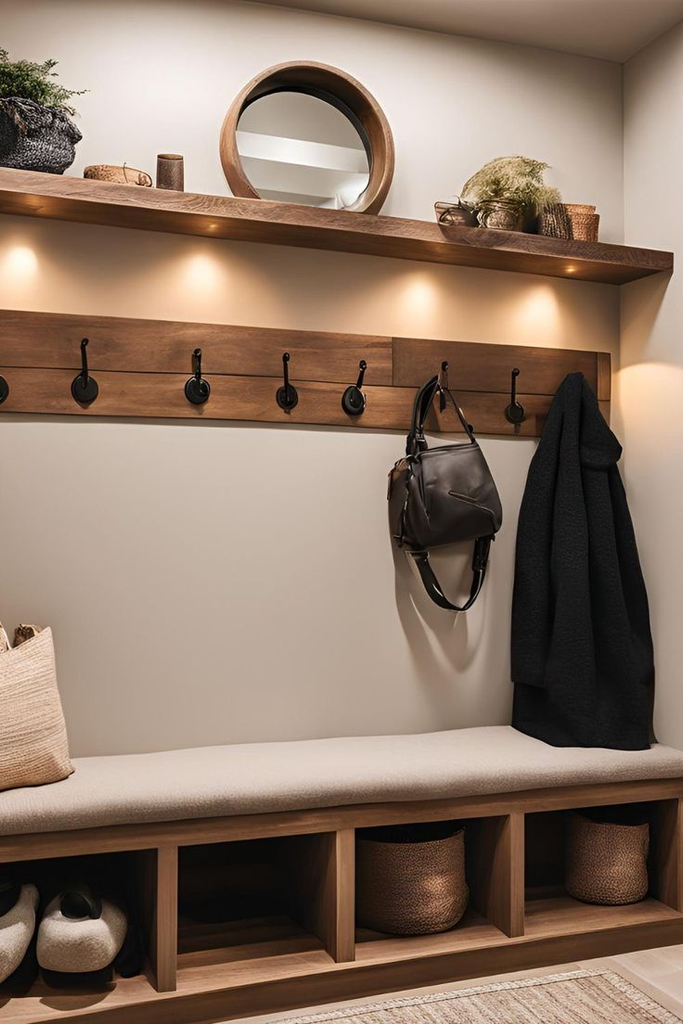
This is the classic mudroom setup for a reason — it works. A bench gives kids somewhere to sit while they put on shoes, storage underneath handles shoes or off-season gear, and hooks above hold the backpacks.
If you’re buying new, look for a bench with cubbies rather than a single open shelf underneath — the cubbies force some organization that an open shelf doesn’t.
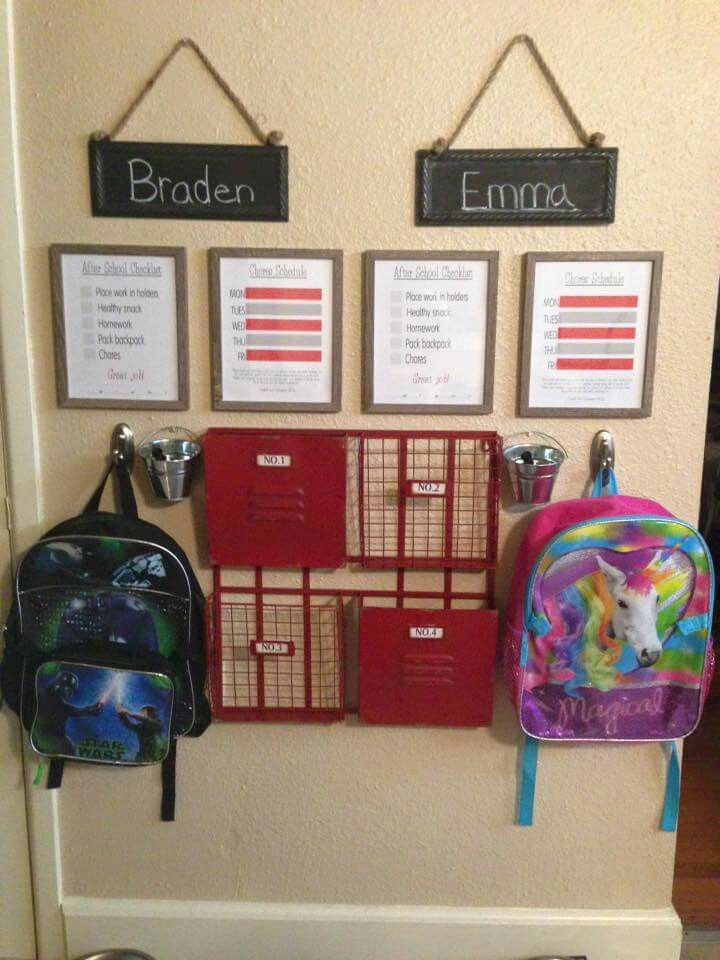
7. Assign One Cubby or Hook Per Person, Not Per Backpack

If you have more than one kid, the thing that actually prevents backpack chaos isn’t more storage, it’s assigned storage.
A label with each kid’s name over their specific hook or cubby cuts down on the “that’s not my spot” arguments more than any organizational product will.
8. A Slim Rolling Cart for Narrow Entryways
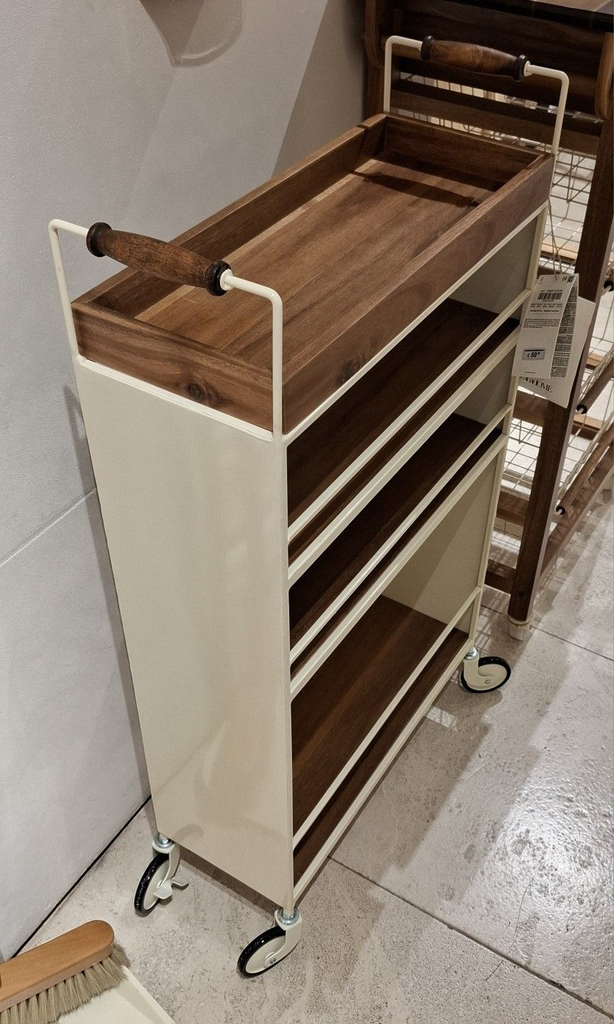
If your entryway is too narrow for a bench, a slim rolling utility cart (the kind with 2-3 tiers) can hold backpacks on hooks mounted to its side, plus shoes or gear on the shelves, and it rolls out of the way when you need the floor space.
This is the option I’d actually recommend for a true hallway-only entryway with no wall space to spare.
For Kids’ Bedrooms
9. A Hook Behind the Bedroom Door
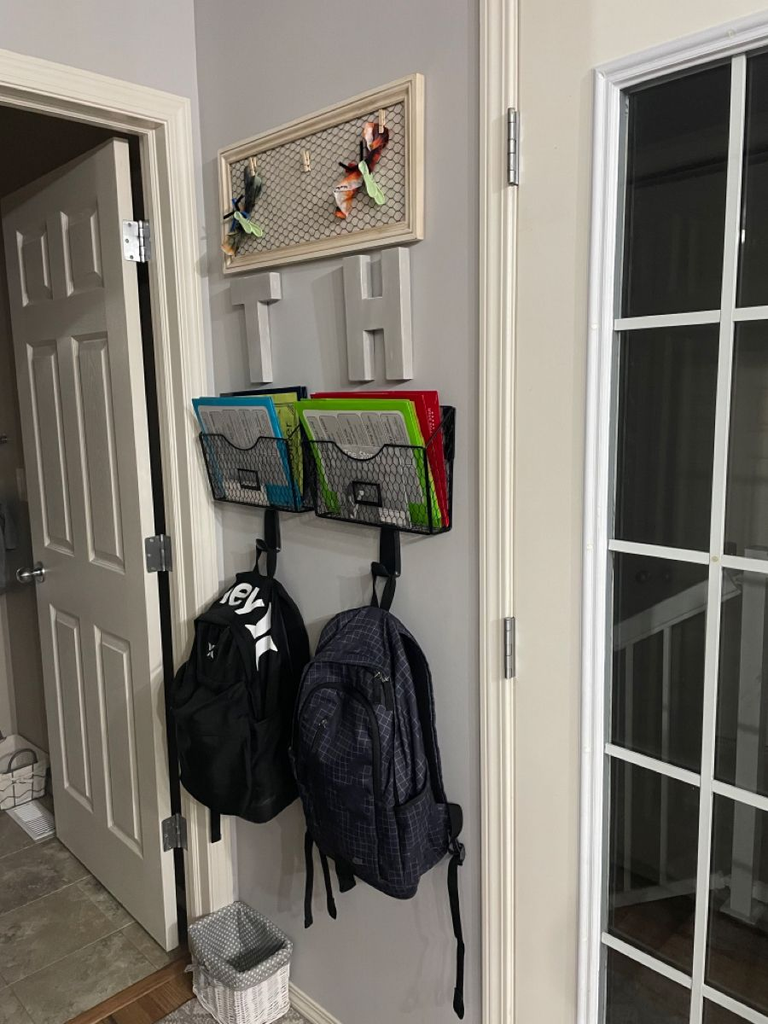
If backpacks are ending up on bedroom floors instead of the entryway, sometimes the fix is accepting that’s where they’re going to live and putting a sturdy hook behind the bedroom door instead of fighting it.
This solved a problem in my house that no amount of entryway systems fixed, because my kid’s actual habit was dropping the bag the second they got to their room, not at the front door.
10. Closet Rod Extender for a Second Hanging Level

A closet rod extender (the kind that clips onto an existing rod and hangs down) creates a lower level specifically for a backpack, keeping it off the closet floor without taking up any hanging space for clothes. This is a $10-15 fix that solves a real space problem in a shared or small kids’ closet.
11. A Fabric Wall Organizer With a Backpack-Sized Pocket
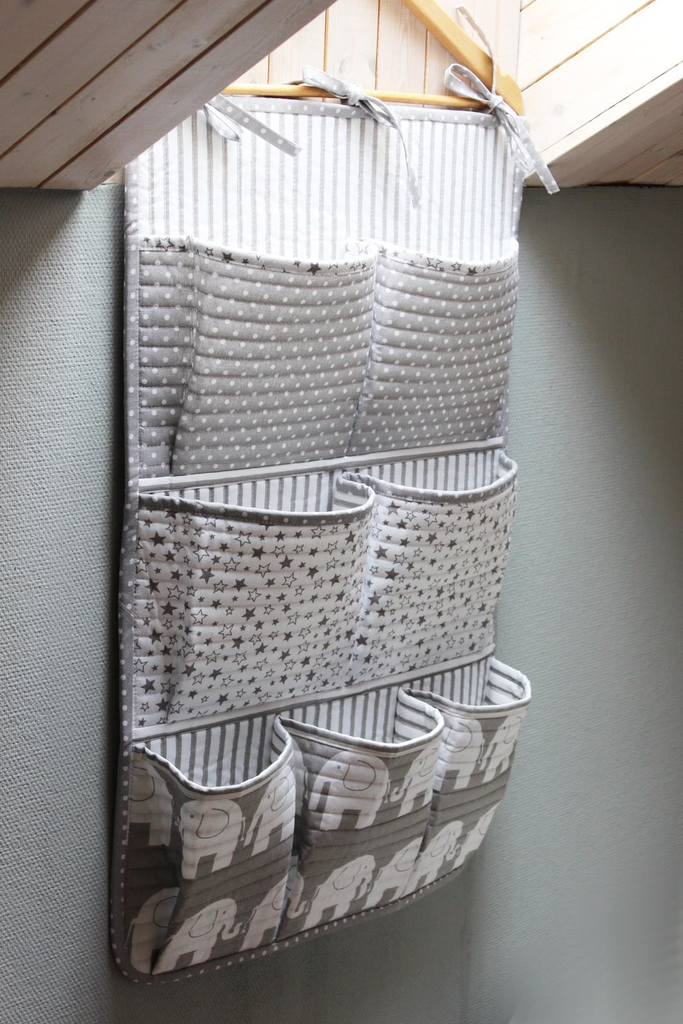
Fabric wall organizers built for over-the-door shoe storage often have pockets big enough for a backpack in the bottom rows, and mounting one gives you backpack storage plus room for smaller items like water bottles and lunch boxes in the smaller pockets above.
This only works with lighter bags, though — a fully loaded backpack stretches the fabric pockets out fast.
For College Dorms and Shared Spaces
12. Over-the-Door Hooks Specifically for Lofted Beds

Dorm rooms almost always have a lofted or bunked bed, and the space under it is usually already full, so backpack storage in a dorm usually has to happen vertically.
An over-the-door hook, or a hook clipped directly to the bed frame if your dorm allows it, keeps the backpack off a desk chair that’s otherwise doing double duty as your only storage surface.
13. A Hanging Closet Organizer With a Reinforced Bottom Shelf

Standard hanging closet organizers aren’t built for backpack weight, but a few brands make a reinforced version with a stiffer bottom compartment specifically for bags or shoes. If your dorm closet is tiny, this gets a backpack off the floor without eating any of your limited shelf space.
Pro tip: Check the weight rating on the specific compartment, not just the whole organizer — a lot of these are rated for the top shelves but not reinforced at the bottom where a backpack would actually sit.
14. Under-Bed Storage With a Dedicated Bin for Bags
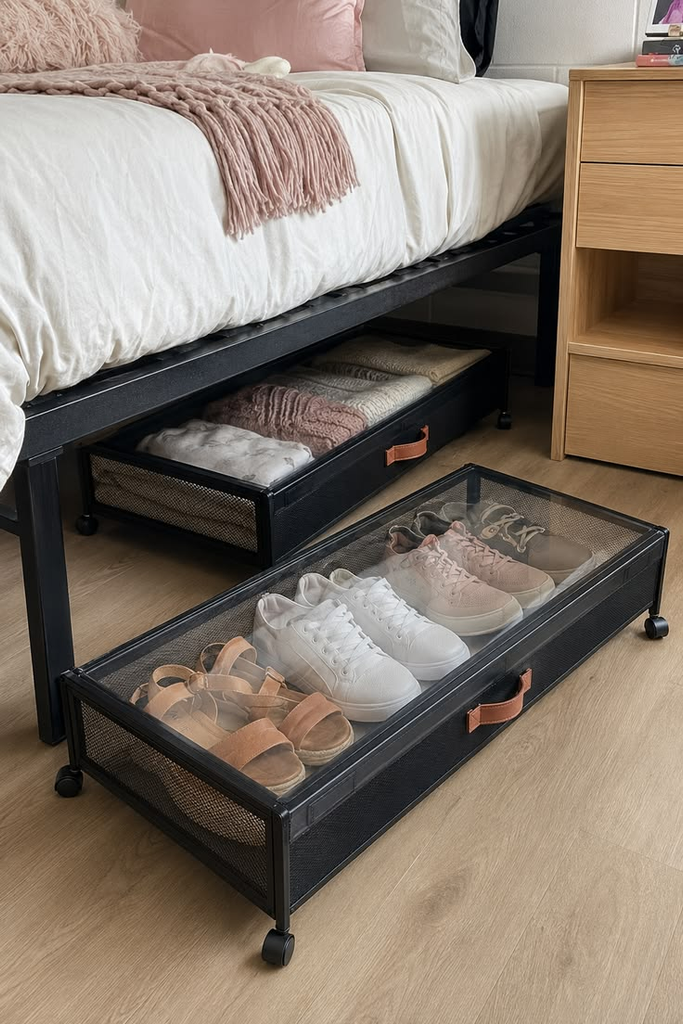
If your dorm bed can be raised on risers, a shallow under-bed bin specifically for backpacks (rather than mixing them in with clothes storage) keeps them from getting crushed or dirty from shoes stored in the same bin.
Label the bin if you’re sharing a room — this avoids the “is this yours or mine” confusion that happens fast in a shared 12×15 space.
For Small Apartments and Studios
15. A Slim Vertical Cabinet by the Front Door

If you have even 12-15 inches of floor space near your entry, a narrow vertical cabinet can hold hanging hooks inside the door plus a shelf or two, and it closes to hide the visual clutter entirely — which matters more in a studio where your entryway is also your living room.
I did this in my own 410-square-foot studio and it’s the single storage piece that’s made the biggest difference in how the entryway looks day to day.
16. A Wall-Mounted Shelf With Hooks Underneath

A single floating shelf with hooks mounted to the underside gives you a spot for keys, mail, or a small plant on top, with the backpack hanging below it, all in one wall-mounted piece that takes up almost no floor space.
This is a good middle-ground option between a full bench setup and a single bare hook.
17. Ottoman With Hidden Storage for Off-Season Bags
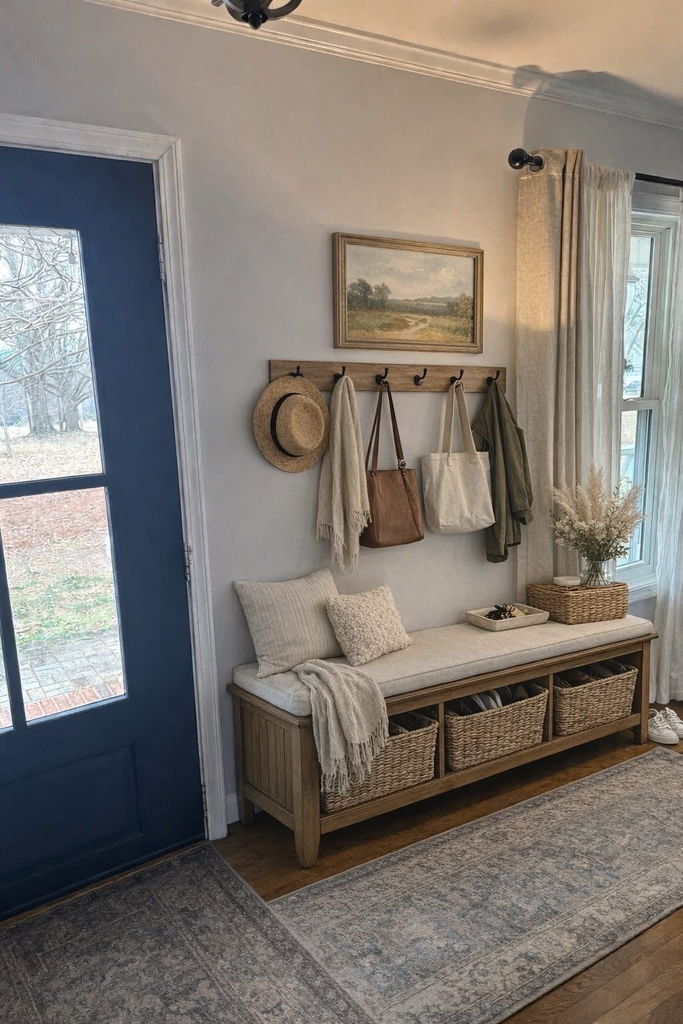
If you own multiple bags — a work backpack, a gym bag, a travel backpack — but only use one at a time, a storage ottoman near the entry keeps the ones you’re not using out of sight, and doubles as extra seating in a small space that doesn’t have room for a dedicated bench.
18. A Pegboard Wall for Full Customization
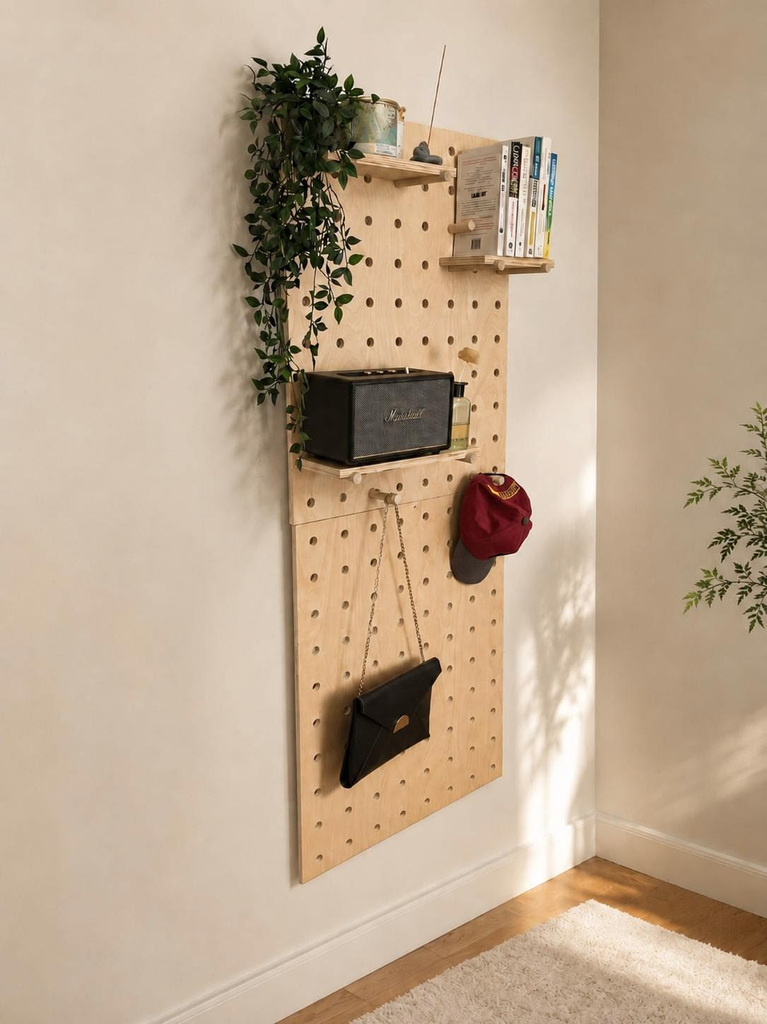
A pegboard mounted in an entryway or closet lets you configure hooks, small shelves, and baskets exactly to your space, and you can rearrange it as your needs change without new holes every time.
This takes more setup time than any other option on this list, but it’s the most flexible if your storage needs are likely to shift.
Organization Systems That Work Alongside Any Storage Method
19. A “Landing Zone” Basket for Anything That Doesn’t Live in the Backpack

Water bottles, permission slips, library books — the stuff that comes out of a backpack but doesn’t go back to its normal spot — needs its own basket or bin near the backpack storage, or it ends up scattered across every surface in the entryway.
This single basket has probably saved me more morning arguments than any of the actual backpack hooks.
20. Color-Coding by Kid Instead of Labeling
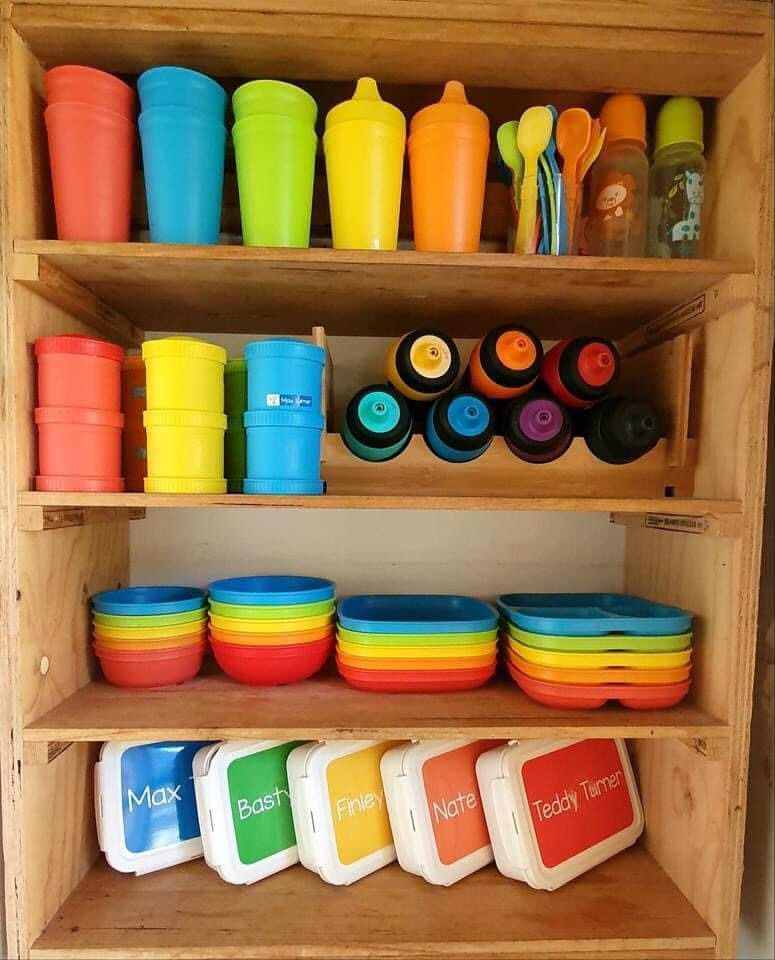
If your kids can’t read yet, or just don’t look at labels, assigning each kid a color (a colored hook, a colored bin, a strip of colored tape) works faster than a name label because it’s a visual match, not a reading task, especially during a rushed morning.
21. A Chalkboard or Whiteboard Above the Backpack Station

A small whiteboard mounted near the backpack hooks for reminders — permission slips due, early dismissal days, what’s for lunch — keeps that information where it actually gets seen, right as the backpack is being grabbed, instead of buried in a group text you read the night before and forget by morning.
22. Empty the Backpack Before It Goes on the Hook, Not After
This isn’t a product, it’s a habit, but it’s the one thing that came up from three different parents I talked to for this post: unpacking lunch containers and papers before the backpack gets hung up, rather than after, prevents the backpack from sitting there for a week with a forgotten sandwich in it.
One mom in my neighborhood group put it perfectly — “the hook doesn’t fix the problem, the five-second unpack does.”
Comparing the Main Backpack Storage Types
| Storage Type | Best For | Weight Handling | Approx. Cost |
|---|---|---|---|
| Command hooks | Renters, single bags | Good if rated “Large/Utility” | $8–15 |
| Over-the-door rack | Renters, multiple bags | Moderate — check bar strength | $20–35 |
| Wall-mounted hooks | Permanent entryways, kids | Excellent | $15–40 |
| Bench with cubbies | Full mudroom setups | Excellent | $80–250 |
| Pegboard system | Flexible, changing needs | Excellent | $40–100 |
| Rolling cart | Narrow entryways | Good | $30–60 |
Two More Worth Mentioning
23. A Garage Hook System If Your Entry Is Through the Garage

If your family comes in through the garage rather than a front door, the backpack storage needs to live there instead — a simple slat wall or hook strip near the door into the house solves this, and it keeps dirty shoes and bags from ever making it into the actual living space at all.
24. Rotate Seasonal or Sports Bags Out of the Main Storage Area
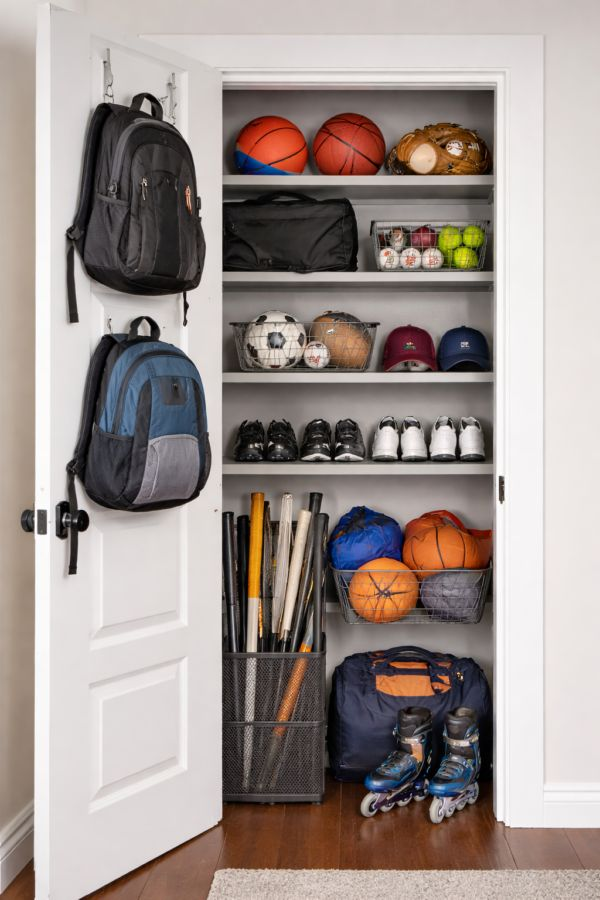
If backpack storage is getting crowded with gym bags, sports equipment bags, or travel backpacks that aren’t in daily use, moving those to a closet or garage bin and reserving the main hooks strictly for daily-use backpacks keeps the main system from becoming cluttered with bags nobody’s grabbing every morning.
Where I’d Start If I Were Setting This Up From Scratch
If I were solving this from zero today, I’d start with properly-rated hooks at the right height and a single landing-zone basket — that combination fixes about 80% of the actual chaos, and it’s under $30 total.
Everything else on this list — the bench, the pegboard, the color-coding — is worth adding once you know exactly where the system is still breaking down, which for most households turns out to be a lot simpler than the full mudroom builds you see online.


Leave a Reply