
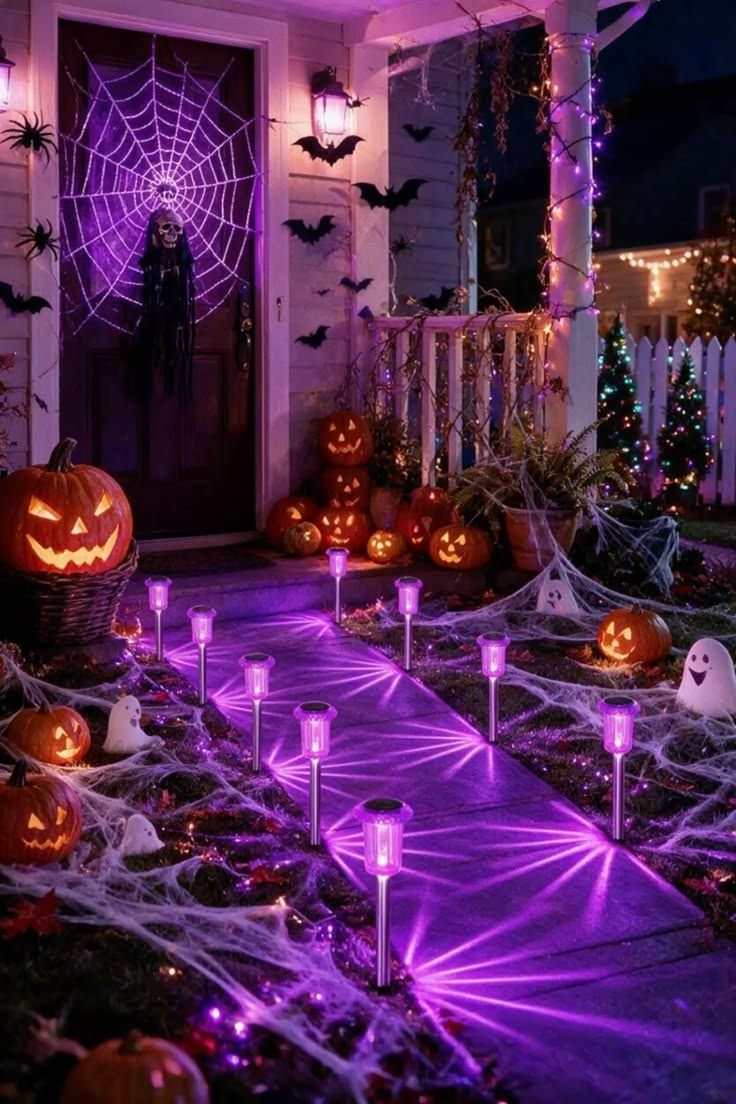
Everyone decorates the porch. Almost nobody decorates the actual path leading up to it, which is honestly a waste, because the walkway is the part every single trick-or-treater and neighbor physically walks through — it’s not something they glance at from the sidewalk, it’s something they experience for ten to fifteen seconds up close.
I didn’t think about this until my neighbor Dana did a five-minute walkway with fabric ghosts hanging on fishing line at kid height, and it got more comments than my entire elaborate porch setup that year.
So this list is specifically about the walkway itself — the stretch of path, driveway, or front steps between the sidewalk and your door — not the porch or the whole yard, which I’ve covered elsewhere.
A good Halloween walkway does two jobs at once: it sets the mood before anyone reaches your door, and it needs to actually be safe to walk on in the dark while wearing a costume with limited visibility, which is a real design constraint most decoration lists ignore completely.
I’ve split these by what you’re actually trying to achieve — lighting first, because it matters more than anything else here, then budget builds, safety-first approaches for high-traffic streets, and a few bigger walkway transformations if you want to go further.
Lighting Ideas for Your Halloween Walkway
This is the category that matters most and gets the least attention in most decoration guides.
1. Luminaries lining both sides of the path
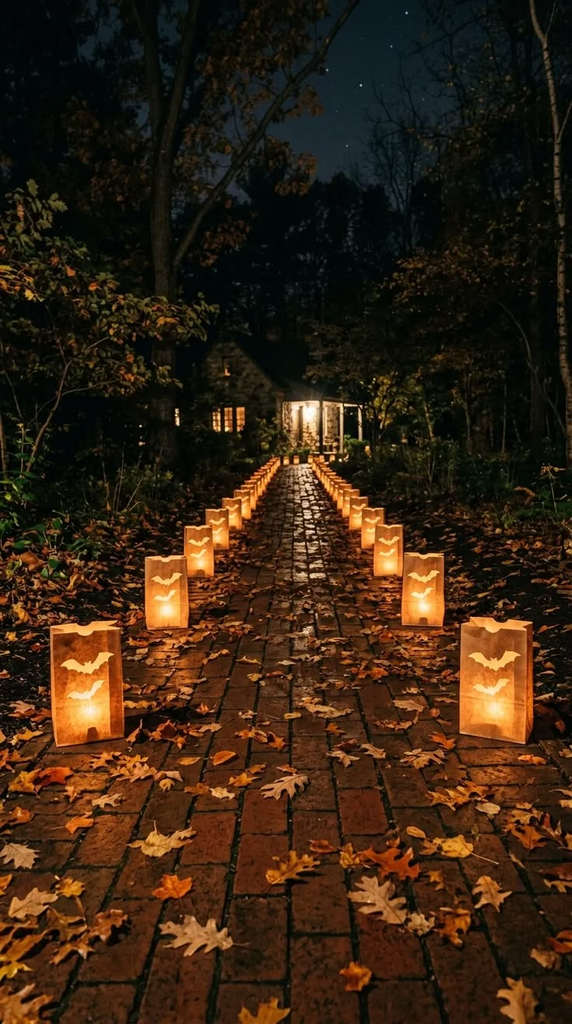
Paper bags weighted with sand and a battery tea light inside, spaced about 18 inches apart along both edges of your walkway, is one of the oldest tricks in the book because it just works.
It defines the path clearly, looks warm rather than garish, and costs almost nothing if you already have paper lunch bags around.
Pro tip: Use battery tea lights, not real candles, if there’s any wind in your area at all — I tried real candles in luminaries one year and lost four of them to a light breeze within twenty minutes of lighting them.
2. Solar path lights swapped to warm white instead of the default blue-white
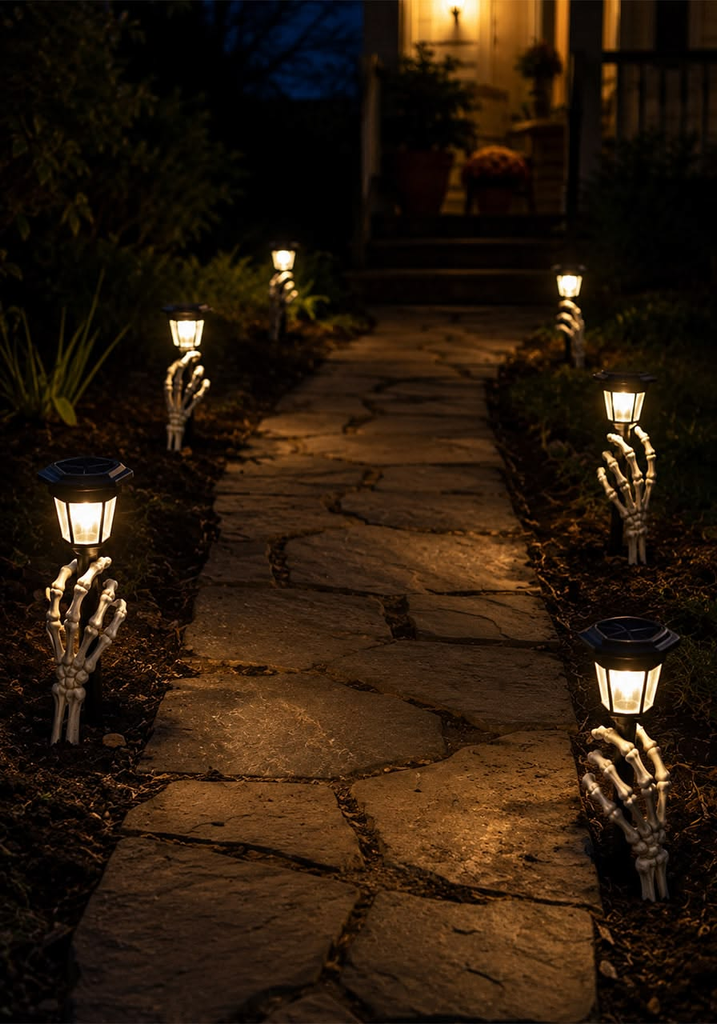
If you already own solar path lights for general landscaping, check the bulb color before assuming they’ll work for Halloween. A lot of basic solar lights run a cool blue-white that looks more like a parking lot than a spooky path.
Swapping in warm-white LED replacement bulbs (a few dollars each) instantly changes the mood without buying new fixtures.
3. Uplighting on any trees or bushes along the path
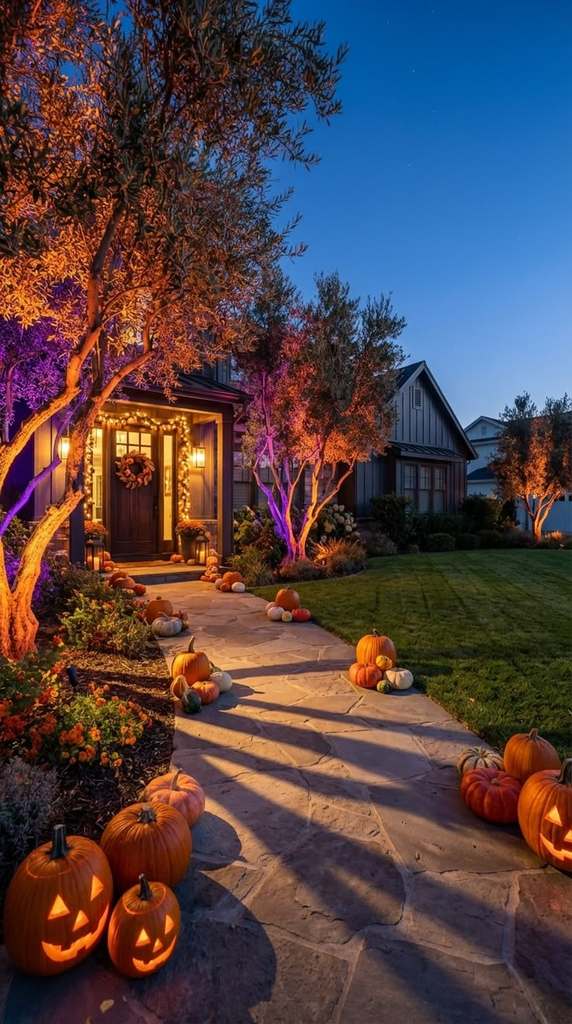
Small spike-mounted spotlights aimed up into foliage from the ground create dramatic shadows overhead as people walk underneath — this is a trick actual haunted house designers use, and it translates surprisingly well to a residential front yard for under $30 for a two-pack of battery spotlights.
4. A single dramatic light source instead of even, flat lighting
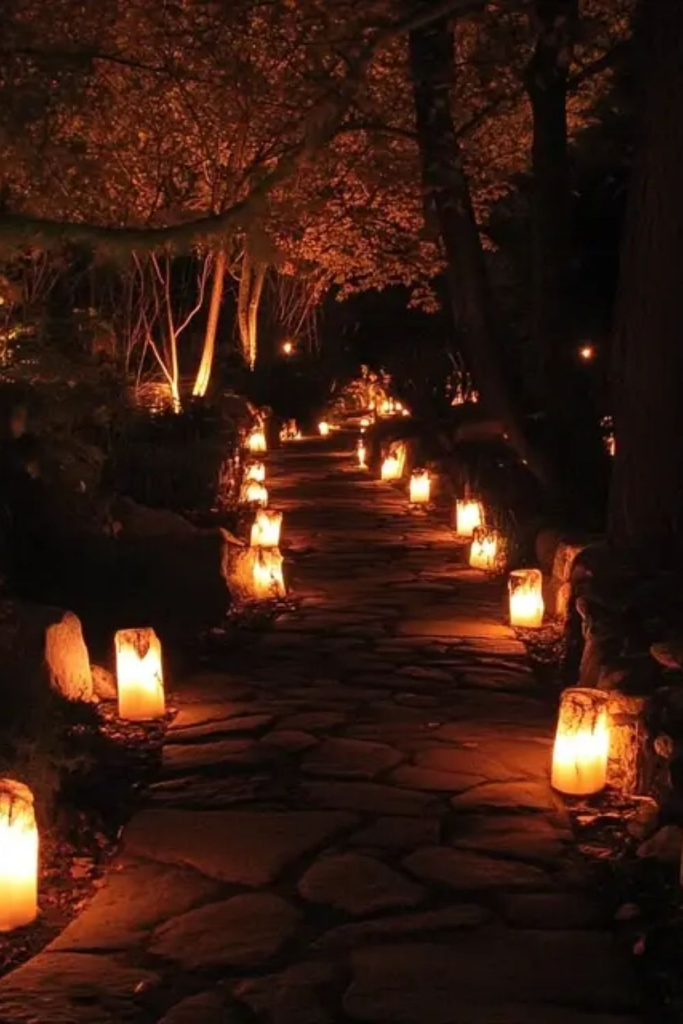
Even, bright lighting the whole way down a walkway looks safe but not atmospheric.
One stronger light source — angled from a low point, like a spotlight tucked in a planting bed — casts longer shadows and reads as far more intentional than uniform lighting strung the whole length.
Budget-Friendly Halloween Walkway Ideas
None of these need a big spend.
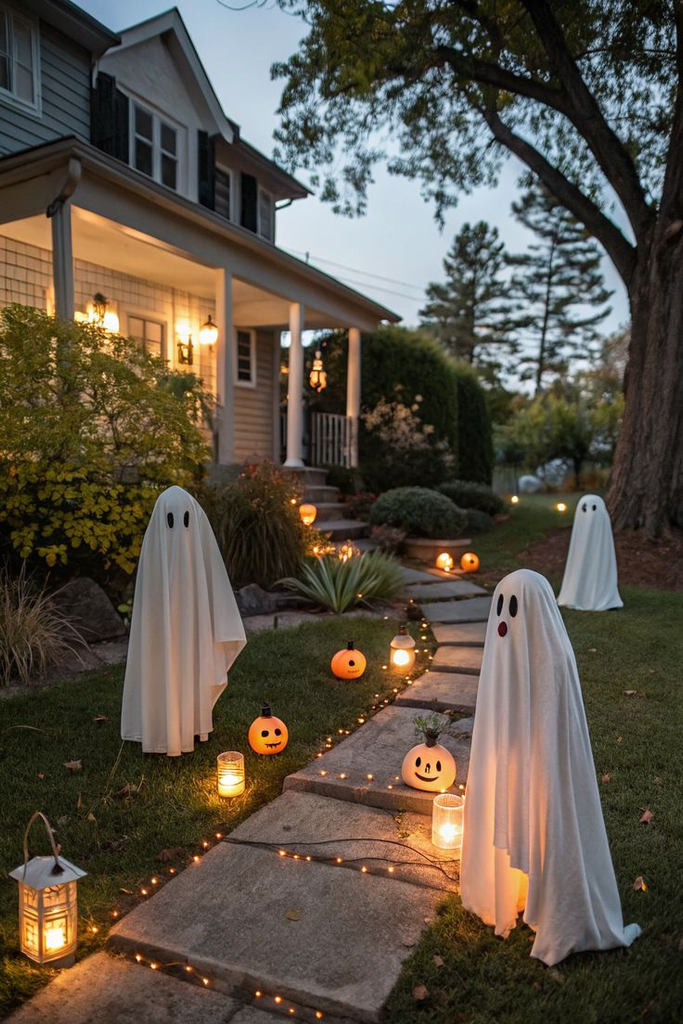
5. Fabric ghosts hung at varying heights along the path edge
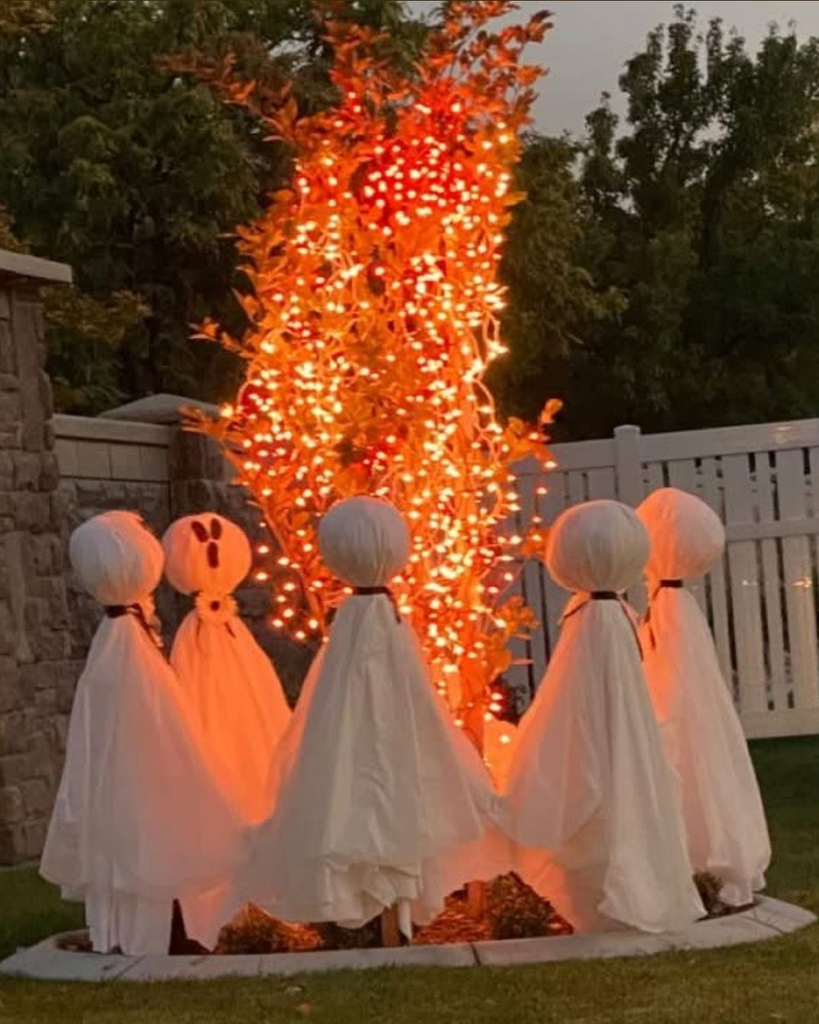
This is the idea from Dana that started this whole list for me. Cut circles of cheap white fabric or old pillowcases, stuff a small ball of newspaper or a styrofoam ball for the head, and hang them from a low branch, a shepherd’s hook, or fishing line strung between two stakes.
Vary the heights so some are knee-level for younger kids to notice and some are higher, and they move naturally in any breeze, which is honestly creepier than anything battery-powered.
6. Painted rocks or stones marking the path edge

If your walkway doesn’t have a hard edge already, a row of rocks painted with simple faces, spiderwebs, or “RIP” lettering marks the boundary for a few dollars in spray paint.
It also solves a genuine safety issue — defining where the walkway ends for anyone in a costume with a mask limiting their peripheral vision.
7. Repurposed string lights in orange or purple gel sleeves along the railing or path border
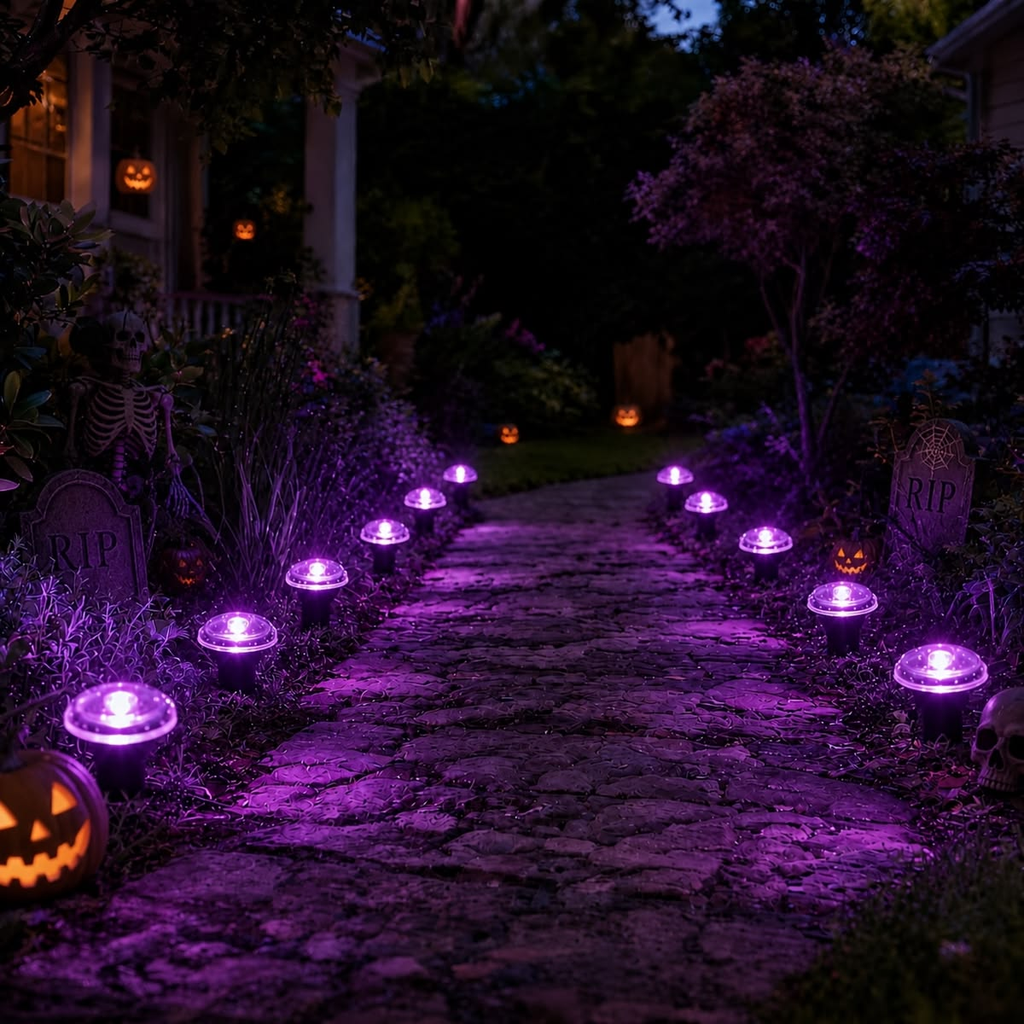
Same trick as porch lighting — gel sleeves over lights you already own, run low along the ground or path border rather than up high, gives you a Halloween-colored glow along the walkway for a few dollars instead of buying dedicated Halloween string lights.
8. A “spiderweb tunnel” using stretchy web material over a simple frame
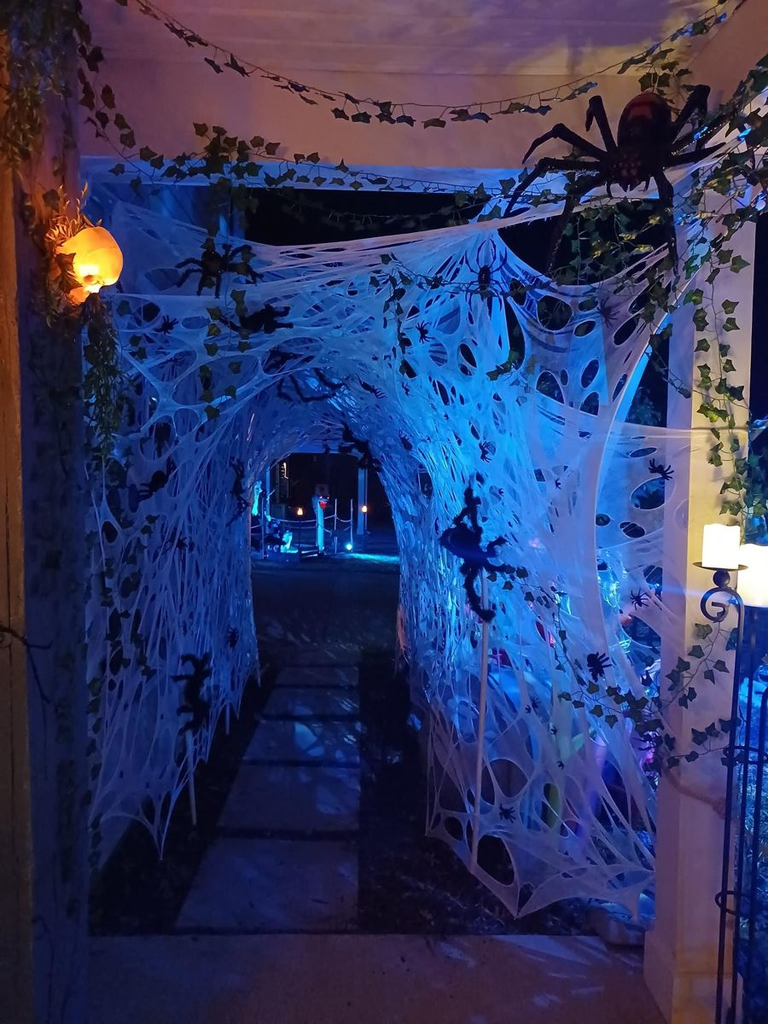
If you’ve got any kind of arch, two shepherd’s hooks with a crossbar, or even just PVC pipe bent into a hoop, stretching spiderweb material over it and setting it at the start of the walkway creates a mini “entrance” moment for basically the cost of a bag of stretch webbing.
Pro tip: Don’t clump the webbing thick across the whole opening — pull it thin and layer it in a couple of spots instead, or it looks like a solid white sheet rather than a web once it catches porch light.
Safety-First Walkway Ideas (Important for High Foot-Traffic Streets)
If your street gets a lot of trick-or-treaters, this section matters more than the spooky stuff.
9. Clear, unobstructed walking surface as the actual priority
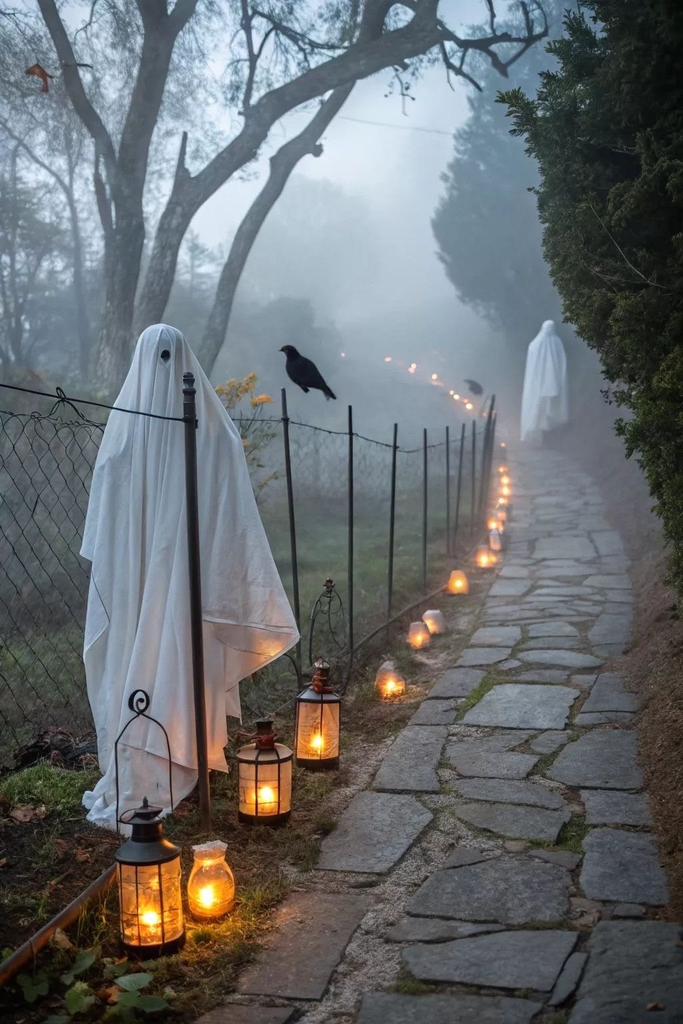
I know this isn’t exciting, but a reader left a comment on one of my older posts about her son tripping over a decoration cord on someone’s walkway and needing stitches, and it’s stuck with me every year since.
Anything with cords, stakes, or low decorations needs to be off the actual walking path, not just “mostly” out of the way — kids in costumes with masks have less peripheral vision and depth perception than you’d expect.
10. Motion-sensor lighting at the start of the walkway
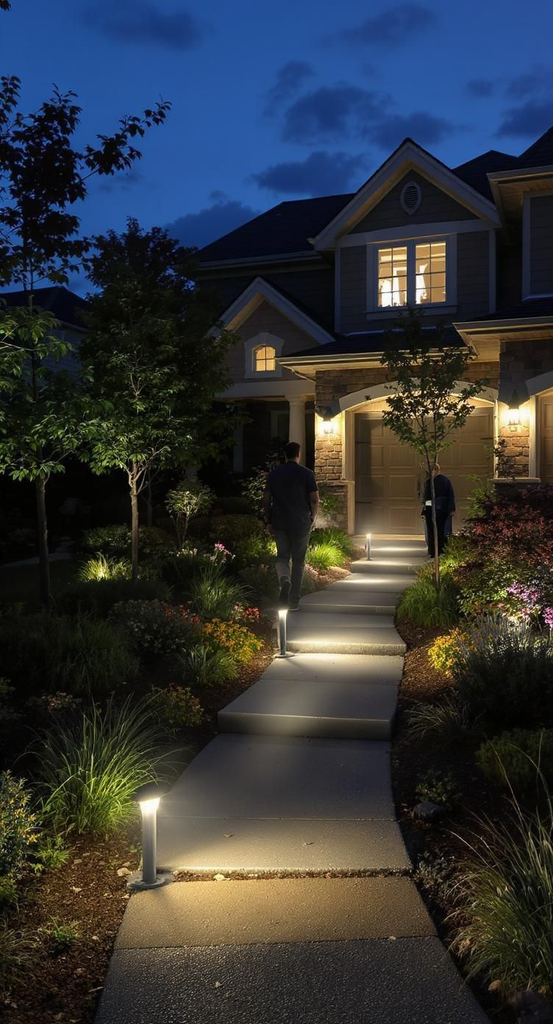
A motion-activated light at the sidewalk end of your path means it’s never fully dark when someone steps onto your property, regardless of whether your ambiance lighting is dim by design.
This is a genuinely good compromise between “spooky and dark” and “actually visible enough not to trip.”
11. Reflective tape on any steps, edging, or uneven sections
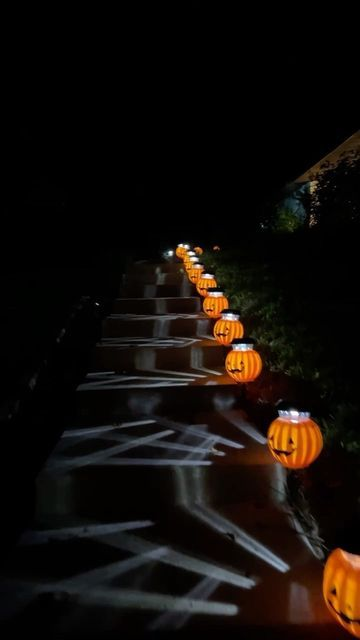
A strip of reflective tape (the kind sold for bike safety, a few dollars a roll) along the edge of steps or where your walkway has a level change catches porch light and headlights and makes an easy-to-miss hazard much more visible without looking like a caution sign.
12. Decorations placed beside the path, never ON it
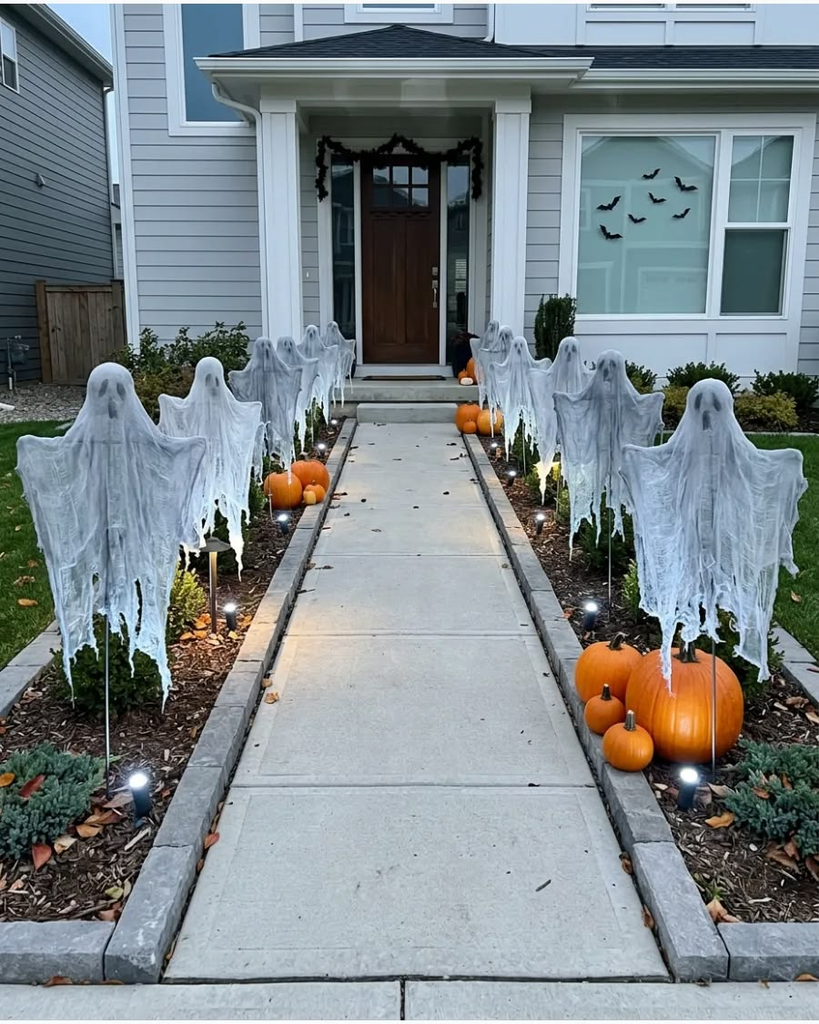
This sounds obvious written out, but it’s the single most common mistake I see walking my own neighborhood — tombstones, hay bales, and props placed directly in the walking line because that’s where there was room.
Move the path decorations to the border and keep the actual walking surface clear; it changes almost nothing about how spooky it looks and it matters a lot for safety.
Comparing Walkway Lighting Options
Since lighting is the category that matters most here, this is roughly how the main approaches stack up.
| Lighting Type | Cost | Effort to Set Up | Effect |
|---|---|---|---|
| Paper bag luminaries | Very low | Low (but done fresh each night) | Warm, classic, defines path edges clearly |
| Solar path lights (warm bulbs) | Low-moderate | Very low (set once, works nightly) | Consistent, hands-off, subtle |
| Battery spotlights/uplighting | Moderate | Low | Dramatic shadows, more “haunted” feel |
| String lights with gel sleeves | Low | Low-moderate | Colorful glow, good for longer paths |
| Motion-sensor lights | Low-moderate | Low | Safety-focused, practical |
I run a mix of solar path lights for the nightly baseline and add luminaries fresh on Halloween night itself, since luminaries need lighting each evening and I’m not doing that every night in October.
Themed & Bigger Walkway Transformations
For when you want the walkway itself to be the main event.
13. A graveyard path with staggered tombstones along both borders
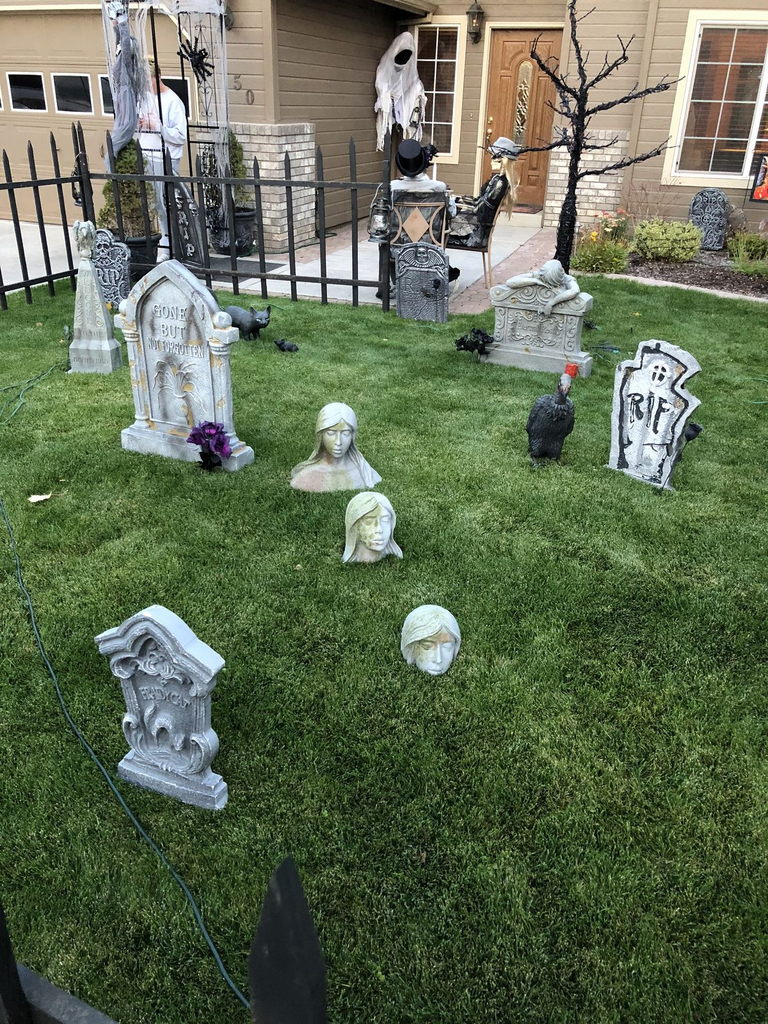
Rather than clustering tombstones in one spot in the yard, spacing 4-6 smaller foam tombstones along both edges of the walkway at slightly different angles turns the whole approach into a scene instead of just a path with decorations nearby.
Angling a few as if they’ve settled unevenly sells the effect more than a straight, even row.
14. A “creature crossing” theme with small figures peeking from the border plants
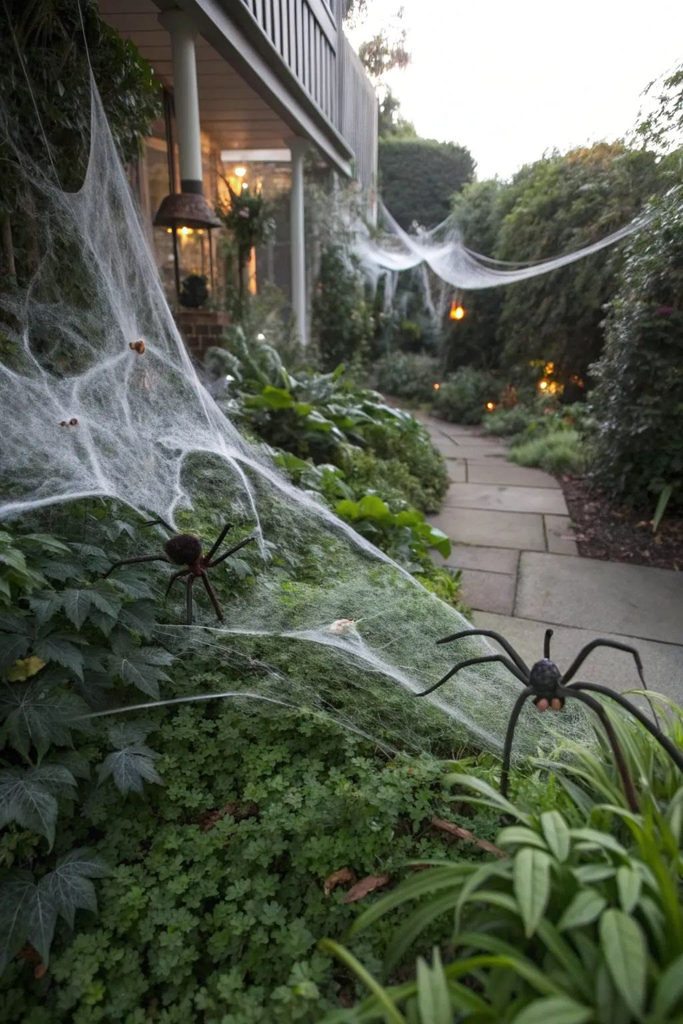
Small plastic spiders, rats, or a lurking figure tucked partially behind existing landscaping along the walkway — not out in the open — relies on the “half-seen” effect, which reads as much creepier than a fully visible prop because people’s imagination fills in the rest.
15. A color-changing or dimmable smart light strip along the path edge
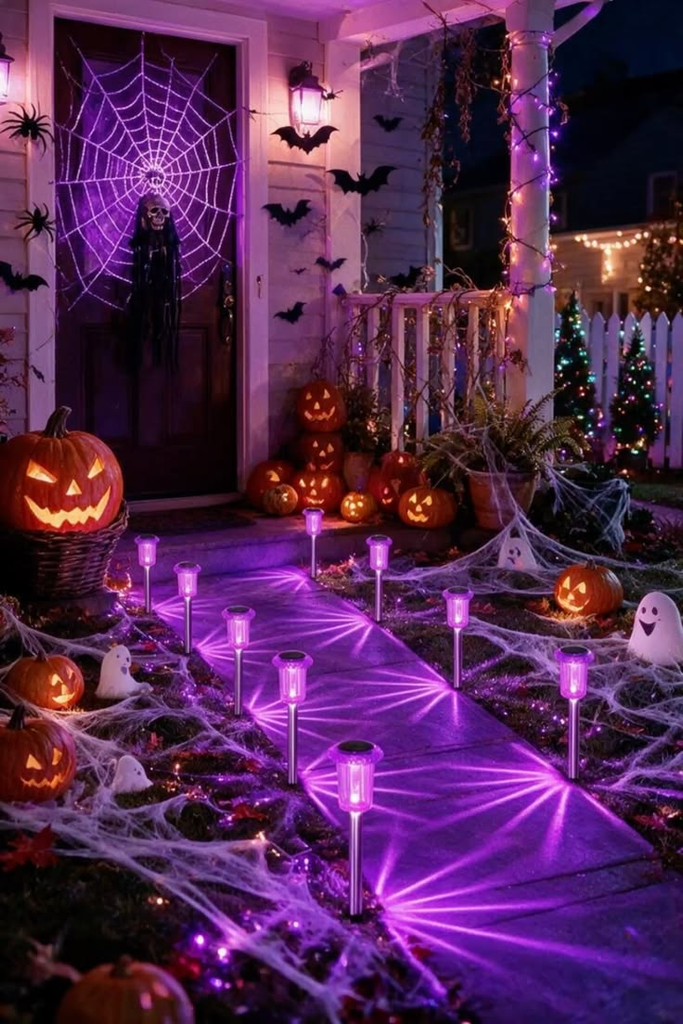
If you already have smart lighting in your house, a battery or plug-in smart light strip along the walkway border that shifts slowly between orange and purple over a few minutes creates a subtle, evolving effect rather than static lighting — this is a step up in cost but genuinely different from anything static on this list.
16. Fog rolling low across the walkway using a small fog machine or dry ice
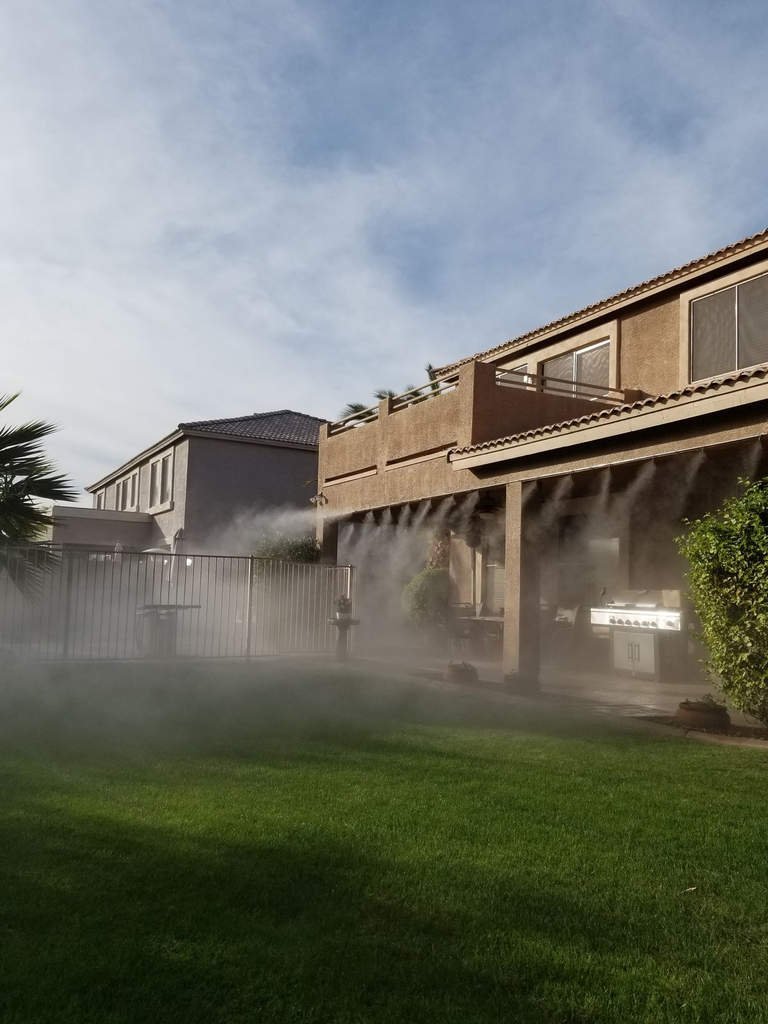
A small tabletop fog machine or a cooler of dry ice and warm water placed just off the path lets fog drift low across the walkway itself as people approach, which is a much stronger effect than fog sitting in the yard where nobody’s actually walking through it.
Keep any dry ice handling to gloves-on, outdoor-only, and away from where trick-or-treaters would touch it directly.
17. A “sound zone” partway down the path
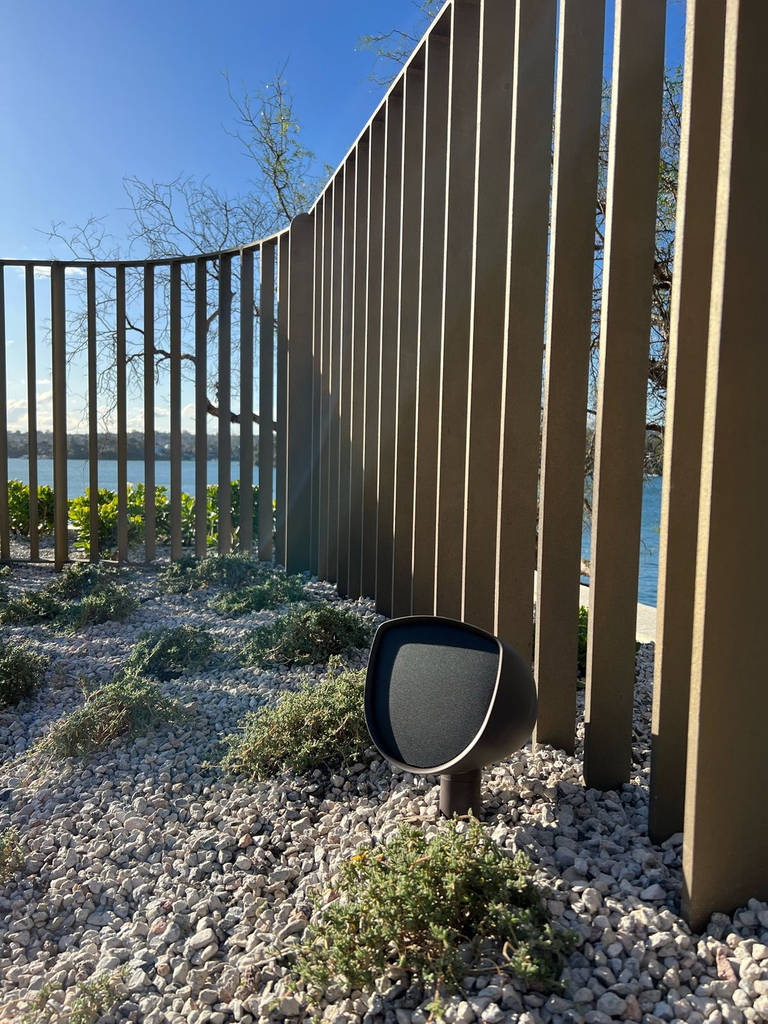
A single motion-activated speaker halfway down the walkway, playing a low ambient sound rather than a jump scare, creates a moment partway through the approach instead of the whole experience happening only at the door.
Keep the volume low and the sound atmospheric — the goal is mood, not startling anyone into dropping their candy bucket.
18. Faux tombstone “path markers” with dates or short epitaphs
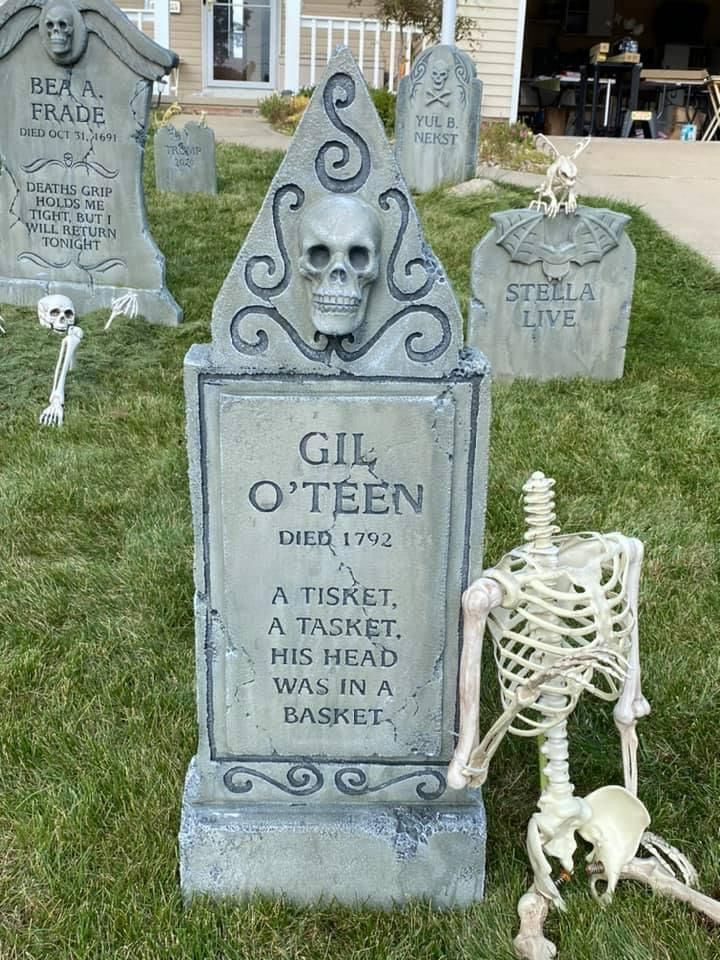
Instead of generic “RIP” tombstones, mini markers with short, mildly funny epitaphs (nothing elaborate — a few words) spaced along the path give people something to actually read as they walk, which slows the pace down in a good way and makes the walkway feel like more than a straight shot to the candy.
19. A canopy of hanging bats or spiders overhead
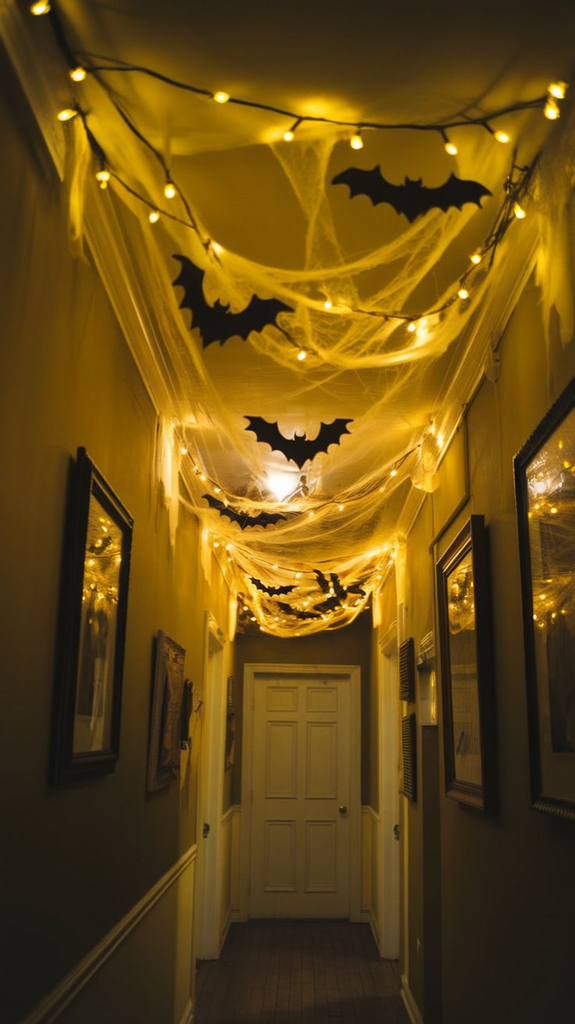
If you have any overhanging trees or can rig a simple line across the path, hanging plastic bats or spiders at head height (adjusted for adult height, not too low) adds an overhead layer to the walkway that ground-level decorations can’t achieve on their own.
20. A “before and after dark” test walk
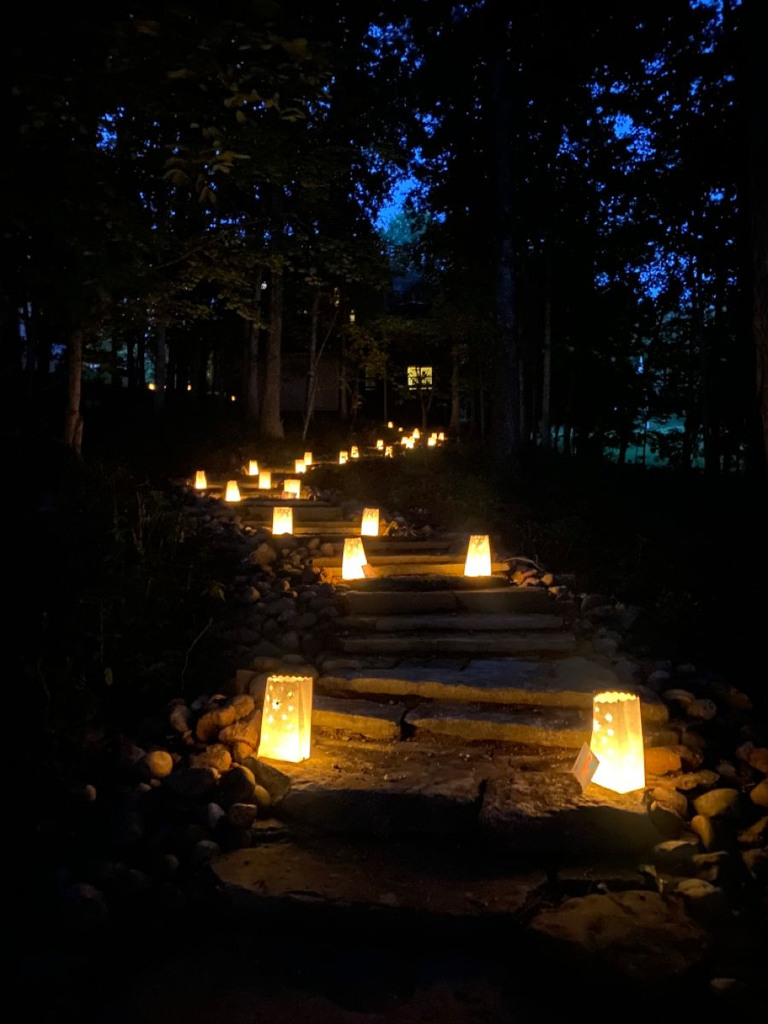
Walk your finished walkway after sunset before Halloween night itself and note anywhere it goes flat or invisible in actual dark conditions — daytime photos of a decorated walkway almost always look better than the walkway looks once it’s genuinely dark outside, because natural light is doing work that won’t be there on the night that matters.
21. Weather-proofing anything that needs to survive multiple nights
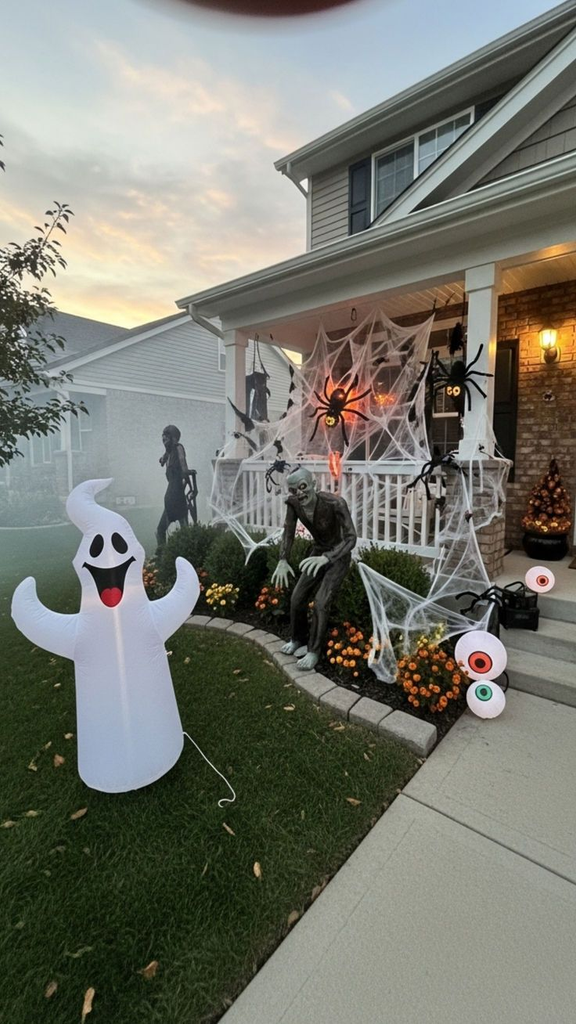
If your walkway decor is up for the whole month rather than just one night, check what’s actually rated for outdoor use versus what’s going to be a soggy mess after the first rain.
Paper luminaries, non-weatherproof fabric, and basic craft paint all degrade fast outdoors — a coat of clear outdoor sealant on painted items adds real durability for very little cost.
22. A clear “end point” marker at your door
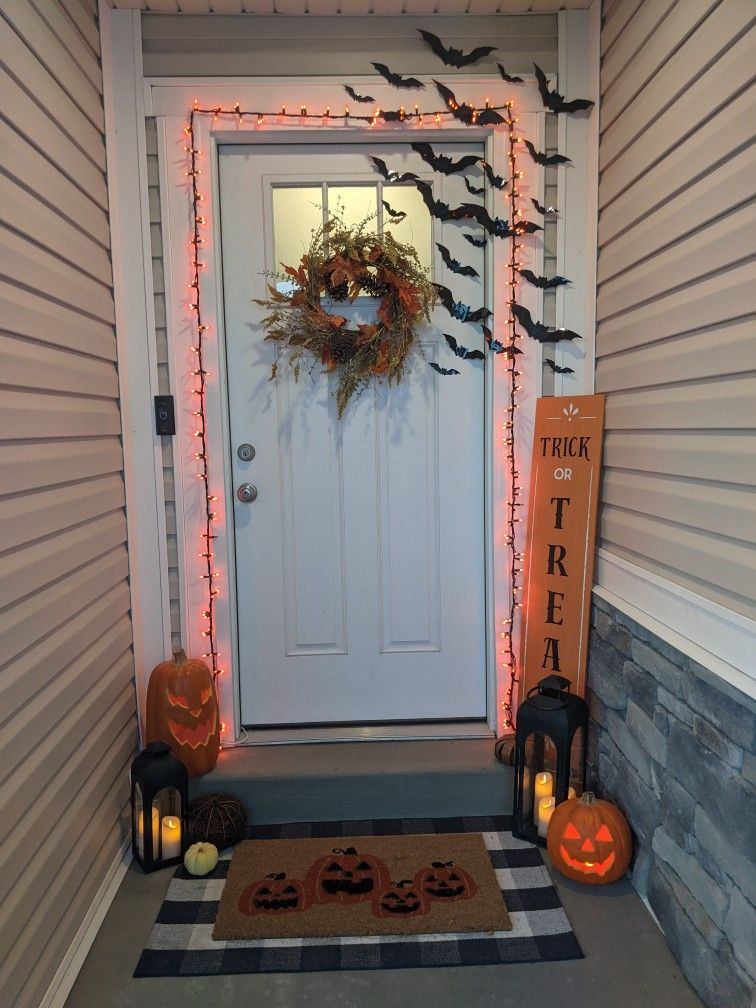
Whatever theme you’ve built along the walkway, a slightly different or brighter decoration right at the door signals “you’ve arrived” and gives the whole path a sense of destination rather than just decorations that happen to be scattered along a route.
It’s a small detail, but it’s the difference between a walkway that feels designed start to finish and one that just has stuff on it.
What This Actually Costs
The luminaries-and-painted-rocks version of this list is realistically a $15-25 investment if you’re using bags and paint you likely already have some of. Adding proper solar path lights with warm bulbs and some battery spotlights pushes you to $50-80, most of which is reusable for years beyond just Halloween.
The bigger transformations — smart lighting, fog, sound zones — are where costs climb into the $100-150+ range, but a lot of that overlaps with gear you’d use again for general outdoor entertaining, not just one night in October.
Where I’d Start If I Were Doing This Over
Lighting, without question — specifically swapping any cool-white bulbs for warm ones and adding luminaries fresh on the actual night.
I spent two years focused entirely on props and decorations scattered along my walkway before I realized the lighting was doing almost none of the atmospheric work it could be doing, and it’s the cheapest fix on this entire list relative to how much it changes the feel of walking up to your door in the dark.


Leave a Reply