
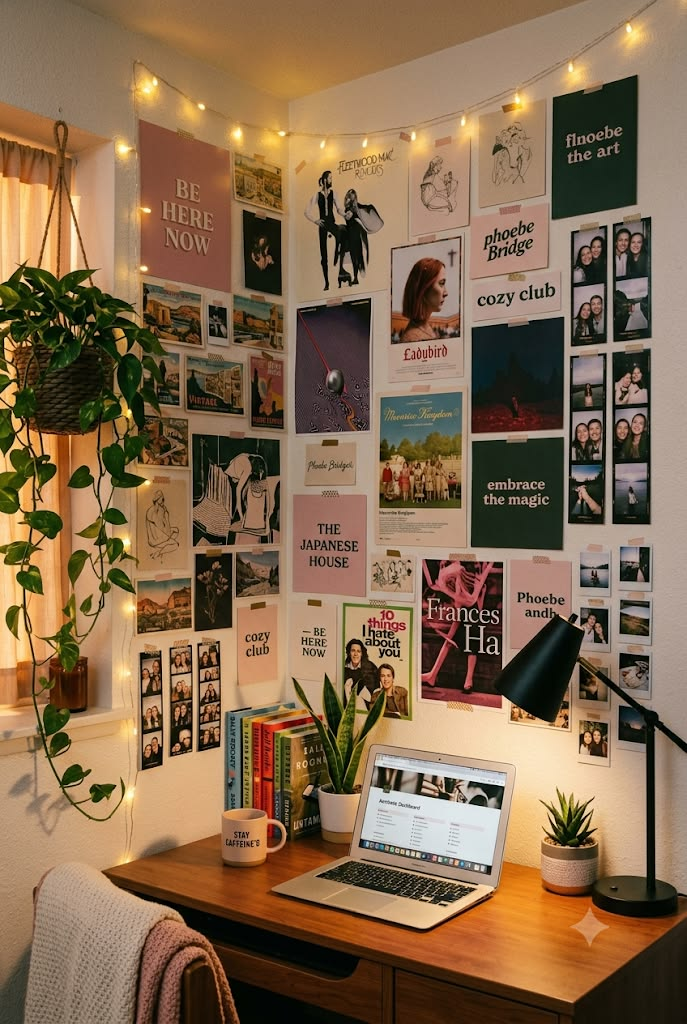
My freshman year RA did a walkthrough two weeks into the semester and pointed at a single Command strip mark on my wall — not even a hole, just a faint outline — and I genuinely thought I was going to lose part of my deposit over it.
That moment taught me more about dorm wall decor than any Pinterest board ever did: in a dorm, the decor isn’t just about what looks good, it’s about what comes off clean when you move out in May, because most schools will absolutely charge you for wall damage you didn’t think counted as damage.
Dorm wall inspo has a reputation for being all string lights and tapestries, and don’t get me wrong, both of those are on this list and both work. But the actual range of what you can do on a cinderblock or drywall dorm wall without risking your deposit is a lot wider than most “dorm decor” roundups make it look, and a lot of it is more interesting than another string-light photo wall, which — I promise — every single person on your floor is also doing.
I’m grouping these 23 ideas by what they’re actually doing on your wall — the big statement anchor, lighting, texture and dimension, functional pieces that double as decor, and themed builds — because a dorm wall usually needs one or two “big” pieces and then a handful of smaller layered ones, not 23 competing focal points.
Statement Anchors: The One Big Thing Your Wall Needs First
1. A tapestry as your wall’s main anchor

A large tapestry covers more wall space per dollar than almost anything else on this list, and it instantly gives a plain dorm wall a focal point without needing 15 smaller pieces to fill the same area.
Most dorm-approved hanging methods use small removable hooks or Command strips along the top edge, so the tapestry itself takes zero wall damage risk even though it’s the biggest visual commitment in the room.
The trade-off is that a tapestry this size can make a small dorm room feel more closed-in if the pattern is very busy or dark, so if your room is genuinely tiny, look for one with some negative space in the design rather than an edge-to-edge dense print.
Pro tip: Hang your tapestry a few inches higher than feels natural — most people center it at eye level out of habit, but hanging the top closer to the ceiling line makes the whole wall, and by extension the room, read as taller.
2. A gallery-style photo collage wall

A cluster of printed photos, arranged in a grid or a looser scattered pattern, using small photo-safe adhesive squares, turns a blank wall into something that’s genuinely yours in a way a store-bought poster can’t.
This is the one dorm wall idea that gets more personal and more valuable to you specifically over the course of the year as you add photos from actual memories made in the dorm.
My roommate freshman year, Devon, started with about 15 photos in September and had over 60 by finals week, and by the end it was the single thing everyone commented on when they walked into our room — way more than the string lights we’d also put up.
Pro tip: Use small binder clips or mini clothespins clipped onto a string of twine instead of adhesive on every photo — it lets you swap photos in and out all year without leaving a dozen sticky residue spots behind when you inevitably rearrange in November.
3. A large-scale removable poster as a single focal point

One oversized poster, rather than several smaller ones scattered around, gives a wall a cleaner, more intentional look and is genuinely easier to hang straight than trying to level five or six smaller frames.
This works especially well on the wall directly across from your bed, since it’s the thing you’ll actually see the most.
Pro tip: Poster putty works better than tape for genuinely large, heavy posters — tape alone can start to peel at the corners over a few months as the poster’s own weight pulls on it, especially in a room with any humidity from a shared bathroom nearby.
4. A vinyl wall decal in a bold shape or quote

Removable vinyl decals apply flat against the wall with essentially zero bulk, which makes them a good option if your school specifically restricts anything that protrudes from the wall (some do, for fire code reasons).
They come off in one clean peel at the end of the year when applied correctly, unlike some tape residues that can leave a faint outline.
Pro tip: Apply vinyl decals to a wall that’s been up for at least a few weeks and has settled to room temperature — applying them to a freshly painted or very cold wall right at move-in is the most common reason people report a decal not sticking well.
Lighting That Does More Than Just Look Cute
5. Warm-white string lights outlining your bed or desk area
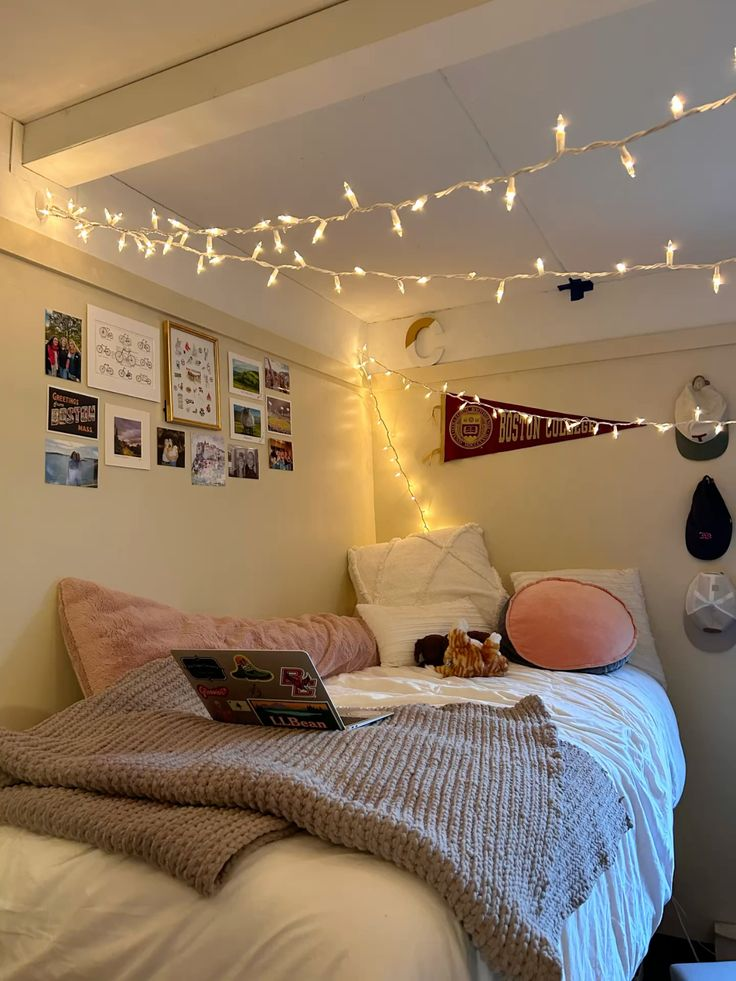
String lights along the frame of your bed or around a desk area do double duty as ambient lighting and as a decor element, and warm-toned lights specifically read as cozier than the cooler blue-white lights that were more popular a few years back.
This is genuinely one of the highest-impact, lowest-effort items on this whole list.
Pro tip: Route the lights along the wall using small adhesive clips spaced every 6-8 inches instead of just draping the whole strand loosely — a properly clipped strand looks intentional, while a loosely draped one tends to sag and look messier within a few weeks.
6. LED strip lights behind your headboard or desk shelf
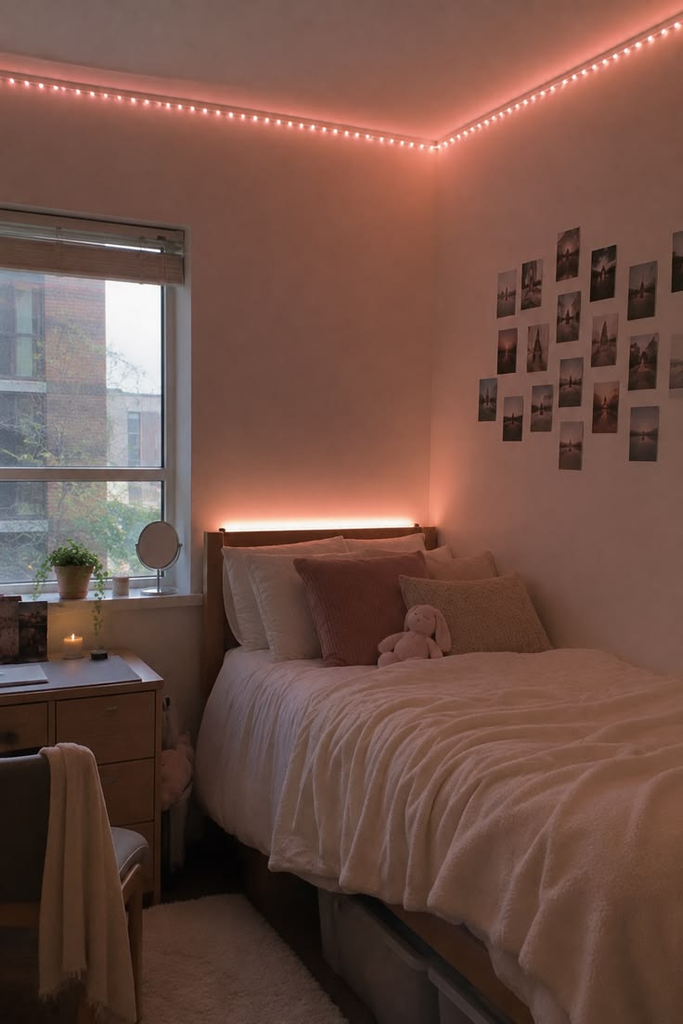
Unlike a string of individual bulbs, an LED strip creates a soft glow effect against the wall behind it rather than being a visible light source itself, which gives a completely different look — more like ambient backlighting than a strand of lights you can see.
Most stick-on versions use the same removable adhesive backing as other dorm-safe decor.
Pro tip: Buy a strip with a remote or app control that includes a dimmer, not just color-changing modes — the actual most-used feature ends up being brightness control for late-night studying versus full brightness for hanging out, not the color options that sell the product in ads.
7. A marquee-style or neon-effect LED sign
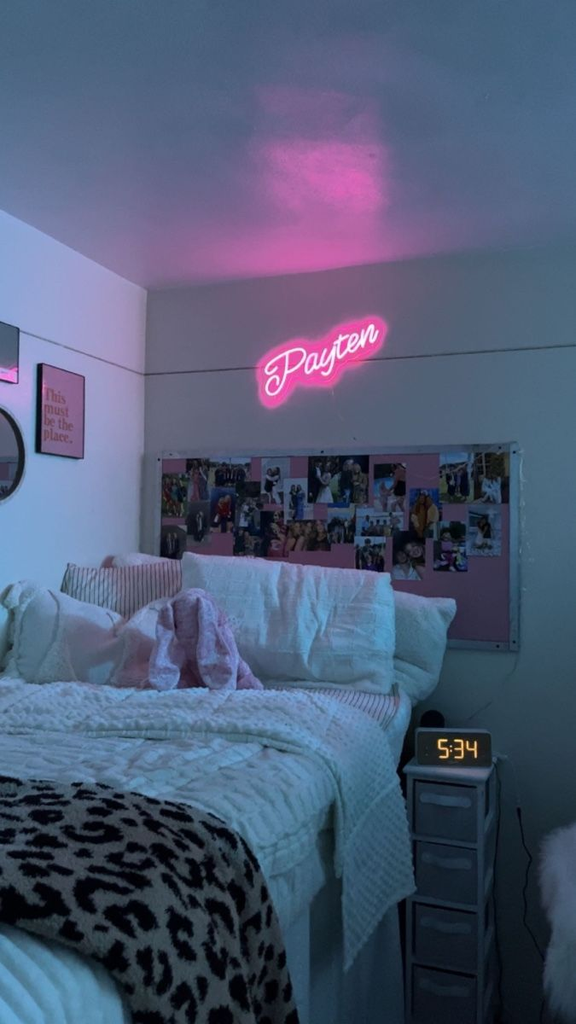
A small LED marquee letter or neon-style sign spelling out a word, initial, or short phrase gives a wall a single playful focal point without needing to fill much space.
These plug in or run on batteries, so there’s no wiring involved, and most mount with the same small removable hooks as everything else on this list.
Pro tip: Check the actual brightness level before buying if you’re sensitive to light while sleeping — some of these are genuinely bright enough to notice from across a dark room, so either get a dimmable one or plan to place it on a wall you’re not directly facing at night.
8. Star or moon-shaped fairy lights for a themed corner
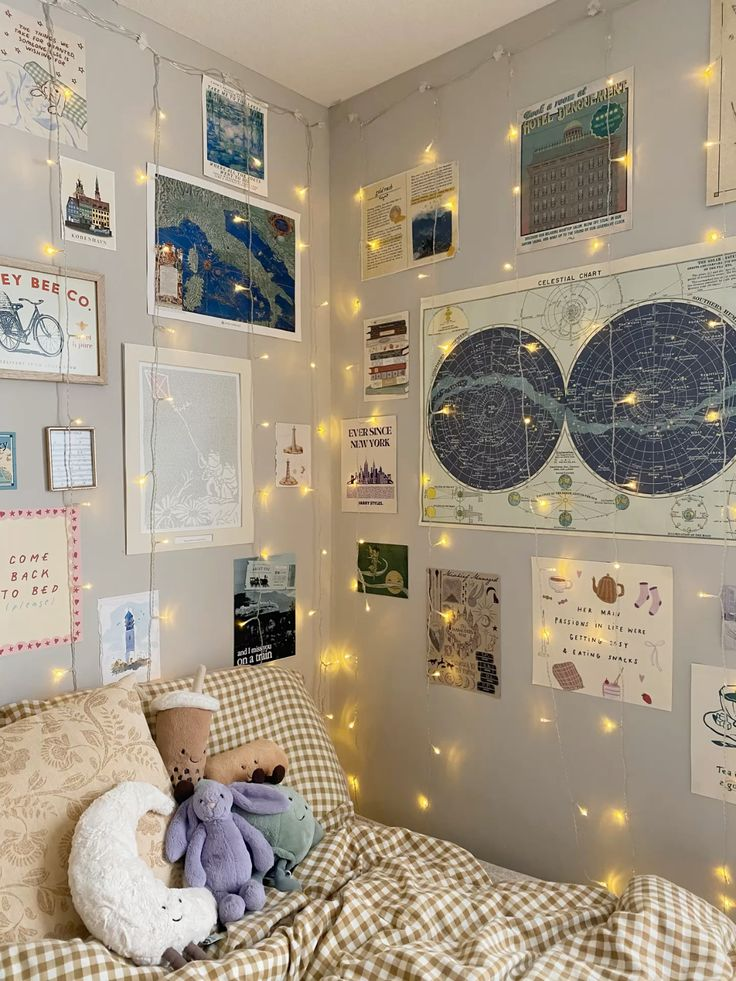
If you want a specific aesthetic — celestial, cottagecore, whatever your Pinterest board is currently obsessed with — shaped fairy lights let you commit to that theme in one small, contained area rather than needing the whole room to match.
This is a good option for someone who wants one “extra” corner without going all-in on redecorating the entire wall.
Texture and Dimension: Making a Flat Wall Feel Less Flat
9. A woven or macrame wall hanging

A macrame piece adds texture and visual depth that flat posters and photos can’t, and it works especially well as a smaller accent next to a larger flat piece like a tapestry or poster, since the contrast in texture is what makes both pieces read as more intentional.
It’s one item, one hook, and genuinely low effort for the visual payoff.
Pro tip: Hang it slightly off-center from your other wall pieces rather than perfectly aligned — a slightly asymmetrical layout with one textured piece breaking up a grid of flat photos or posters looks more curated than a perfectly even grid.
10. Floating wall shelves for small displayed items

A small floating shelf gives you a spot to display a few objects — a plant, some books, a candle, whatever — turning the wall into something with actual dimension instead of everything being flat against it.
Most dorm-safe versions use a heavy-duty removable adhesive mount rated for a few pounds, which is enough for lightweight decor items even if it’s not enough for anything genuinely heavy.
Pro tip: Check the weight rating carefully and stay well under it — a shelf rated for 5 pounds holding exactly 5 pounds of books is a shelf that’s going to slowly droop and eventually fail, so treat the listed rating as a ceiling, not a target.
11. A cluster of small round or asymmetrical mirrors
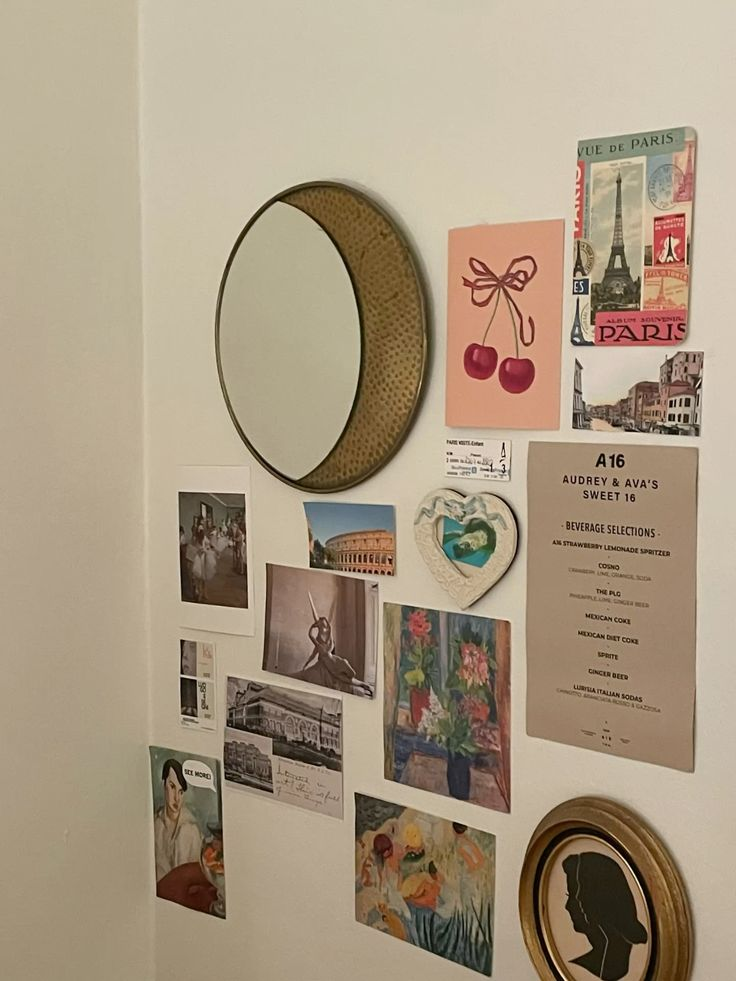
A grouped set of small mirrors in varying shapes adds visual interest and also does the practical job of making a dorm room, which is almost always small, feel like it has a bit more depth and light.
This works particularly well on a wall that doesn’t get much natural light, since the mirrors help bounce around whatever light you do have.
12. A fabric canopy or drape over your bed corner

Draping lightweight fabric from a corner point above your bed, using a small removable hook, creates a soft canopy effect that adds real texture and a sense of a separate “zone” in a room that’s otherwise just one open box.
It’s a bigger visual commitment than most items on this list, but it transforms a bed corner more than almost anything else here.
Pro tip: Use lightweight, sheer fabric rather than anything heavy — a heavier fabric puts more ongoing pull weight on your hook and adhesive over months, and it’s more likely to eventually come loose than a light, breathable fabric would be.
Functional Pieces That Also Work as Decor
13. A magnetic dry-erase or cork combo board
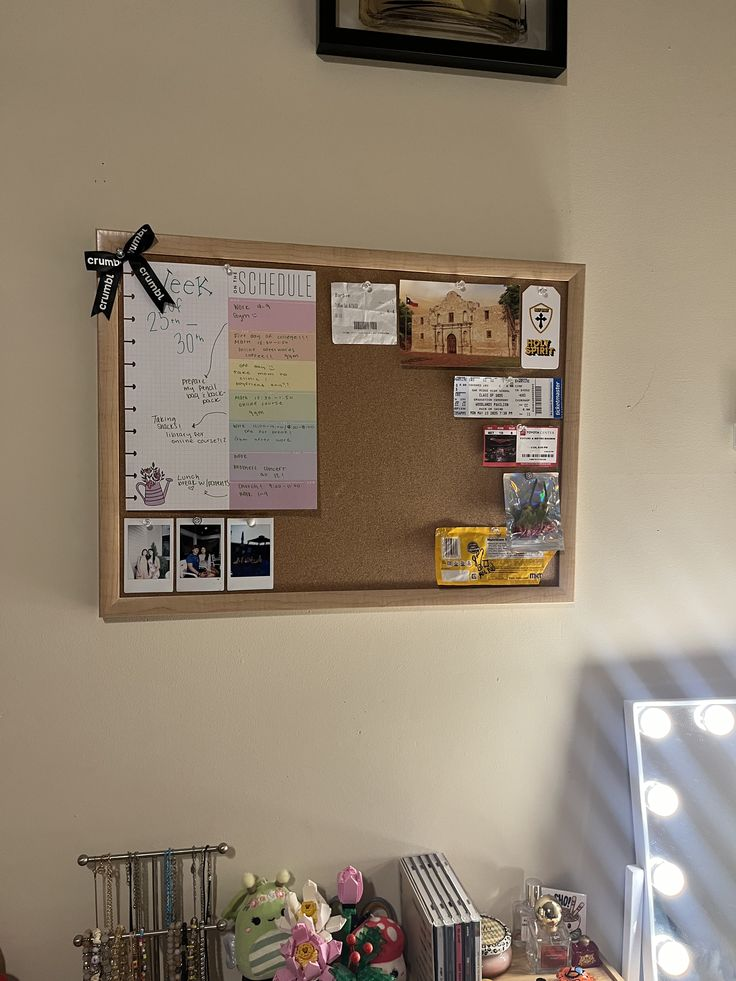
A combination board gives you somewhere to actually pin reminders, tickets, or notes while also functioning as a piece of wall decor once you personalize the frame or surround it with photos and washi tape.
It’s a good pick for the wall near your door, since that’s the spot you actually glance at on your way out.
14. A wall-mounted calendar you actually decorate around

Instead of treating your calendar as a purely functional afterthought stuck somewhere out of the way, building a small decor cluster around it — a couple of photos, a string light accent, a small plant — turns a boring but necessary item into part of your wall’s overall look instead of an eyesore you’re trying to hide.
15. Vinyl record or CD wall display
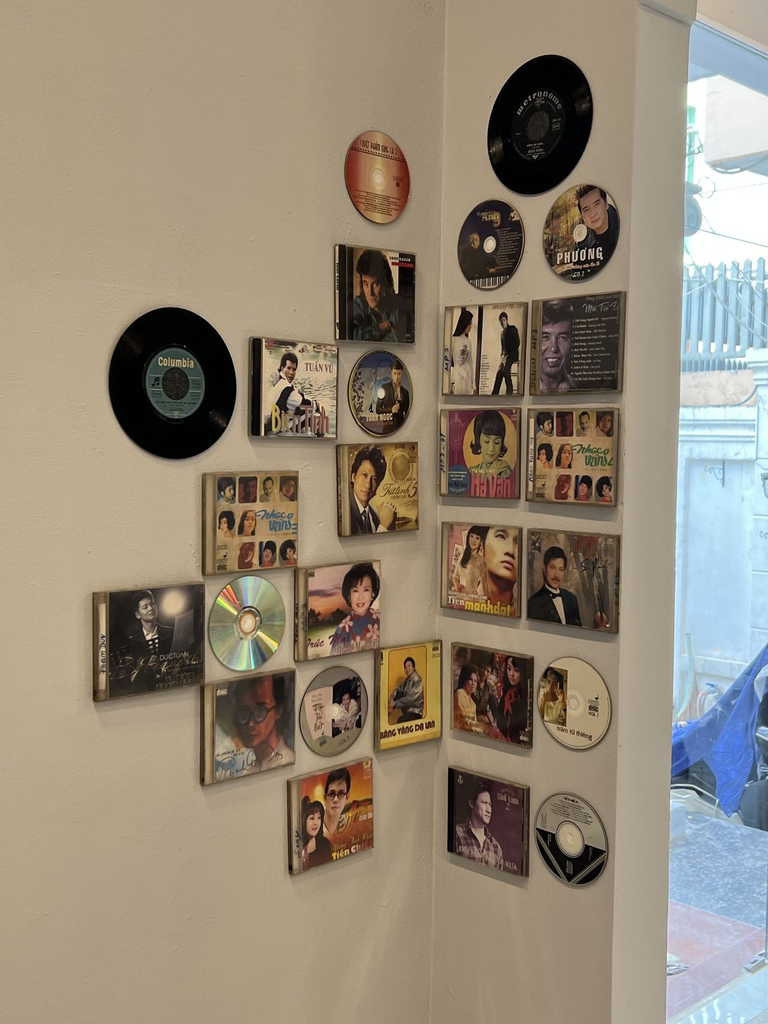
Mounting a few records or CDs on small adhesive display clips gives a wall genuine dimension and a bit of a retro, curated look, especially if the records or albums actually mean something to you rather than being purely decorative props.
This is a good “conversation starter” piece for the specific handful of people who’ll recognize what’s on the wall.
Pro tip: Use display clips designed specifically for records, not general adhesive hooks — regular hooks can put uneven pressure on the edge of a record and warp it slightly over months of hanging.
16. A hanging wall organizer with pockets

A fabric or woven wall pocket organizer gives you storage for small items — mail, chargers, a notebook — while also adding texture and color to the wall, essentially doing double duty as function and decor in a single hung piece.
This is a strong pick for the wall by your desk specifically, where small loose items tend to pile up otherwise.
Themed and Personality-Driven Builds
17. A washi tape geometric wall design

Washi tape in a repeated geometric pattern — triangles, a sunburst, a simple grid — gives you the visual impact of a painted accent wall with zero paint and zero deposit risk, since it peels off cleanly at the end of the year.
This is one of the cheapest ideas on the entire list and one of the most customizable, since you’re not limited to whatever pattern a poster or tapestry happens to come in.
Pro tip: Sketch your pattern out on paper first, to scale, before applying any tape — washi tape is forgiving to reposition once, but a design you’re constantly peeling and re-sticking while figuring it out as you go will lose some adhesive strength each time.
18. A small peel-and-stick wallpaper accent behind your desk
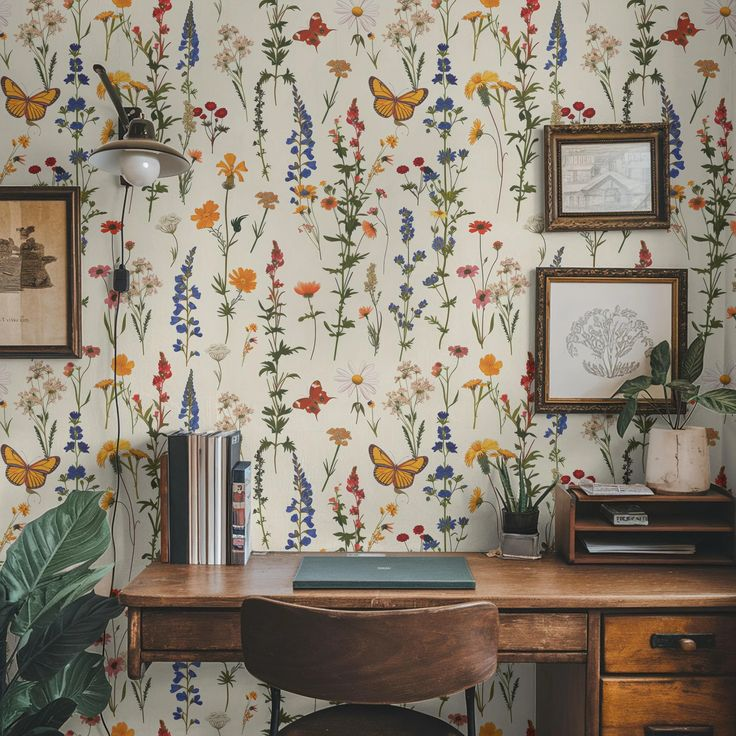
Rather than wallpapering an entire wall, applying a small peel-and-stick section specifically behind a desk or shelving unit gives you real pattern and color in a contained area that’s easy to reverse completely at move-out.
It reads as a much bigger design commitment than it actually is, since most people assume peel-and-stick wallpaper is an all-or-nothing wall treatment.
19. A collage of concert tickets, playbills, and small memorabilia

Displaying actual tickets and small flat memorabilia, mounted in a simple grid using photo corners or small adhesive squares, is genuinely one of the more personal ideas on this list because it’s literally impossible for anyone else’s wall to look the same as yours.
It also solves the real problem of ticket stubs and playbills otherwise just living in a drawer where you never look at them again.
20. A wall-mounted world map with pins for places you’ve been or want to go
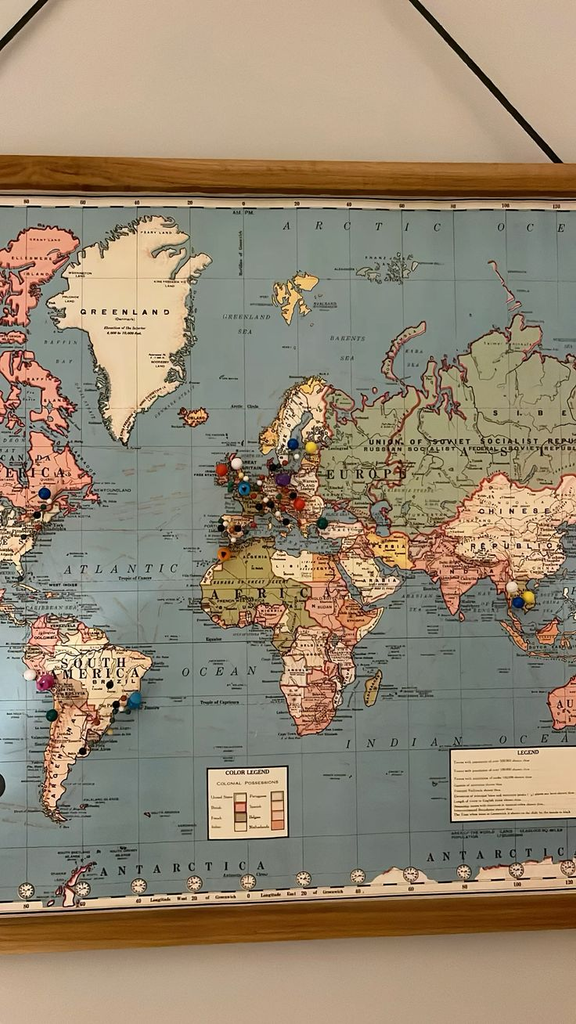
A large map poster with small pins or stickers marking places gives your wall a genuine sense of purpose beyond decoration — it’s something you actually add to and interact with over time, rather than a static piece you hang once and forget about.
21. A grid of small framed prints in a single consistent color palette
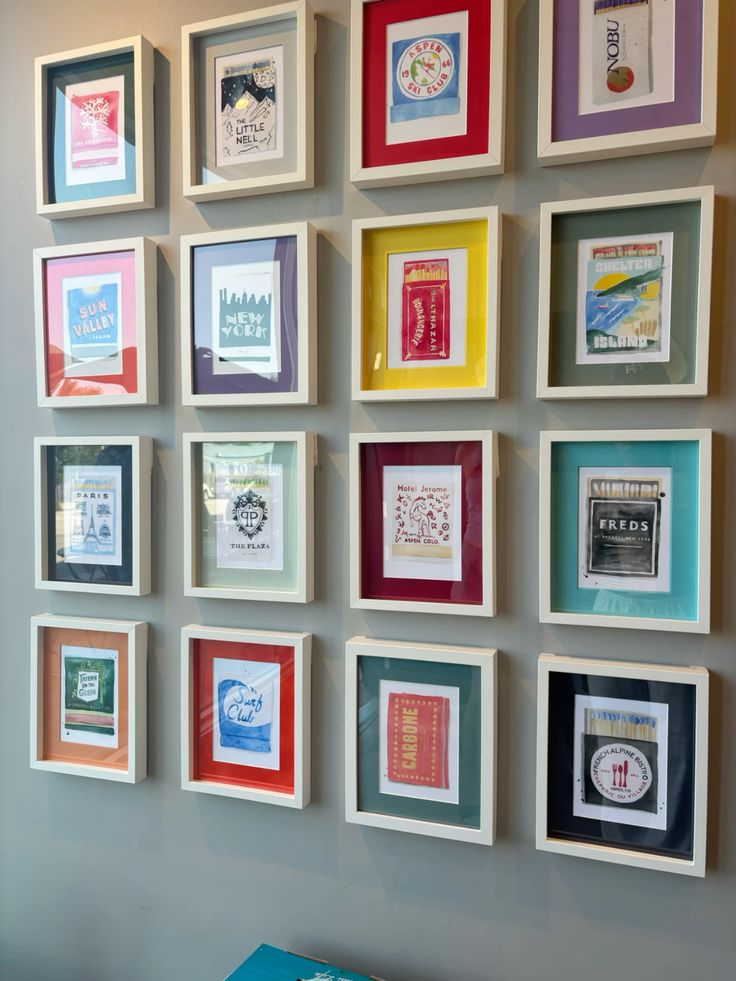
A set of 6-9 small prints, all sharing a limited color palette even if the subject matter varies, reads as far more intentional and “designed” than a random mix of poster styles and colors thrown up over the course of a semester.
This is a good option if you want a curated, cohesive look rather than the more eclectic, added-over-time feel of a photo collage wall.
Pro tip: Pick your three-color palette before you buy a single print, and hold every piece to it — this single constraint is what makes a grid of otherwise-random prints look like a deliberate design choice instead of a pile of things you liked individually.
22. A fabric pennant banner string
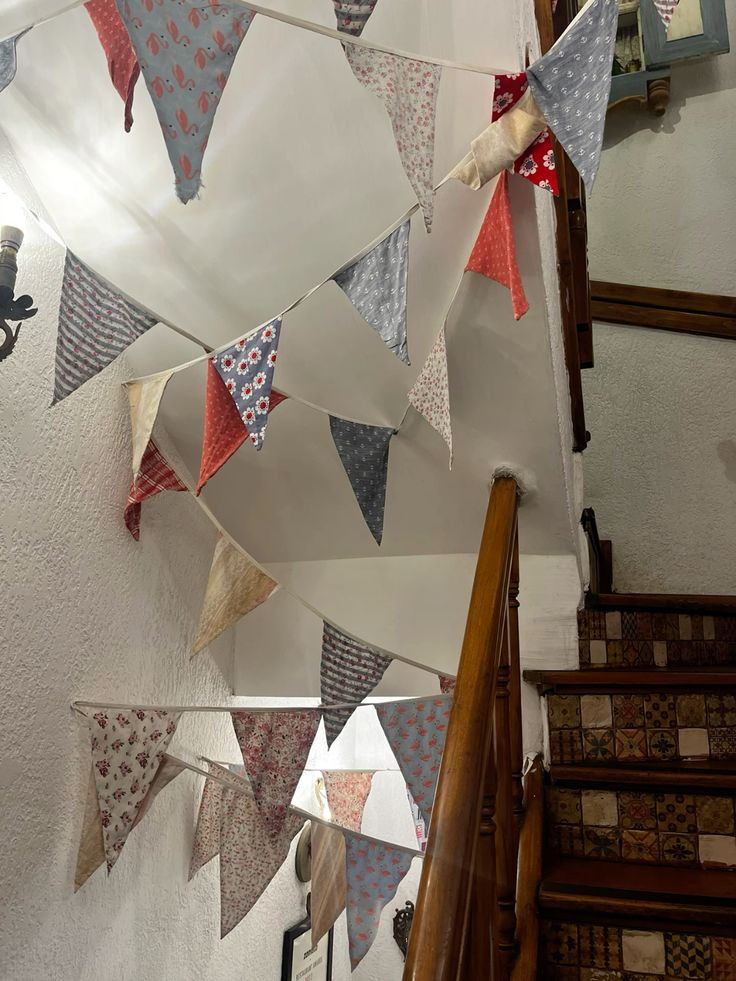
A string of small fabric or felt pennants, hung along a single wall edge or draped in a loose curve, adds a playful, collegiate feel without needing a large flat surface — it works even on an oddly shaped wall segment that’s too narrow for a poster or tapestry.
23. A DIY string art piece with your initials or a simple shape
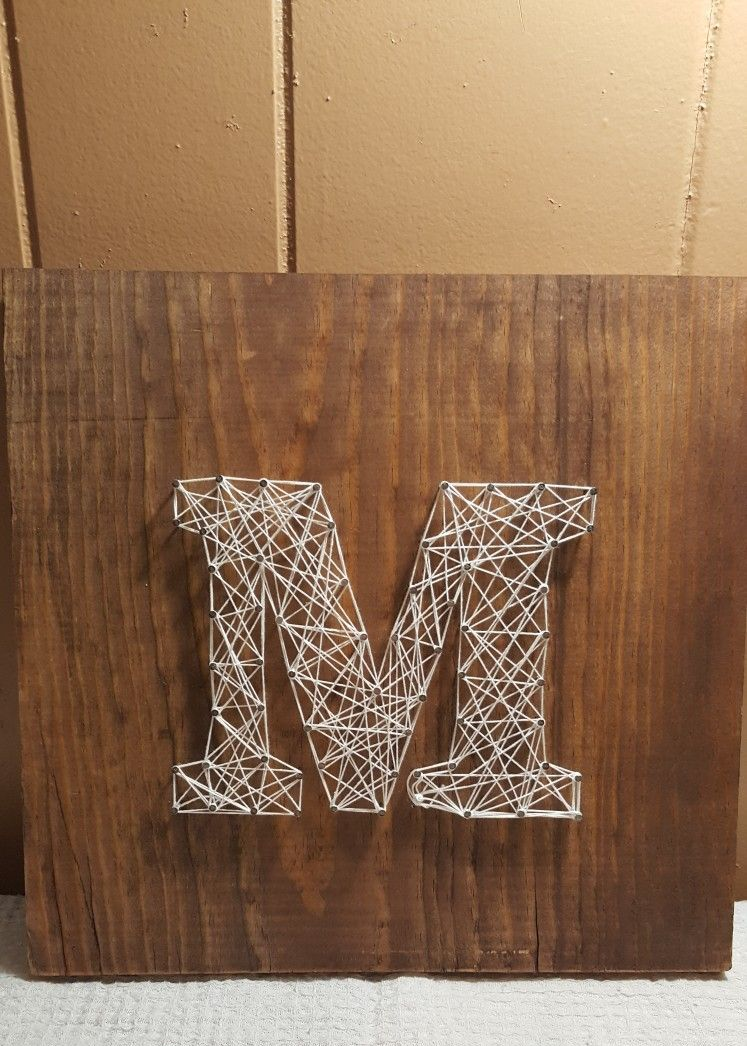
String art, made by wrapping colored thread around small nails driven into a piece of wood you hang as a unit rather than into the dorm wall itself, gives you a genuinely handmade, dimensional piece without ever putting a nail in university drywall.
It’s a project you make once, on your own board, and then hang using the same removable methods as everything else on this list.
| Hanging Method | Wall Damage Risk | Weight It Can Hold | Best For |
|---|---|---|---|
| Command strips/hooks | Very low, residue-free if removed correctly | Light to moderate (check label, usually 1-7 lbs) | Posters, small shelves, light hanging decor |
| Museum/poster putty | Low, can leave slight residue on some paints | Light, single flat items | Large flat posters, prints |
| Washi tape | Very low | Extremely light | Paper items, small photos, patterns |
| 3M removable hooks | Low, rated hooks remove cleanly | Moderate (up to 5 lbs typically) | String lights, hanging plants, small organizers |
| Regular tape/duct tape | Higher, often peels paint or leaves residue | Light | Avoid for anything you care about the wall under |
What I’d Put Up First If I Were Moving Into a Dorm Tomorrow
If I were starting over with a completely blank dorm wall, I’d hang the tapestry first, since it does the most visual work for the least effort and gives every other smaller piece something to build around instead of competing with.
After that, string lights, because they’re the cheapest way to make a plain dorm room feel warmer within the first hour of moving in, before you’ve even unpacked everything else.
The real thing I wish someone had told me freshman year is that dorm wall inspo doesn’t need to be finished on move-in day. My best wall, by the end of that first year, was the photo collage that started with maybe eight pictures in August and kept growing — it looked more like “me” in April than anything I’d carefully planned out before I ever unpacked a box.


Leave a Reply