
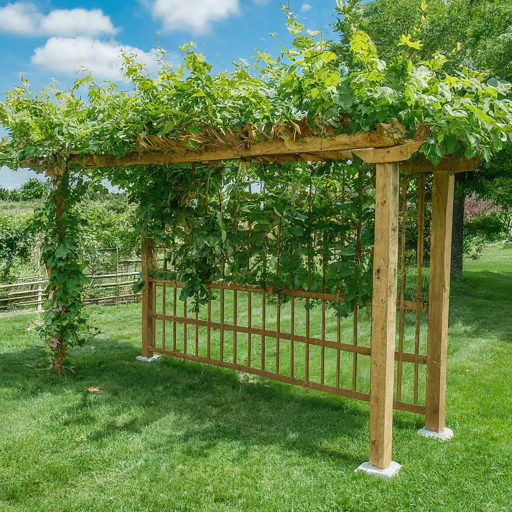
My first grape trellis was a cheap wood lattice panel from the garden center, and it lasted exactly two growing seasons before it started bowing in the middle under the weight of the vine.
I didn’t know, going in, that a mature grape vine gets genuinely heavy — not “a few pounds of leaves” heavy, but enough that a flimsy structure will visibly sag or collapse by year three or four if it wasn’t built for it.
My uncle Frank, who’s grown grapes on the same property for over twenty years, laughed when I told him what I’d bought and then spent an afternoon helping me build a proper one out of cedar posts and galvanized wire instead.
That’s the thing most “grape vine trellis ideas” content skips entirely — plenty of trellis designs look great in a first-season photo and then genuinely fail once the vine matures, because grape vines aren’t like a light annual climber.
They’re a long-term, increasingly heavy commitment, and the trellis needs to be built with that in mind from the start, not upgraded later once it’s already straining.
So this list is organized around that reality — starting with materials and what they can actually handle long-term, then structural styles, then space-specific and budget options, because picking the right category first will save you from Frank’s exact “laughing at my flimsy trellis” reaction a few years down the line.
Materials: What Actually Holds Up
This is the decision that matters most, since it determines whether your trellis is still standing in five years or needs replacing in two.
| Material | Cost | Weight Capacity for Mature Vines | Best For |
|---|---|---|---|
| Pressure-Treated Wood | $$ | Good, especially 4×4 posts | Most home gardens, DIY builds |
| Cedar | $$$ | Good, naturally rot-resistant | Longer-lasting wood option, ages well |
| Galvanized Metal/Wire | $$ | Excellent | Long-term, low-maintenance setups |
| Bamboo | $ | Poor to Moderate | Short-term or annual vine support, not mature grapes |
| PVC Pipe | $ | Poor | Budget test setups only — not recommended long-term |
Frank’s actual rule of thumb, after two decades of doing this: if you’re not planning to rebuild the trellis within five years, don’t use bamboo or PVC as your primary structural support.
Both are fine for guiding young growth in year one, but neither holds up once a vine reaches full maturity and starts producing real fruit weight alongside the foliage.
Classic Materials & Builds
1. Wood Lattice Trellis
The most common starter option, and — as I learned the hard way — genuinely not built for a mature grape vine long-term unless it’s a heavy-duty version with reinforced framing rather than the thinner decorative panels sold at most garden centers.
2. Cedar A-Frame Trellis
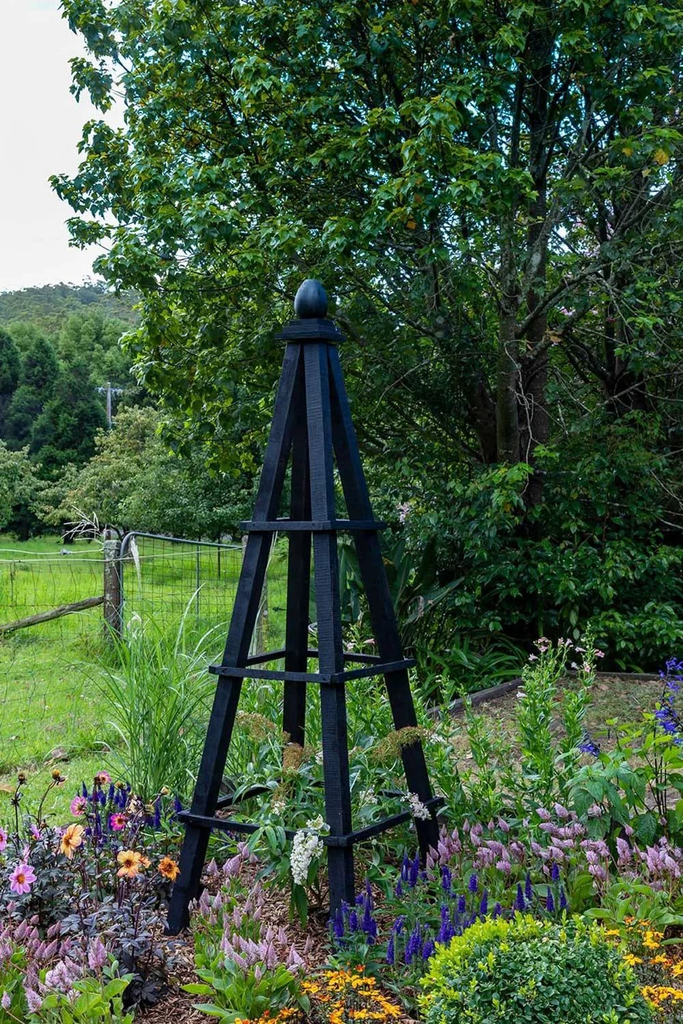
A frame shape gives vines two angled sides to climb, and cedar specifically resists rot better than most other woods without needing regular sealant reapplication, which matters a lot for a structure meant to stay outside year-round for a decade or more.
3. Metal Cattle Panel Arch
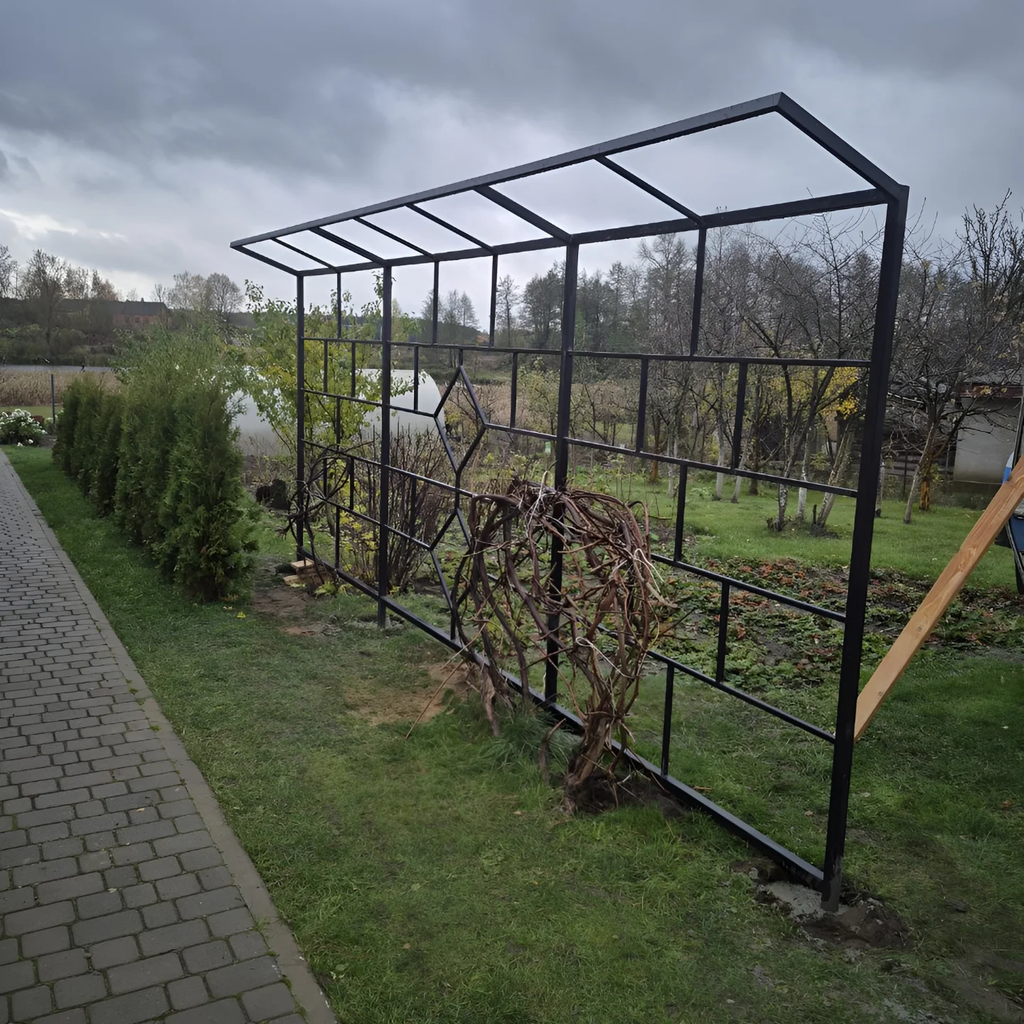
Cattle panels (the galvanized wire panels used for livestock fencing) bent into an arch shape make one of the sturdiest, most affordable trellis structures available, and this is genuinely what Frank switched me to after the lattice failure — mine is going into its sixth season with zero sagging.
4. Wire Grid Trellis
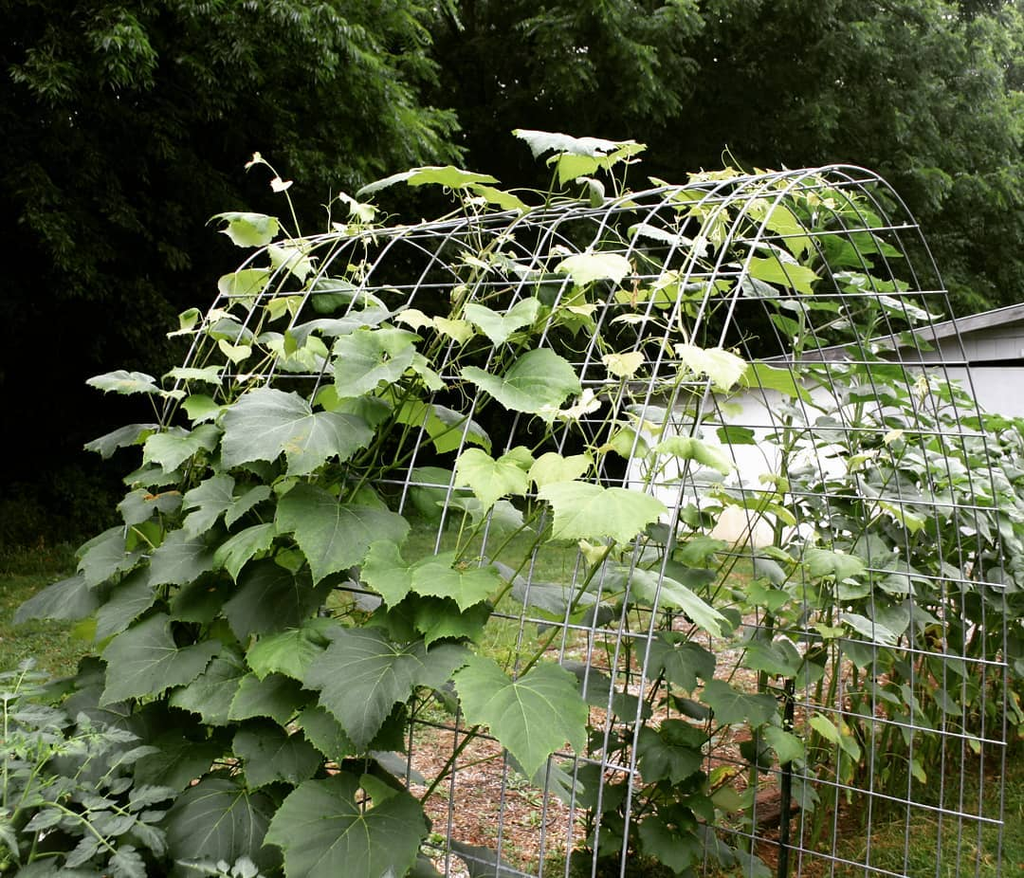
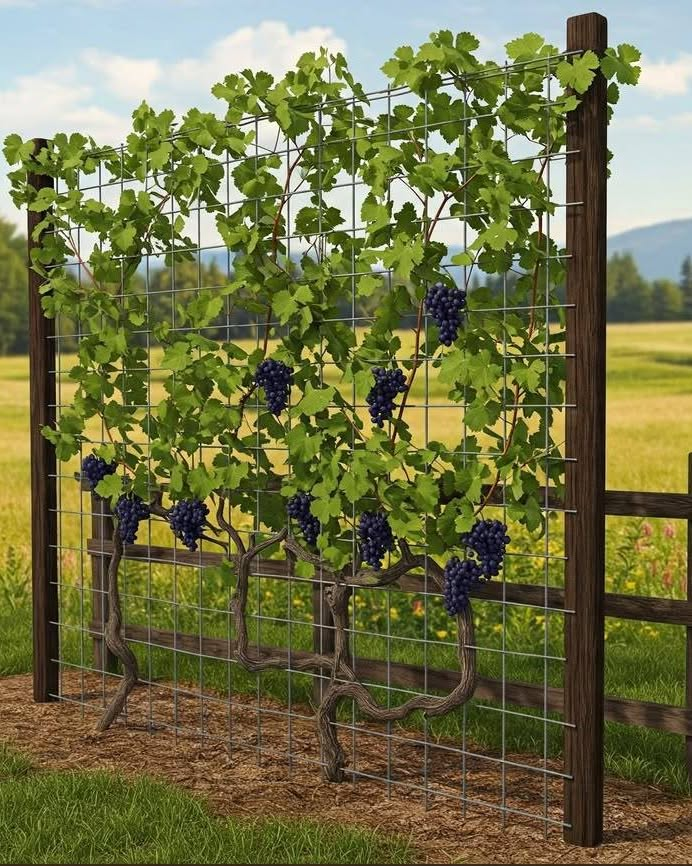
A grid of galvanized wire strung between sturdy posts, rather than a solid panel, gives vines something to weave through directly and is easier to prune around than a solid lattice, since you can see and access the whole structure from both sides.
5. Bamboo Trellis
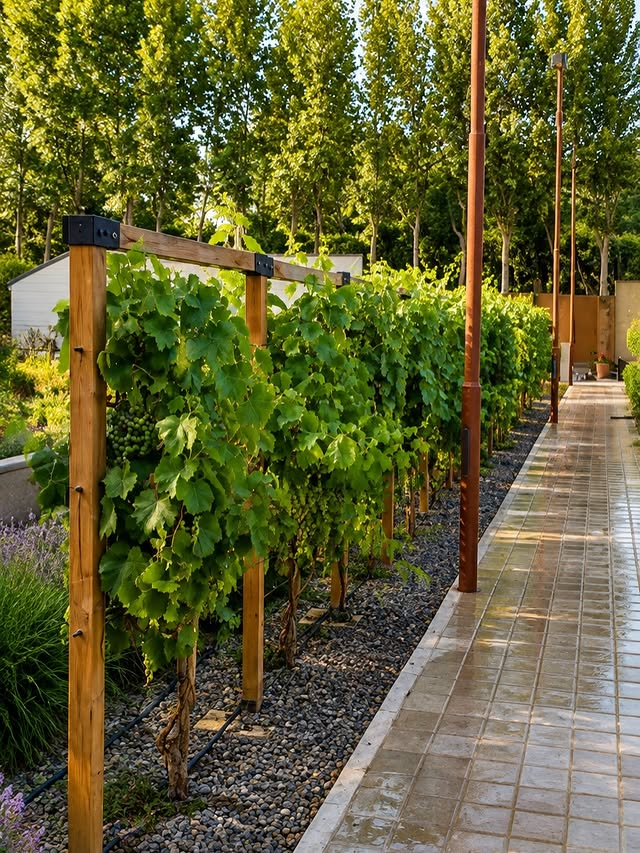
Genuinely fine for the first year or two while a young vine establishes itself, but plan to transition to something sturdier before the vine reaches full maturity — treat this as a starter structure, not a permanent one.
6. PVC Pipe Trellis
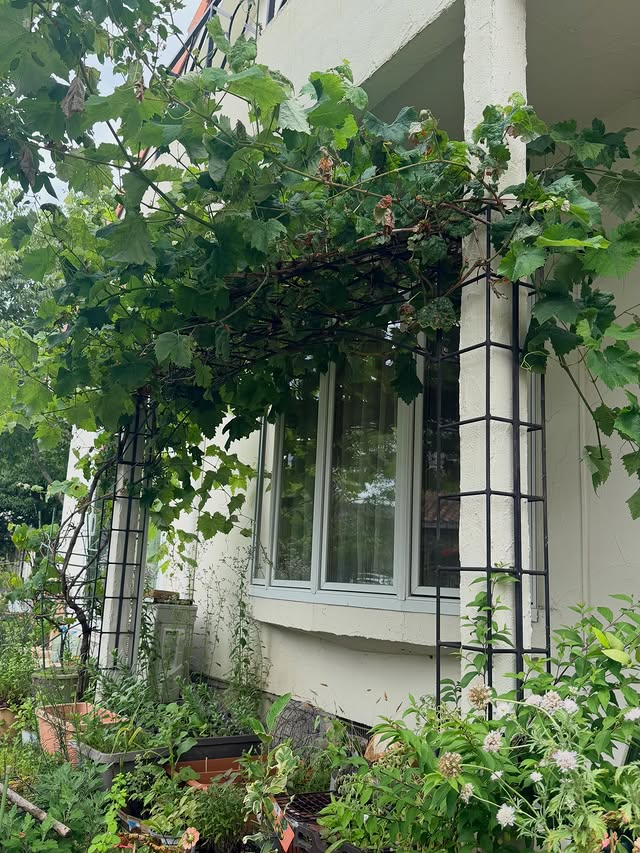
The cheapest option to build, and useful as a temporary test structure to figure out placement and sizing before committing to a permanent build, but it flexes and degrades in sunlight over time in a way that makes it a poor long-term choice for anything but the lightest support.
Pro tip: Whatever material you choose, sink support posts at least two feet into the ground (deeper in loose or sandy soil) and set them in concrete if the structure is meant to be permanent — a trellis that’s structurally sound but not anchored well enough will lean or shift as the vine’s weight increases over the years, which was actually a bigger issue for my cattle panel arch than the panel material itself until Frank had me reset the posts properly.
Structural Styles
7. Free-Standing Obelisk Trellis
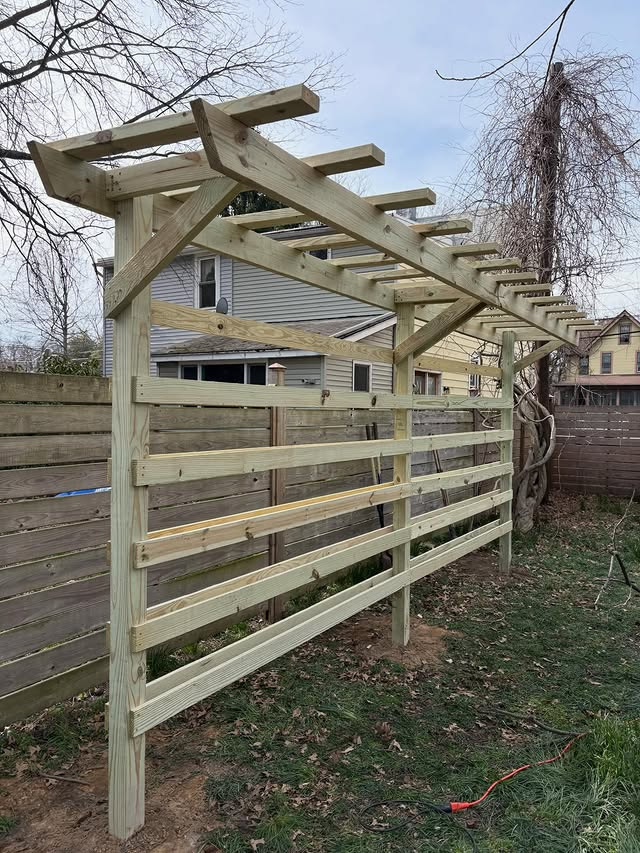
A tall, narrowing structure that stands alone rather than attaching to a fence or wall — this works well as a focal point in a garden bed, though it’s better suited to smaller ornamental grape varieties than a full production vine, since the narrow top limits how much mature growth it can support.
8. Wall-Mounted Trellis
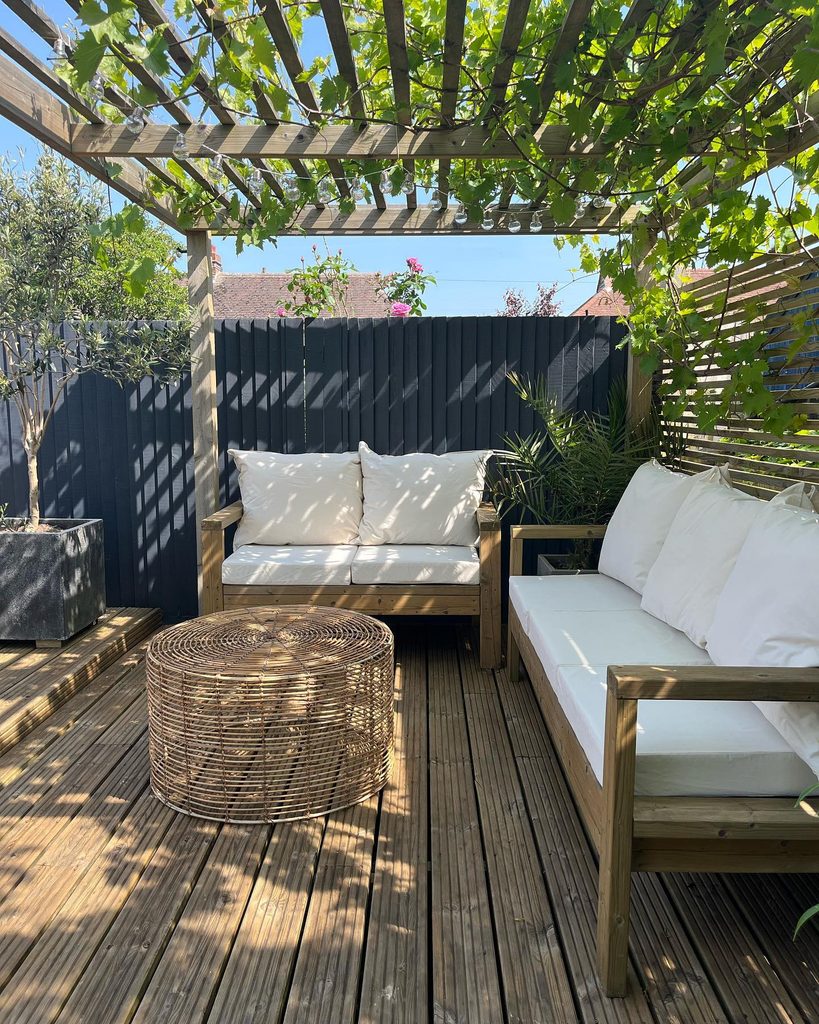
Attaching a trellis directly to a wall (with enough clearance behind it, usually 6 to 8 inches, for airflow and pruning access) works well if you’re short on yard space, but it means the wall side of the vine is much harder to prune and inspect for pests.
9. Fence-Line Trellis
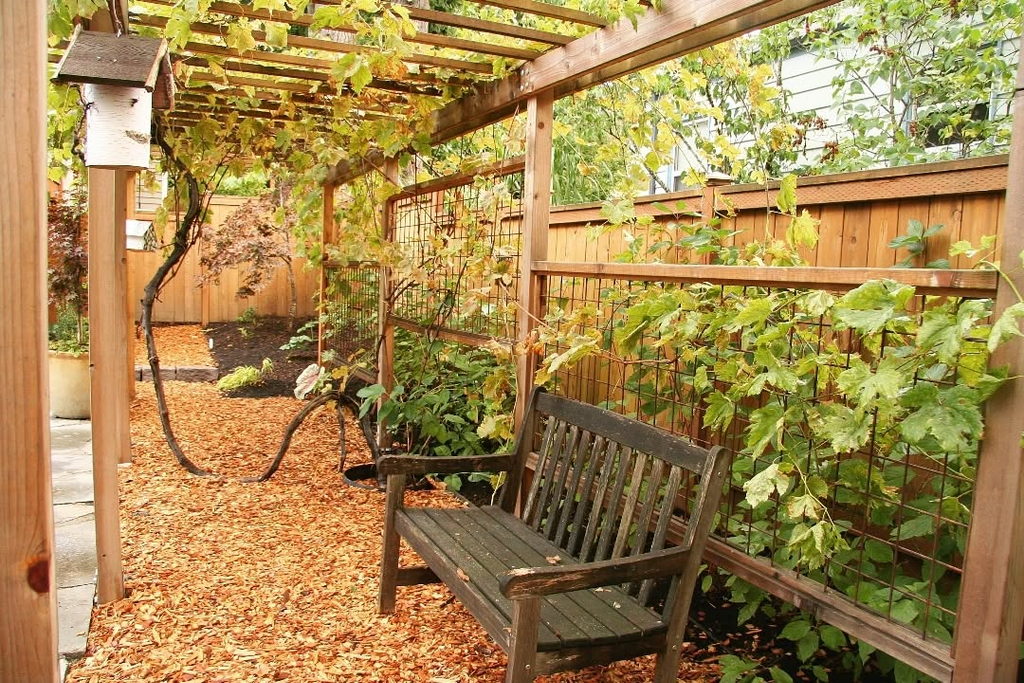
Running wire or a lattice structure along an existing fence line uses a structure you already have as partial support, which cuts down on materials, but the fence itself needs to actually be sturdy enough to handle the additional weight — a decorative picket fence generally isn’t.
10. Arbor or Tunnel Trellis
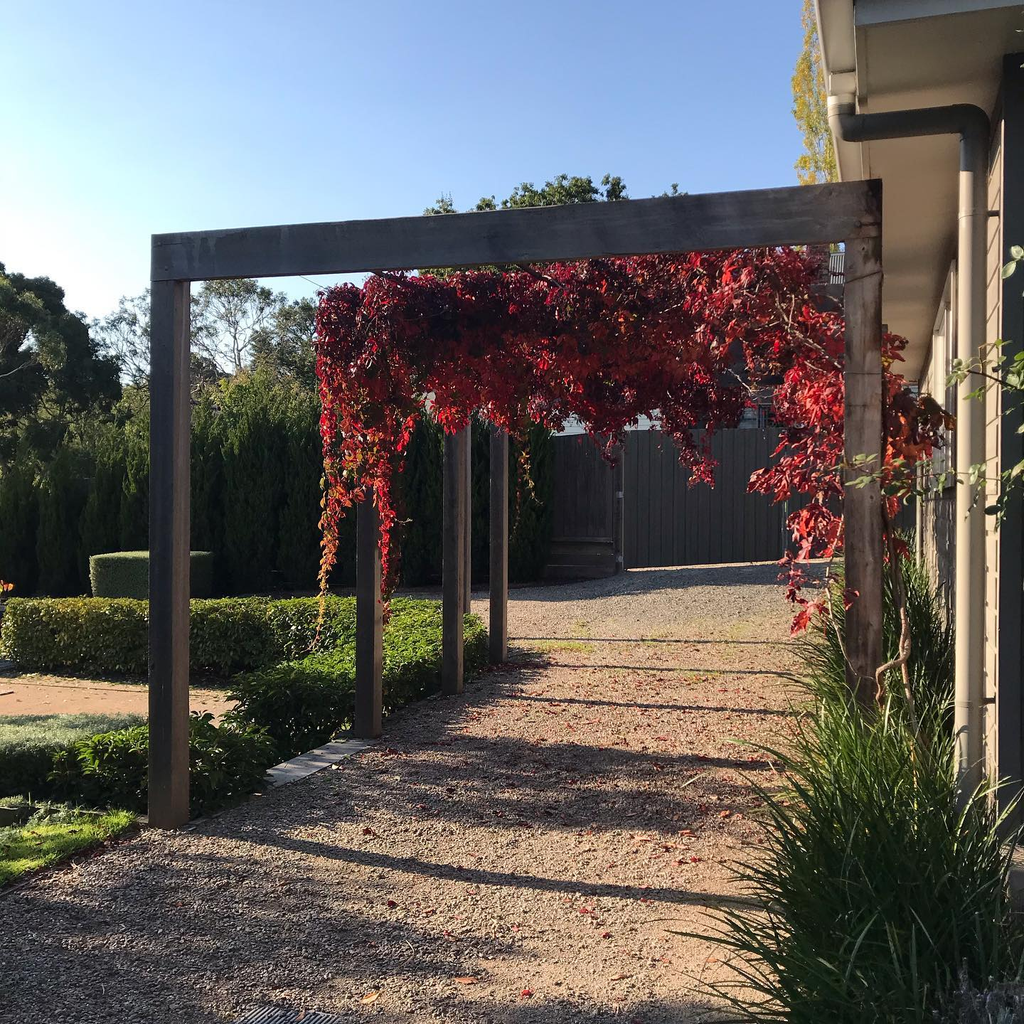
A tunnel-shaped structure that vines grow up and over creates a genuinely striking walkway effect once established, and it’s one of the few styles where a mature grape vine’s weight and shade become a feature rather than something to manage around.
11. Pergola-Integrated Vines
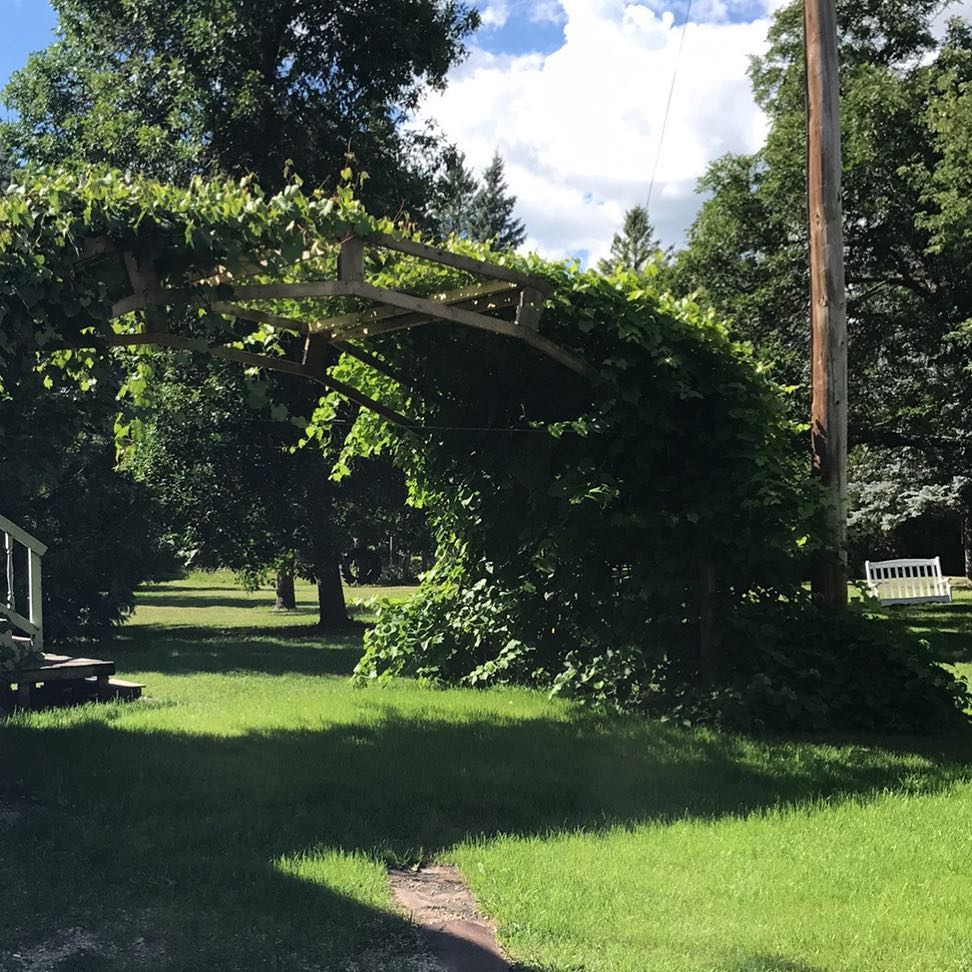
Training grape vines up and across an existing pergola gives you shade and fruit in the same structure, though it does mean the pergola needs to be built to handle real ongoing weight, not just the light shade structure many pergolas are originally designed for.
12. T-Post and Wire (Vineyard-Style)
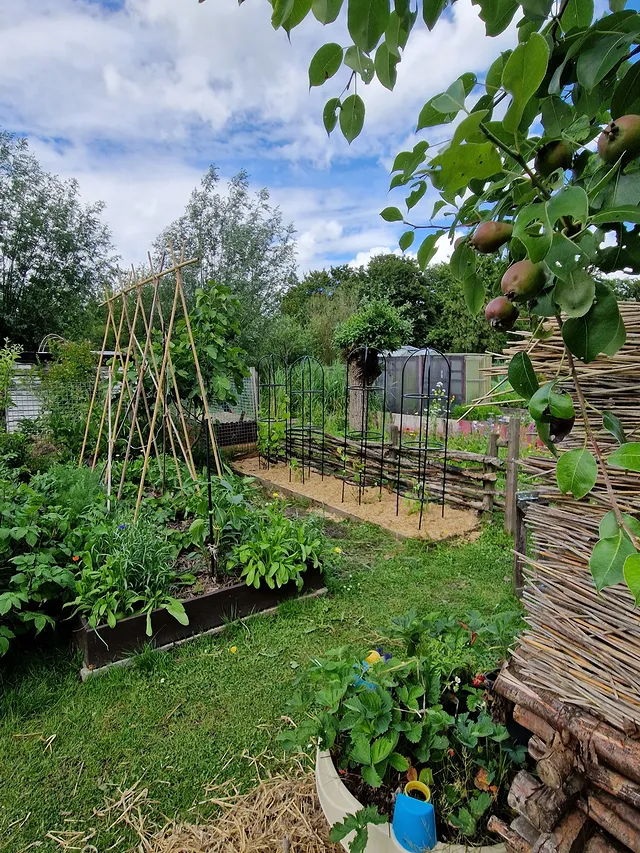
The system actual vineyards use — sturdy metal T-posts with horizontal wires strung between them at set heights, allowing vines to be trained flat along a single plane.
This is the most efficient style if you’re growing more than one or two vines and want them easy to manage in a row.
13. Umbrella or Spoke Trellis
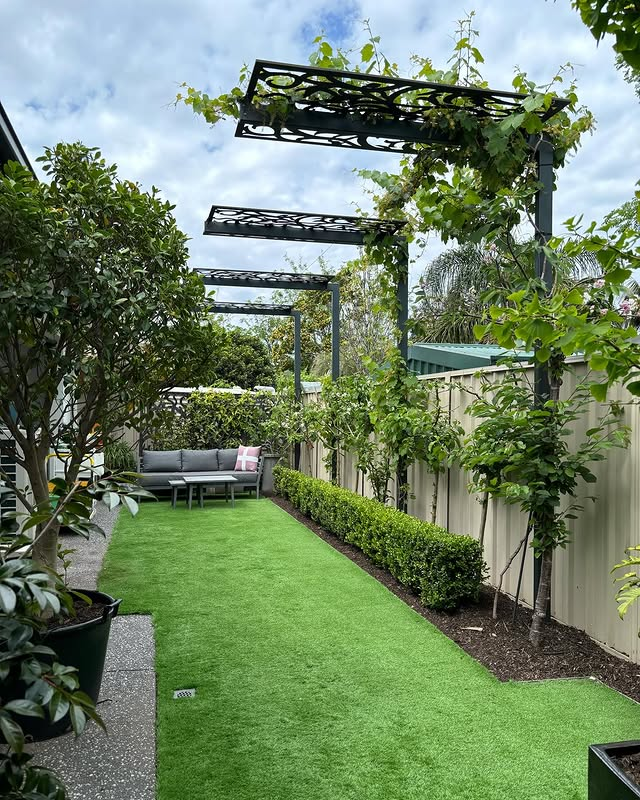
A central post with wires radiating outward and downward, similar to an umbrella shape, spreads a single vine’s growth outward rather than upward, which some growers prefer for easier harvest access since the fruit hangs at a more consistent, reachable height.
14. Teepee Trellis
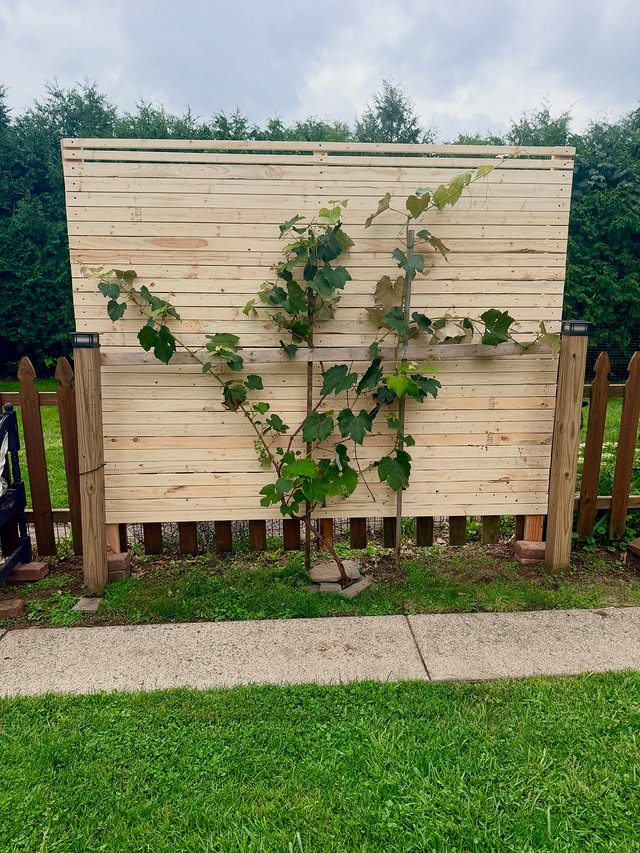
Several posts angled inward and tied at the top, similar to a bean teepee — a fun, low-cost shape for an ornamental vine, though like the obelisk, it’s better suited to a smaller variety than a full production grape vine given the limited surface area near the top.
Space-Specific Options
15. Container or Patio Trellis
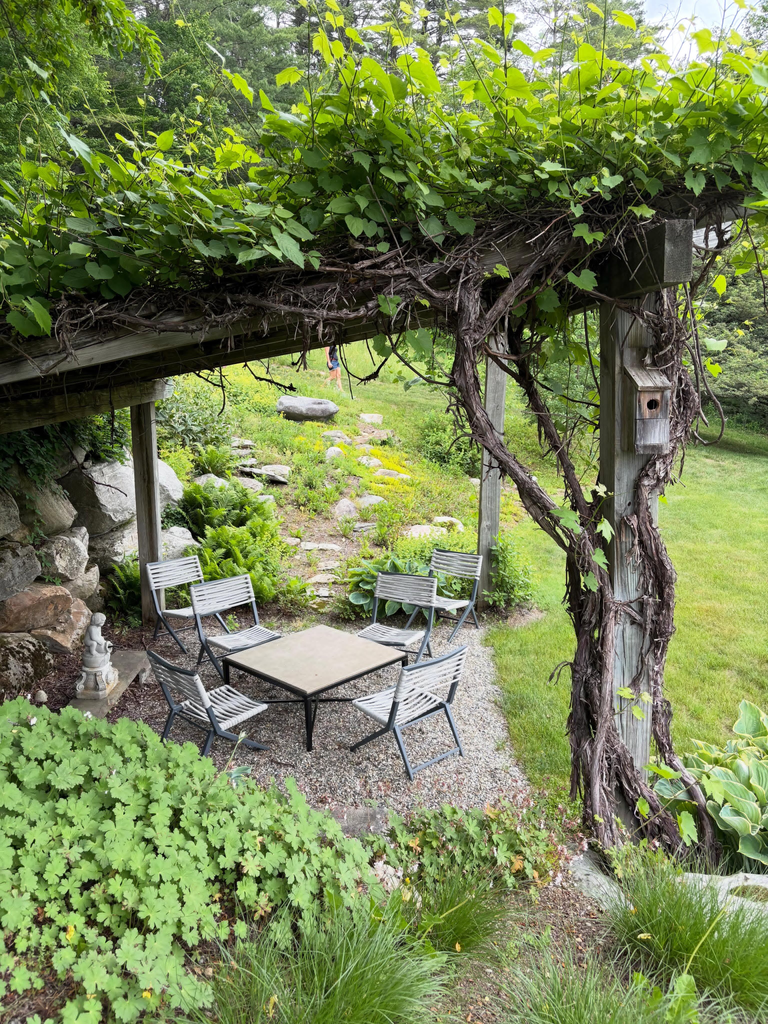
For growing grapes in a large container rather than in the ground, a smaller, sturdy trellis anchored into or attached to the container itself works, though container-grown vines need more frequent watering and won’t reach the same size or yield as an in-ground vine, so expect a smaller structure to actually be sufficient.
16. Small Backyard Vertical Trellis
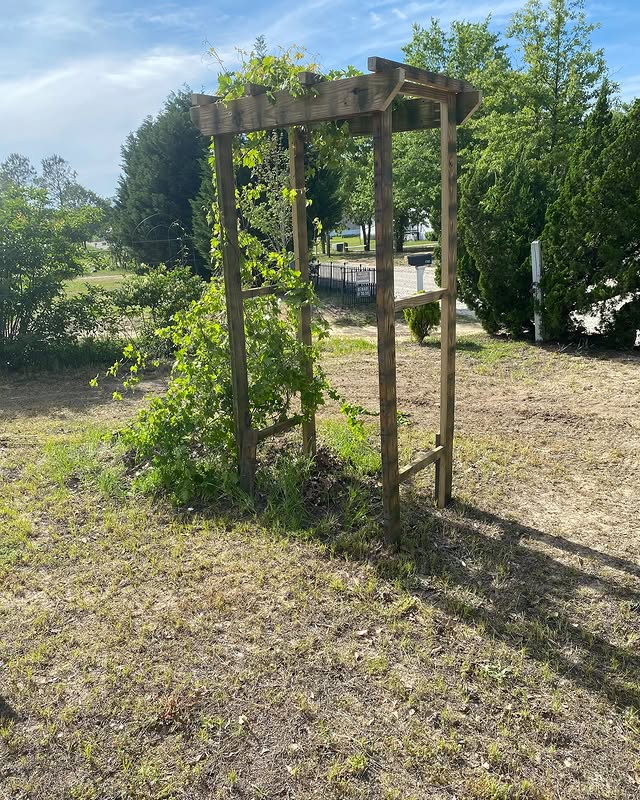
For limited yard space, training a single vine straight up a narrow vertical structure against a fence or wall maximizes fruit production per square foot of ground space used, even if it means a bit more maintenance to keep growth from sprawling sideways.
17. Trellis Along a Driveway or Walkway
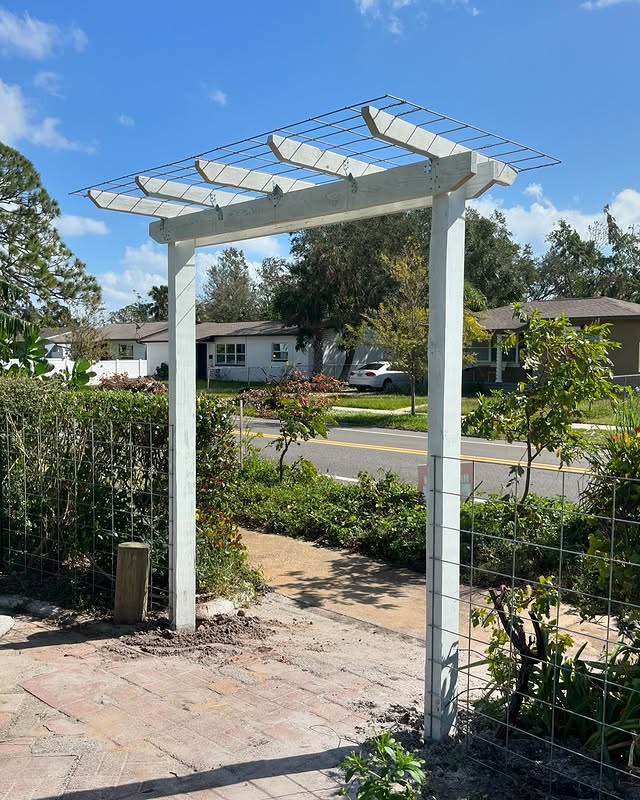
Running a trellis along the edge of a walkway (with enough clearance to avoid overhanging growth interfering with foot traffic) turns unused edge space into productive growing area, though it does mean more frequent pruning to keep the path clear.
18. Corner Garden Trellis
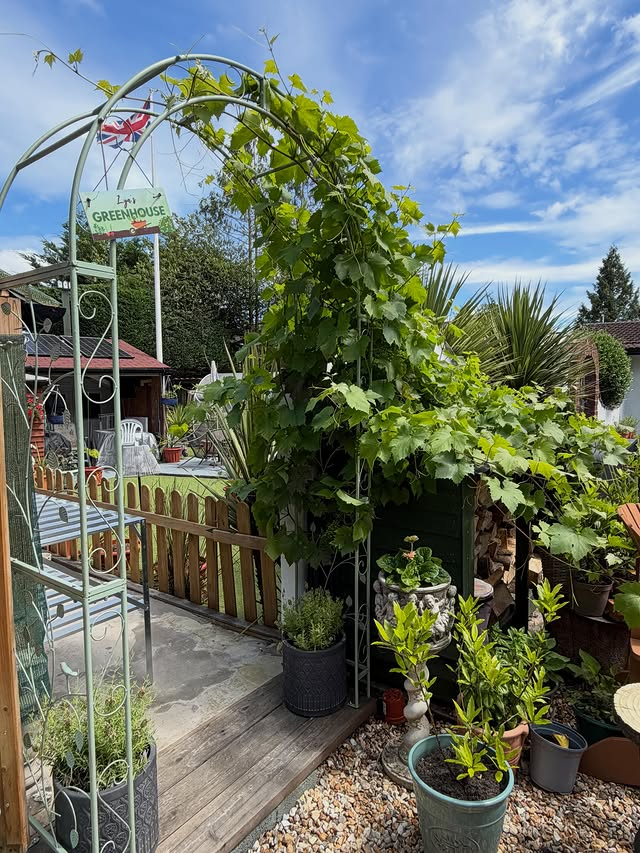
An L-shaped or angled trellis fit into a garden corner uses space that’s often otherwise wasted, and it can support two vines trained in different directions from the same general area.
19. Balcony Railing Trellis
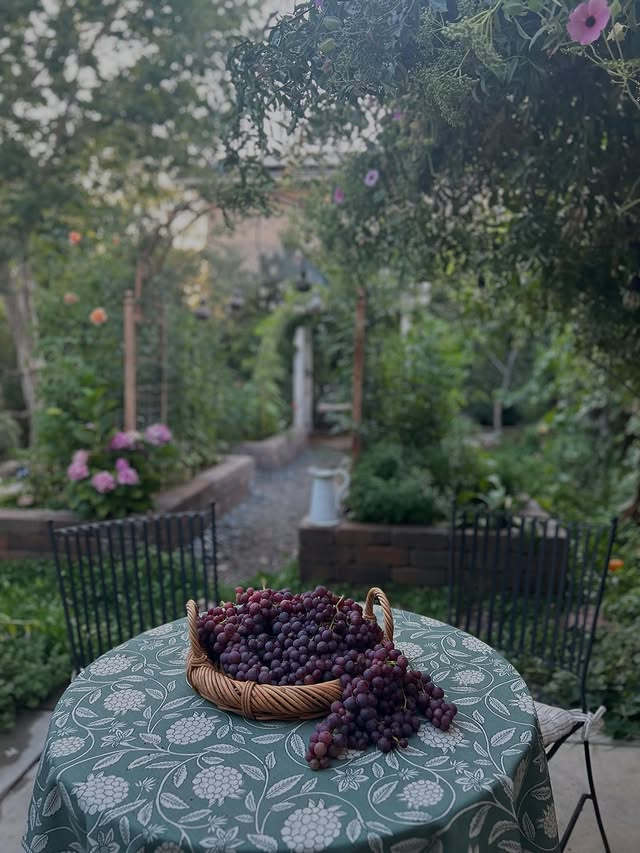
For apartment or condo growers, a trellis attached to a balcony railing (checking your lease or HOA rules first) can support a smaller, more manageable grape variety, though this is genuinely one of the more limited setups on this list — full-size production grape vines need more root space and support than most balconies can accommodate long-term.
DIY & Budget Builds
20. Repurposed Wooden Ladder Trellis
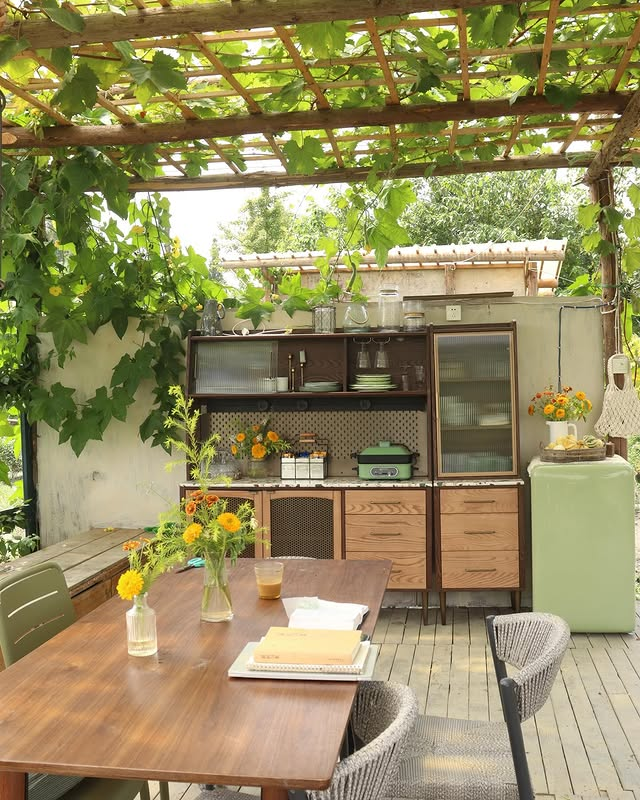
An old wooden ladder, leaned against a wall or fence, gives vines built-in rungs to climb — a genuinely clever reuse of something that would otherwise be thrown out, though check that the ladder itself is sturdy and rot-free before committing a young vine to it.
21. Recycled Pallet Trellis
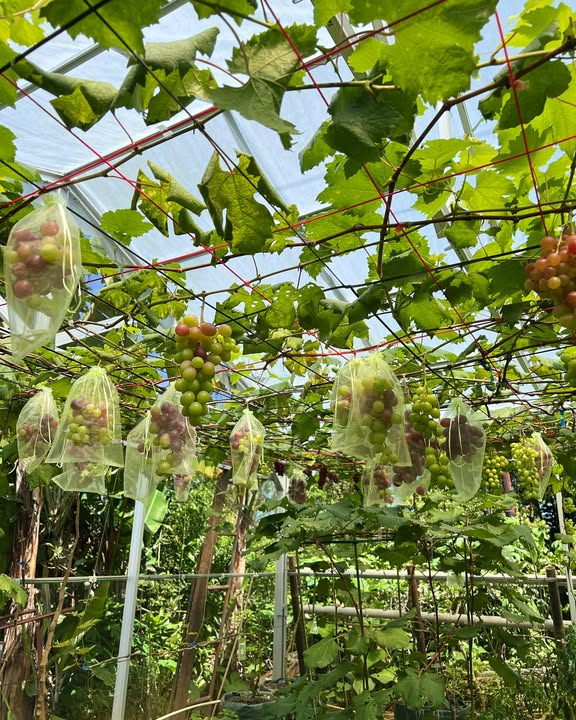
A wooden shipping pallet, stood on end and anchored securely, gives a ready-made grid structure for vines to climb.
This is one of the cheapest options if you can source pallets for free, but make sure any pallet you use is heat-treated rather than chemically treated, since chemically treated pallets aren’t safe near food-producing plants.
22. Chicken Wire and Wood Frame DIY
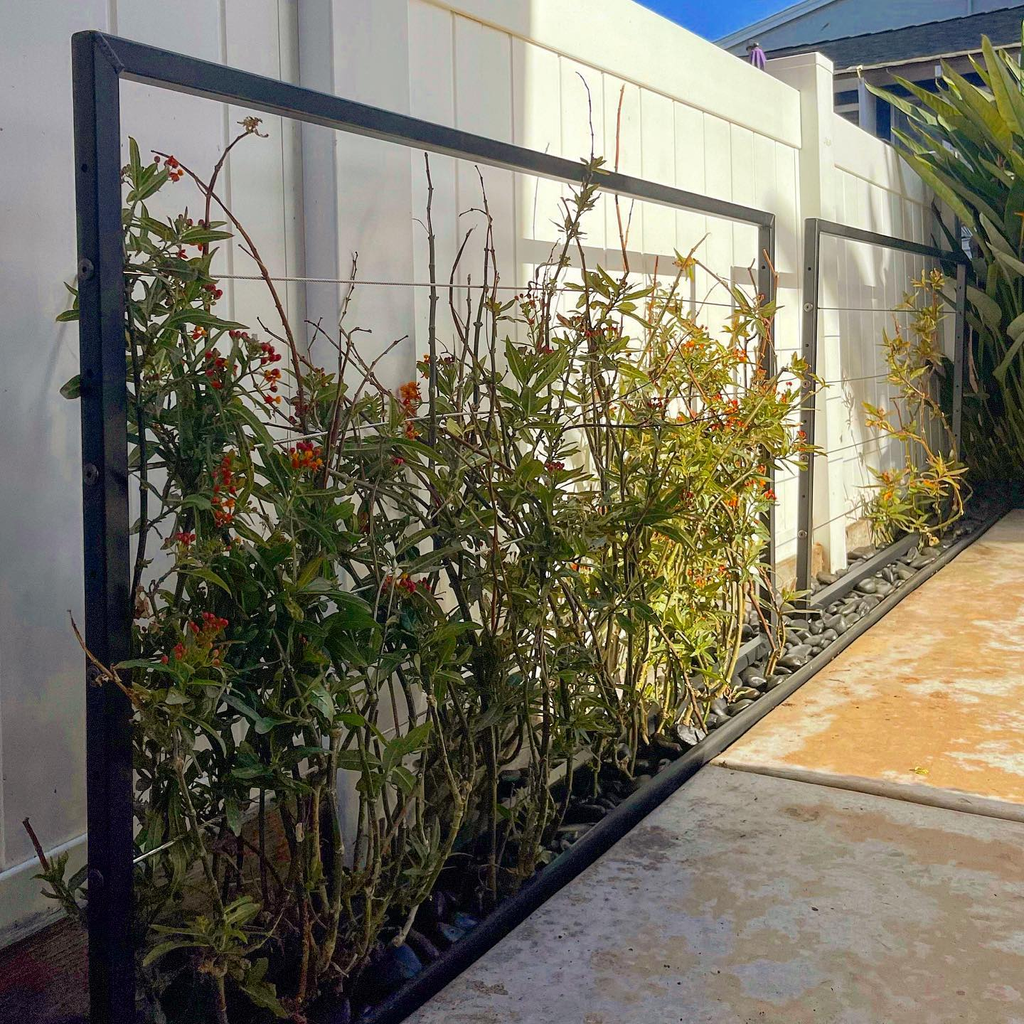
A simple wood frame with chicken wire stretched across it is an inexpensive, straightforward build for a first-time DIY trellis, though the wire itself will need replacing sooner than a sturdier galvanized option as it’s more prone to rusting and sagging over time.
23. Rebar and Wire DIY Trellis
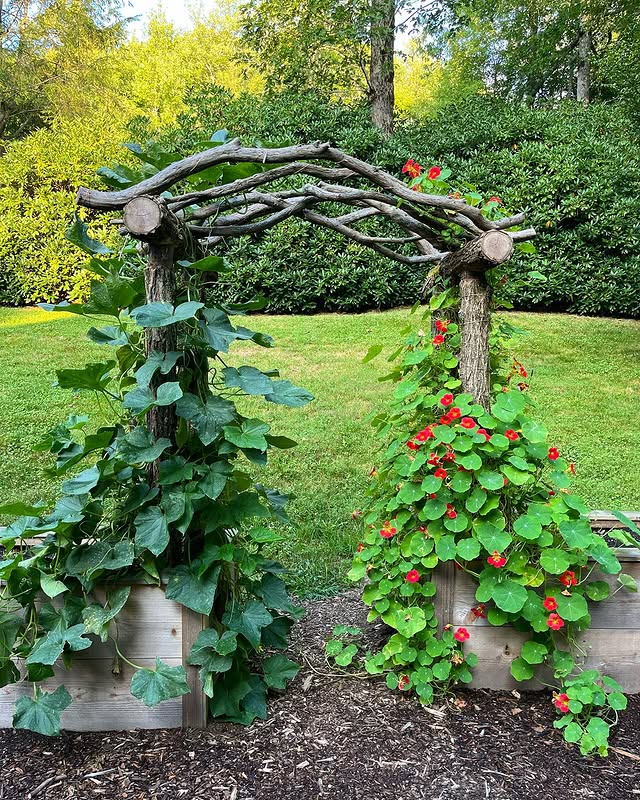
Rebar stakes driven into the ground with wire strung between them makes a cheap, surprisingly sturdy structure for a smaller or younger vine, and it’s easy to adjust or extend as the vine grows, which is a genuine advantage over a more fixed, permanent structure.
Pro tip: Whatever DIY route you go, use galvanized rather than plain steel wire for any wire-based trellis — plain wire rusts within a couple of seasons outdoors, and once it starts rusting it weakens right around where the vine is gripping it hardest, which is exactly the wrong place for a weak point to develop.
Extra Features & Curb Appeal
24. Trellis with Built-In Seating or Pergola Combo
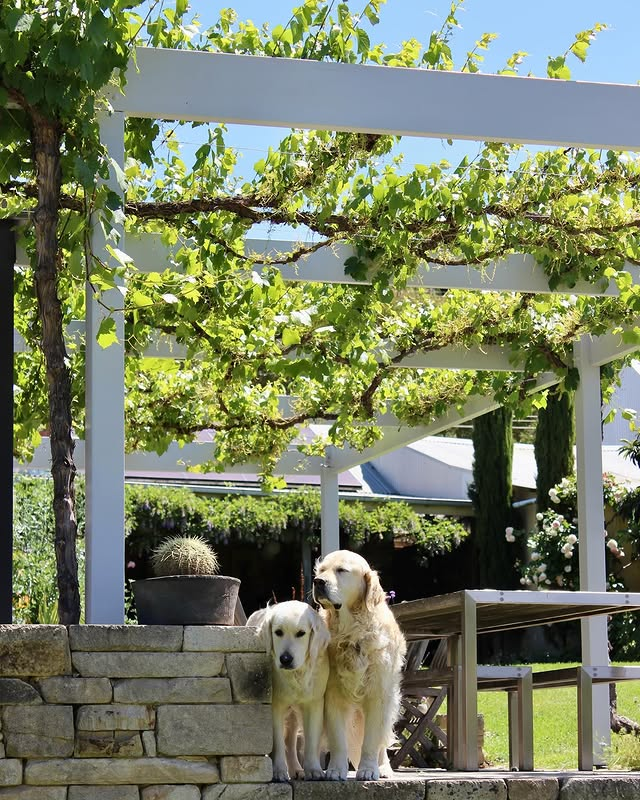
Combining a grape trellis with a seating area underneath — essentially a small pergola with a bench — turns a purely functional structure into a usable outdoor space, and the eventual shade from a mature vine makes it genuinely pleasant to sit under by midsummer.
25. Single-Wire Training System
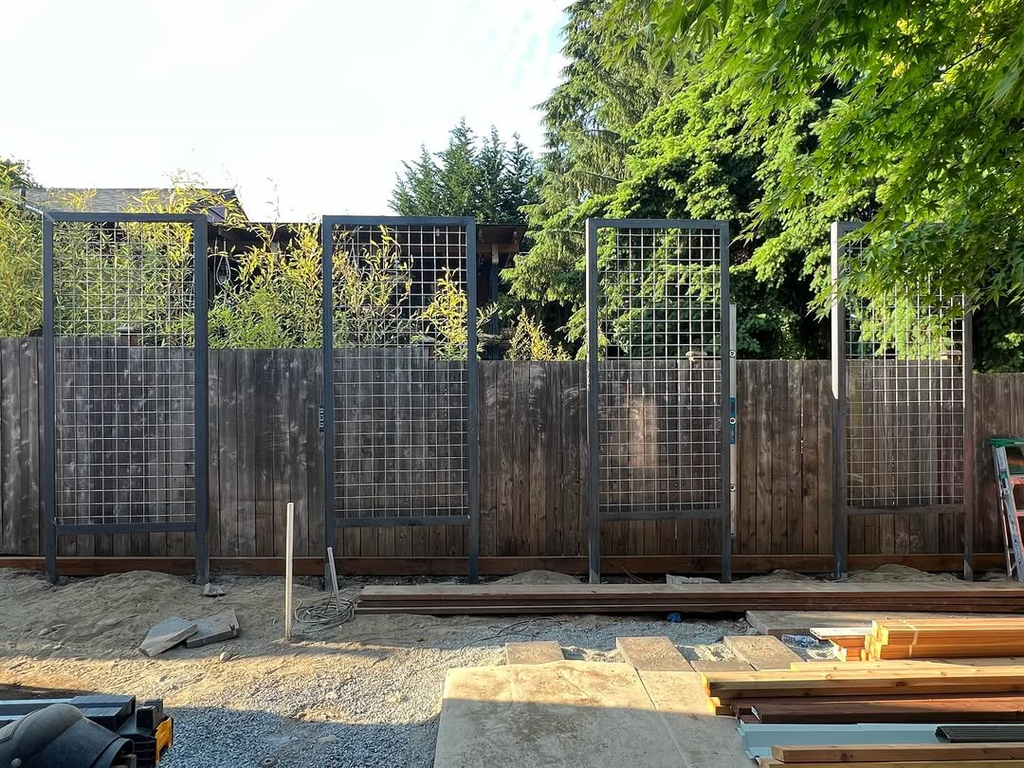
A minimalist approach using just one or two horizontal wires, with the vine trained along a single cordon rather than spread across a full grid — this is a more advanced pruning technique that produces a cleaner, more manageable vine, but it requires more consistent pruning knowledge than a simpler grid-style trellis.
26. Decorative Painted or Stained Trellis
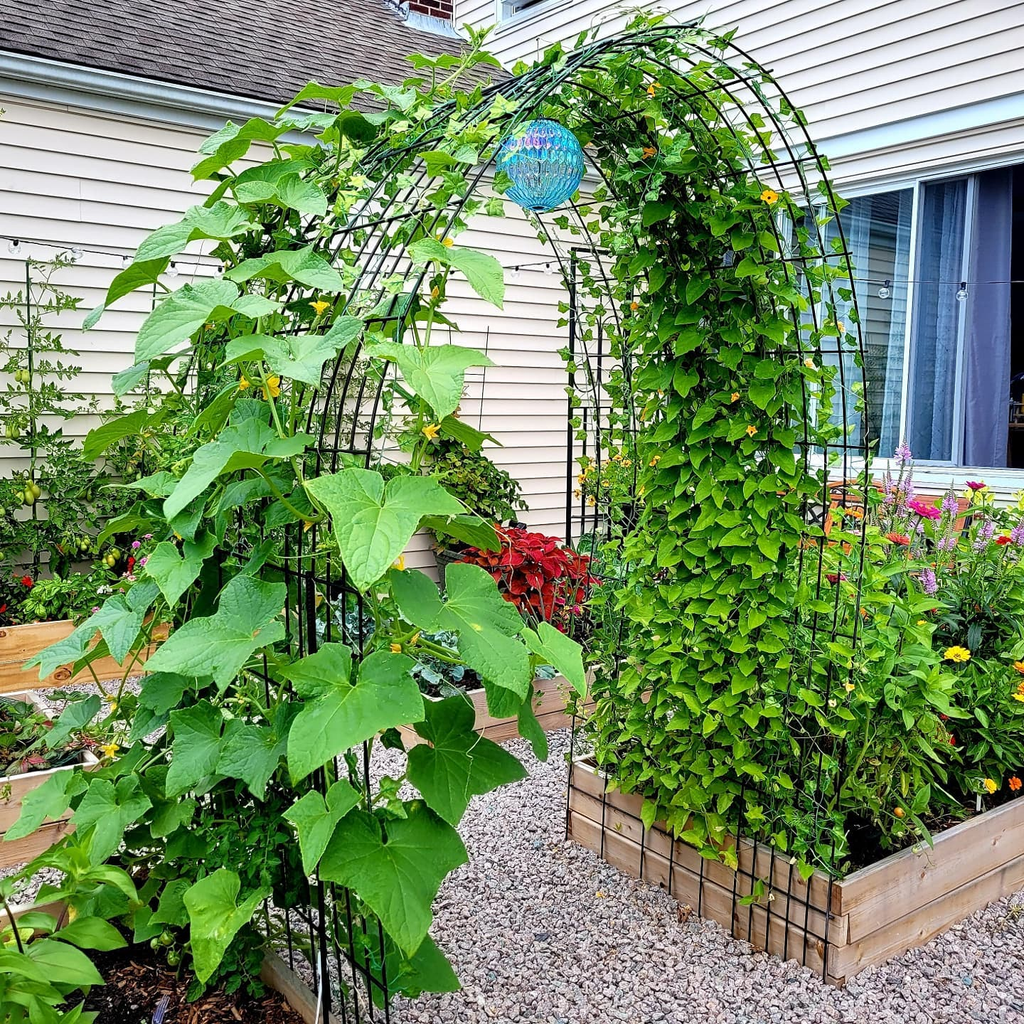
For anyone who wants the trellis itself to look intentional rather than purely functional, painting or staining a wood structure in a color that complements your house or garden turns it into an actual design element instead of just infrastructure — Frank’s is stained a dark walnut to match his deck, and it’s genuinely one of the better-looking structures in his yard even in the off-season when the vine has died back.
What This Actually Costs
- Under $50: A DIY rebar-and-wire trellis, a repurposed pallet or ladder
- $50–$150: A basic wood A-frame kit, a cattle panel and posts
- $150–$400: A cedar structure, a full T-post and wire vineyard-style setup for a few vines
- $400+: A pergola-integrated build, a large arbor or tunnel structure
Where I’d Start
If I were starting over, I’d skip the flimsy lattice panel entirely and go straight to something built for the long haul — a cattle panel arch or a proper cedar frame, sunk deep enough and anchored well enough that I wouldn’t be rebuilding it in year three the way I did the first time.
Grape vines are a genuinely long-term planting, often producing for decades once established, and the trellis is the one piece of this whole setup where cutting corners costs you more time and money in the long run than just building it right the first time.








Leave a Reply