
I used to trip over my own shoes every single morning until I figured out that the problem wasn’t my apartment — it was that I was trying to furnish it like I had a house.
My first place after college was 410 square feet, and for the first year I basically just… crammed a house’s worth of stuff into it and hoped for the best. It looked cluttered, it felt smaller than it was, and I hated being home.
Apartment living comes with real constraints — no knocking down walls, no repainting without asking, sometimes not even a nail hole allowed in the lease.
But the apartments that actually feel good to live in aren’t the ones with the least stuff or the most Pinterest-perfect styling. They’re the ones where every room has been thought through for what it actually needs to do.
So this is a room-by-room list of apartment ideas I’ve either used myself, watched a friend figure out the hard way, or picked up from readers who left a comment explaining what actually worked for them.
I’m grouping these by room — living room, bedroom, kitchen, bathroom, entryway, and the awkward in-between spaces every apartment has — because “apartment room ideas” usually means different things depending on which room is driving you crazy.
Living Room Ideas for Small Apartments
1. Float your sofa instead of pushing it against a wall
The instinct in a small living room is to shove every piece of furniture against a wall to “save space.” It usually backfires — it makes the room feel like a waiting room and wastes the most useful spot in the space, the middle. Floating your sofa a foot or two off the wall, even in a room that’s only 12×14, creates a defined seating area and gives you a spot behind it for a slim console table or a stack of baskets.
My friend Jess did this in her one-bedroom in Chicago and was convinced it would make the room feel smaller. It didn’t — it made the room read as intentional instead of like everything got backed into a corner.
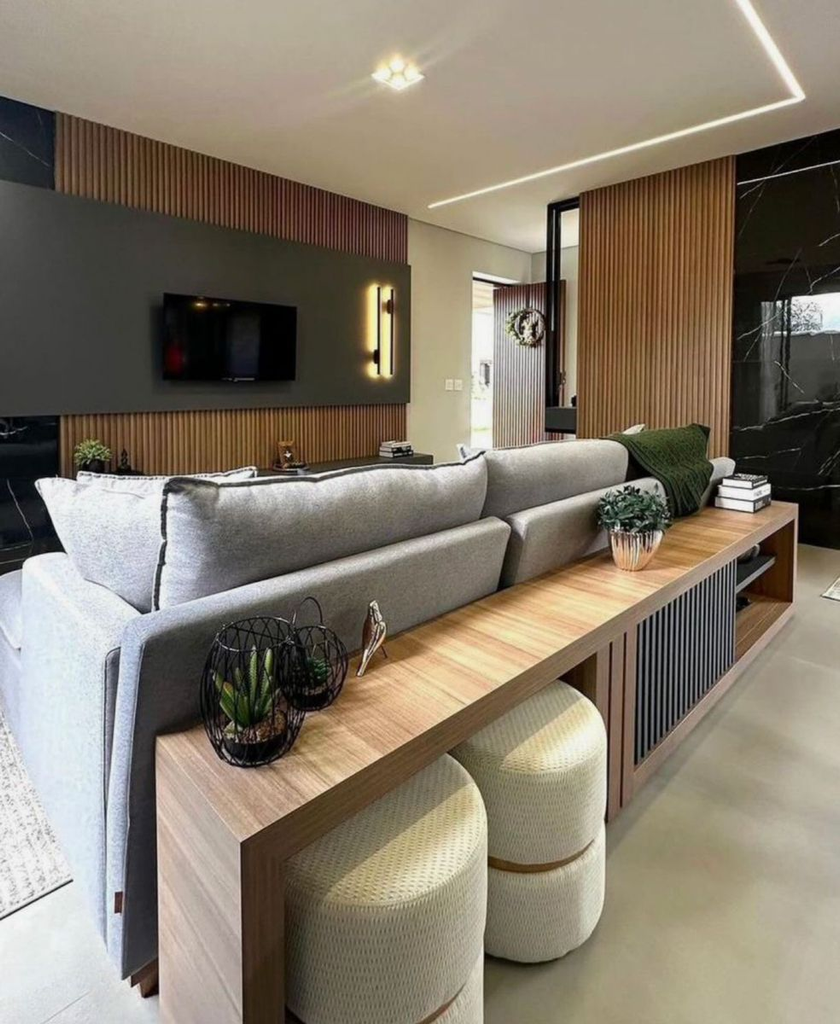
Pro tip: if your sofa has to sit against a wall because of outlet placement or a radiator, use a rug to define the seating area instead. A room with no rug, or a rug too small for the furniture on it, is one of the fastest ways to make a small living room feel unfinished.
2. Pick furniture with legs, not furniture that sits on the floor
This one sounds minor but it’s not. Furniture with visible legs — sofas, chairs, even TV consoles — lets your eye travel underneath it, which reads as more floor space even when the actual square footage hasn’t changed.
Low, chunky furniture that sits flush to the floor eats visual space fast in a small room.

3. Use a large mirror, not several small ones
A single oversized mirror leaning against a wall or hung opposite a window does more for a small living room than five smaller decorative mirrors scattered around.
It reflects light across the whole room instead of in small pockets, and it gives you one strong visual anchor instead of a cluttered wall.

4. Multi-purpose coffee table with storage
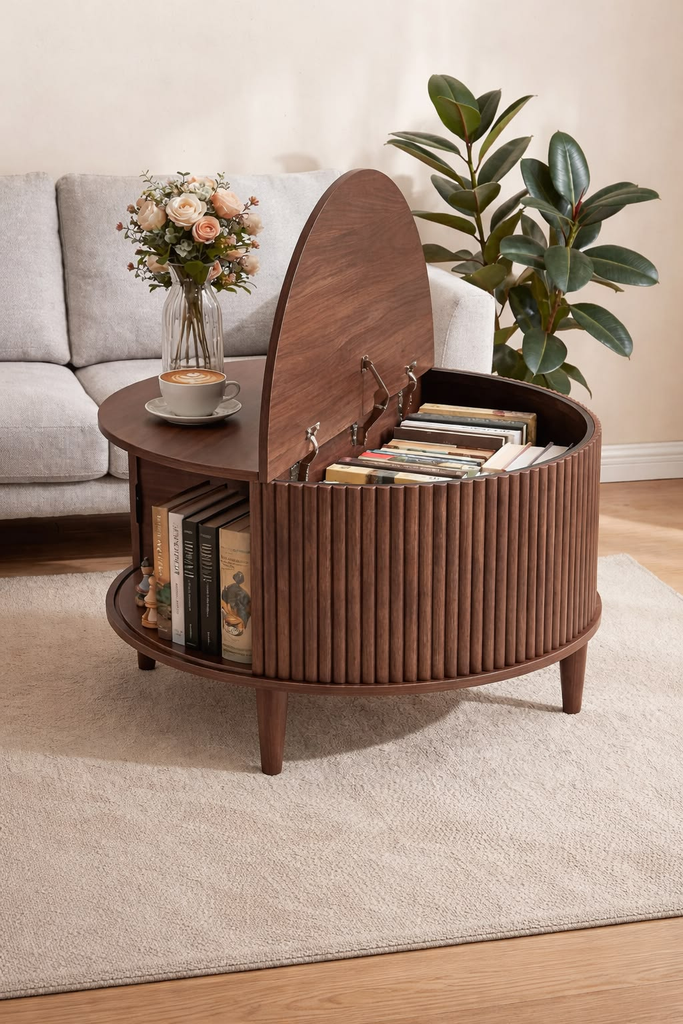
If your living room doubles as a dining spot, a work spot, or a guest bedroom on weekends (mine has, more than once), a coffee table with a lift-top or hidden storage underneath earns its keep fast.
I use mine to stash extra throw blankets and the laptop I don’t want visible when someone’s over.
Pro tip for the living room section: Resist the urge to fill every wall. One reader left a comment on a related post saying she left one wall completely bare in her living room on purpose, just to give the eye somewhere to rest — and it’s the thing people compliment most when they visit. A small room with breathing room reads bigger than a small room packed floor to ceiling.
Bedroom Ideas for Small Apartments
5. Under-bed storage instead of a dresser
If your bedroom can’t fit both a bed and a full dresser without feeling like a hallway, under-bed storage bins can genuinely replace two or three drawers’ worth of off-season clothes, extra linens, or shoes.
I use flat rolling bins under a bed frame with about 7 inches of clearance — measure before you buy, because a lot of bed frames only clear 4-5 inches and won’t fit standard bins.

6. A daybed instead of a bed-plus-sofa setup
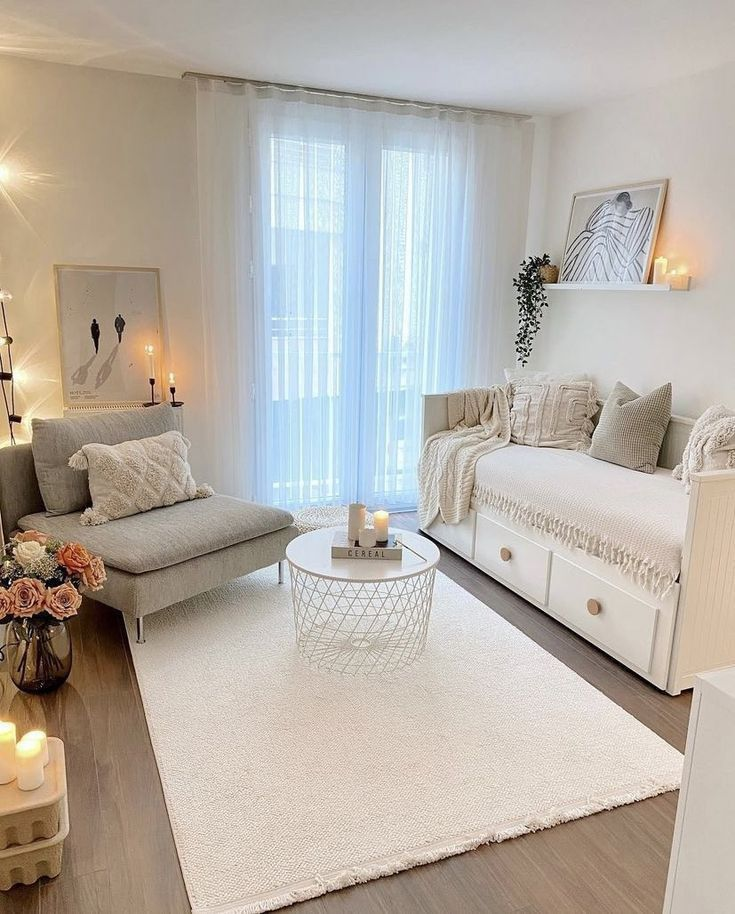
For a studio or a bedroom that has to double as a hangout spot, a daybed against a wall does the job of both a bed and a couch without needing floor space for two separate pieces.
It’s not for everyone — daybeds run smaller than a full mattress, so if you’re used to sprawling out, it’ll feel tight.
7. Wall-mounted nightstands or floating shelves
A tiny bedroom often can’t spare the floor space for two full nightstands. Floating shelves or wall-mounted nightstand alternatives free up the floor around the bed, which matters more than it sounds like it should in a room where you’re squeezing past furniture to get to the closet.

8. Closet doors that actually open
This is such a dumb, unglamorous thing to include on a list, but if your bedroom closet has traditional swinging doors and the room is small, replacing them with sliding or bifold doors (if your lease allows it, or a tension-rod curtain if it doesn’t) can free up several square feet of usable floor space that was previously just “door swing zone.”
My old apartment had a closet door that swung directly into the foot of the bed — I lived with it for two years before I finally swapped it for a curtain, and I regret not doing it sooner.

Pro tip: if you’re renting and can’t modify the door itself, a floor-length curtain on a tension rod hides a messy closet and costs less than most curtain panels sold for windows — buy the cheaper “door curtain” version, not decorative window curtains, which are usually priced higher for the same fabric.
Kitchen Ideas for Small Apartments
9. Magnetic strips instead of a knife block
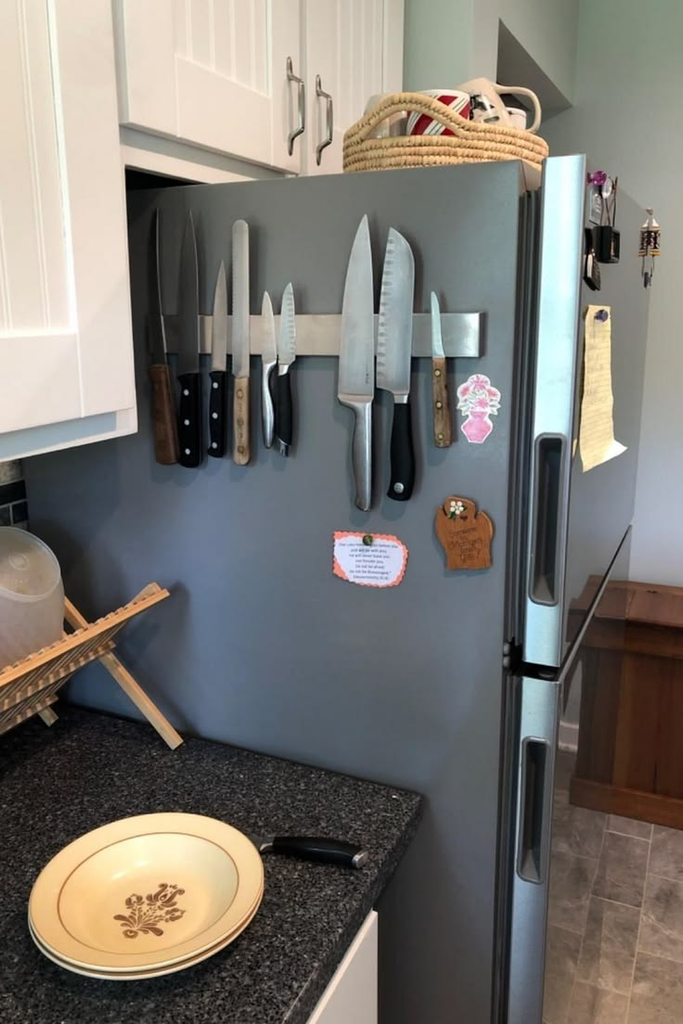
A knife block takes up prime counter space that most apartment kitchens don’t have to spare. A magnetic strip mounted on the wall (command-strip versions exist for renters) frees the counter and, honestly, makes the knives more visible so you actually use the right one instead of digging through a drawer.
10. Rolling cart as extra counter and storage
If your kitchen has zero counter space — and a lot of apartment kitchens genuinely don’t — a rolling utility cart solves two problems at once: it’s extra prep surface when you need it, and it rolls out of the way or into a corner when you don’t. I keep small appliances I don’t use daily on the bottom shelf of mine.

11. Over-the-sink cutting board
This is one of those ideas that shows up on Pinterest constantly for a reason — a cutting board that sits over your sink basin effectively creates counter space where there wasn’t any. It’s not a gimmick; it’s genuinely useful in a galley kitchen with 18 inches of counter total.

12. Vertical storage for cabinets
Stackable shelves inside cabinets double your usable space by using the dead air above each stack of plates or bowls. It sounds obvious, but most apartment kitchens come with cabinets that assume you’ll only ever store one layer of dishes per shelf, which wastes a huge amount of vertical space.

| Small-Kitchen Storage Option | Best For | Approx. Cost | Trade-off |
|---|---|---|---|
| Magnetic knife strip | Freeing counter space, renters | $12–$25 | Requires wall space near prep area |
| Rolling utility cart | No counter space at all | $40–$120 | Takes up floor footprint when in use |
| Over-sink cutting board | Galley kitchens, tiny counters | $20–$45 | Only usable when sink is free |
| In-cabinet stackable shelves | Deep or tall cabinets | $10–$30 per shelf | Doesn’t help shallow cabinets |
Pro tip: don’t buy all four of these at once just because they’re all reasonably cheap — measure your actual dead space first. I bought a rolling cart before I owned a kitchen small enough to need one, and it just became a place where mail piled up.
Bathroom Ideas for Small Apartments
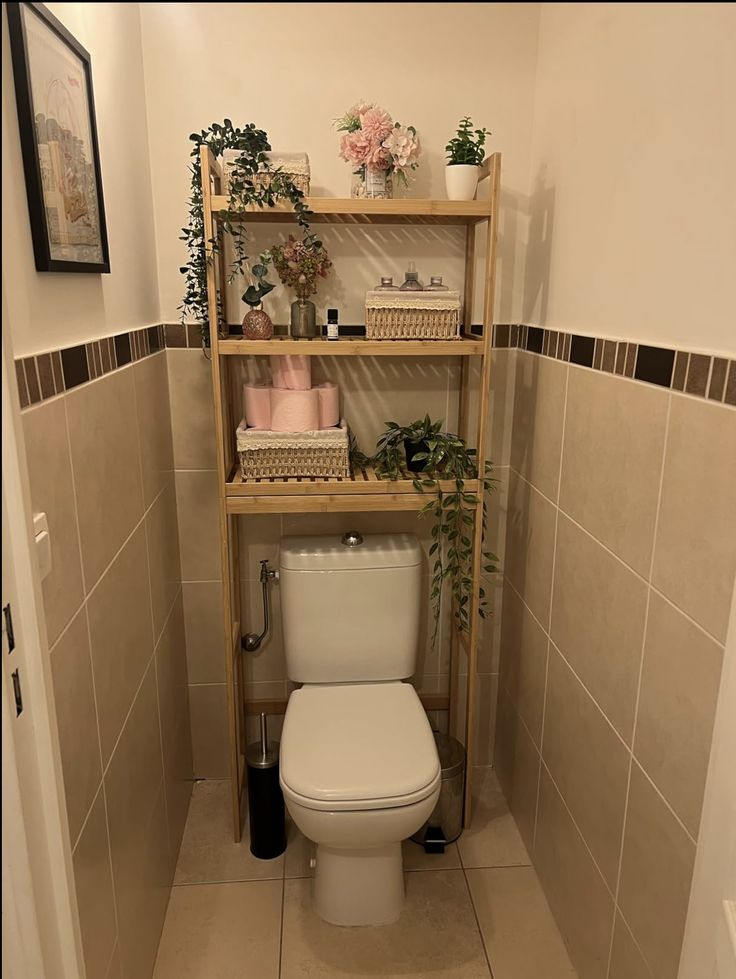
13. Over-the-toilet storage
Almost every apartment bathroom has unused vertical space above the toilet, and a slim shelving unit there can hold towels, toiletries, or extra toilet paper without eating into the already-tight floor space. This is one of the few apartment bathroom upgrades that’s genuinely close to a must, not a nice-to-have.
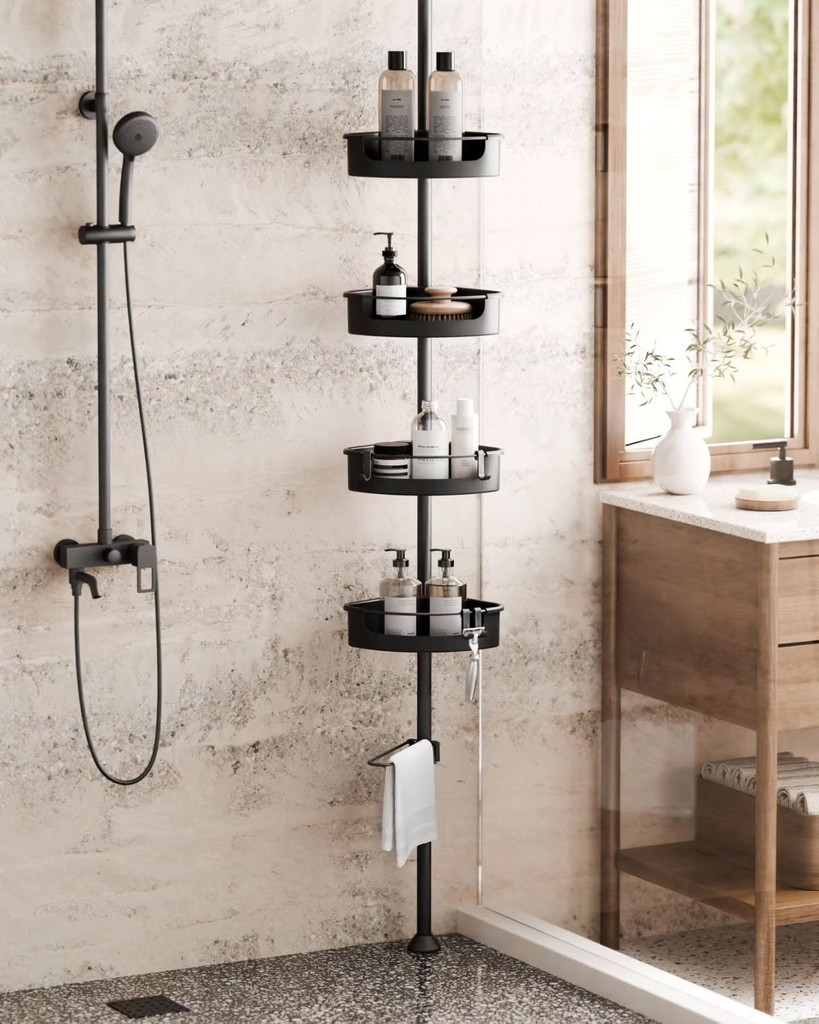
14. Tension shower caddy instead of a suction one
I tried the suction-cup shower caddy first and it fell off the wall within a week, soap and all, at 7am, which is a genuinely bad way to start a day.
A tension-rod caddy that wedges between the ceiling and tub doesn’t rely on adhesive holding in a wet, steamy environment, and it holds significantly more weight.
15. Round rug in an oddly shaped bathroom
A lot of apartment bathrooms have awkward layouts — a toilet at an angle, a sink crammed into a corner — where a standard rectangular bath mat just doesn’t fit the actual usable floor.
A round rug is more forgiving of odd angles and tends to look more intentional in a small, irregular space.

Entryway & Hallway Ideas
16. A slim console table, even a 6-inch-deep one
Most apartment entryways aren’t real rooms — they’re a few feet of hallway between the front door and everything else.
A console table as narrow as 6-8 inches deep still gives you a spot to drop keys and mail without eating the walking path, and it visually signals “this is the entry” even without a dedicated foyer.

17. Wall hooks over a shoe bench
If you don’t have the floor space for a full shoe bench, a row of wall-mounted hooks handles coats and bags, and a slim shoe rack (not a bench) handles shoes without needing the extra depth a bench requires. This was the fix that finally solved my shoe-tripping problem, for the record.

18. A runner rug to visually widen a narrow hallway
A rug running the length of a narrow hallway, especially with a pattern that runs perpendicular to the hallway’s length, can make the space read as wider than it is. A rug that runs the same direction as the hallway tends to emphasize how narrow it already is — small detail, bigger visual difference than you’d expect.
Pro tip for entryways: Skip the full-length mirror by the door unless you actually have the wall space for it. A lot of small-apartment posts push the “mirror by the door” idea regardless of layout, but in a narrow hallway it can make the space feel like it’s closing in rather than opening up. A smaller mirror above the console table does the same job without the bulk.
Multi-Purpose & Awkward Spaces
19. A fold-down desk for a home office corner
If you don’t have a spare room for a home office, a wall-mounted fold-down desk gives you a workspace that disappears when you’re not using it.
I switched to one during a stretch of working from home and it turned an unusable dead corner into an actual desk setup, without permanently losing the floor space when the workday’s over.

20. Room dividers that aren’t full walls
Bookshelves, curtains, or slatted wood screens can visually split a studio into “bedroom zone” and “living zone” without the commitment (or lease violation) of an actual wall.
A tall, open-backed bookshelf does double duty as storage and divider, which matters when every piece of furniture needs to earn its square footage.

21. A Murphy bed or wall bed for true studios
This is a bigger investment, and it’s not for every renter, but if your studio genuinely needs to function as a living room by day and a bedroom by night, a wall bed reclaims the entire footprint of a bed frame during waking hours.
It’s the single highest-impact change on this whole list if your space allows for it — and also the most expensive, so it’s worth thinking through before committing.

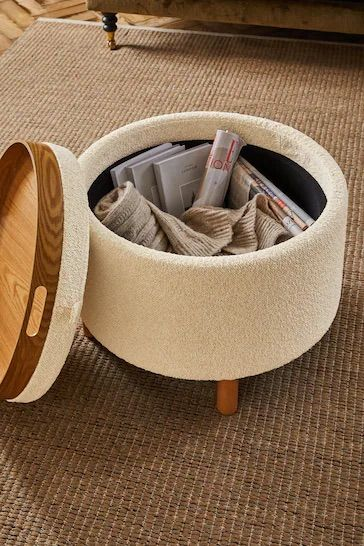
22. Storage ottomans as extra seating
An ottoman that opens up for storage does the job of extra seating when you have guests and hides blankets, games, or off-season stuff the rest of the time. It’s a smaller commitment than the multi-purpose coffee table idea above and works in rooms too tight for a full coffee table.
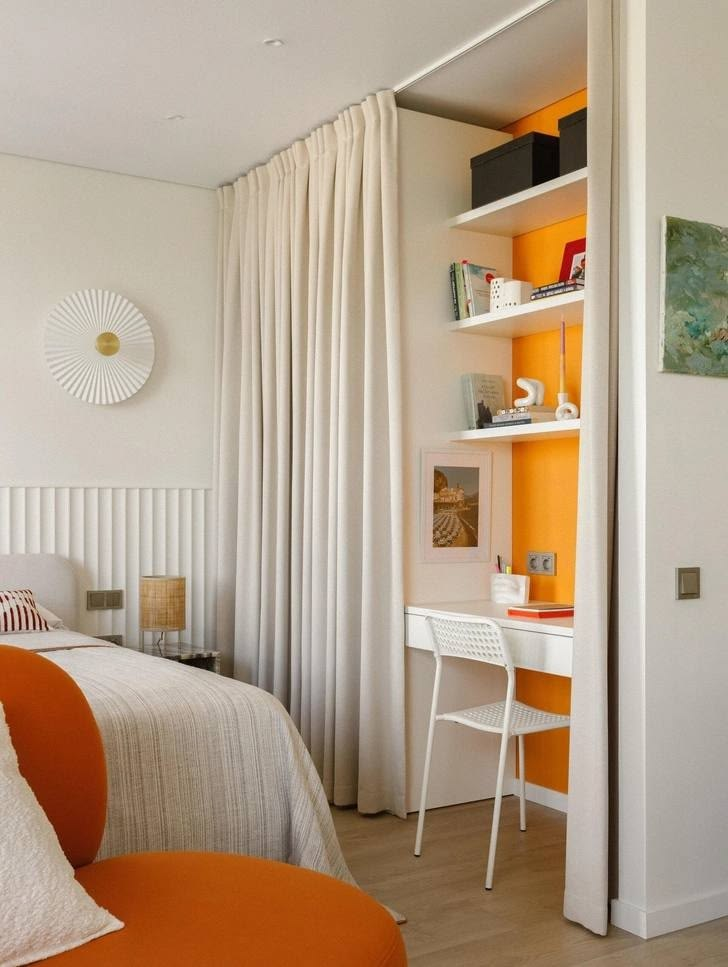
23. Curtains instead of doors for a closet-turned-office
If you’ve converted a closet into a mini office nook (a genuinely popular move in older apartments with deep reach-in closets), a curtain instead of leaving the doors off hides the desk clutter when you’re done for the day, which matters more than people expect for keeping a studio apartment feeling calm.
24. A narrow bar cart as a plant stand or bookshelf
Bar carts get pitched constantly as, well, bar carts, but the narrow footprint makes them just as useful as a plant stand or slim bookshelf in a spot too tight for a real piece of furniture. Mine has never held a single bottle of anything — it’s been a plant shelf since the day I bought it.
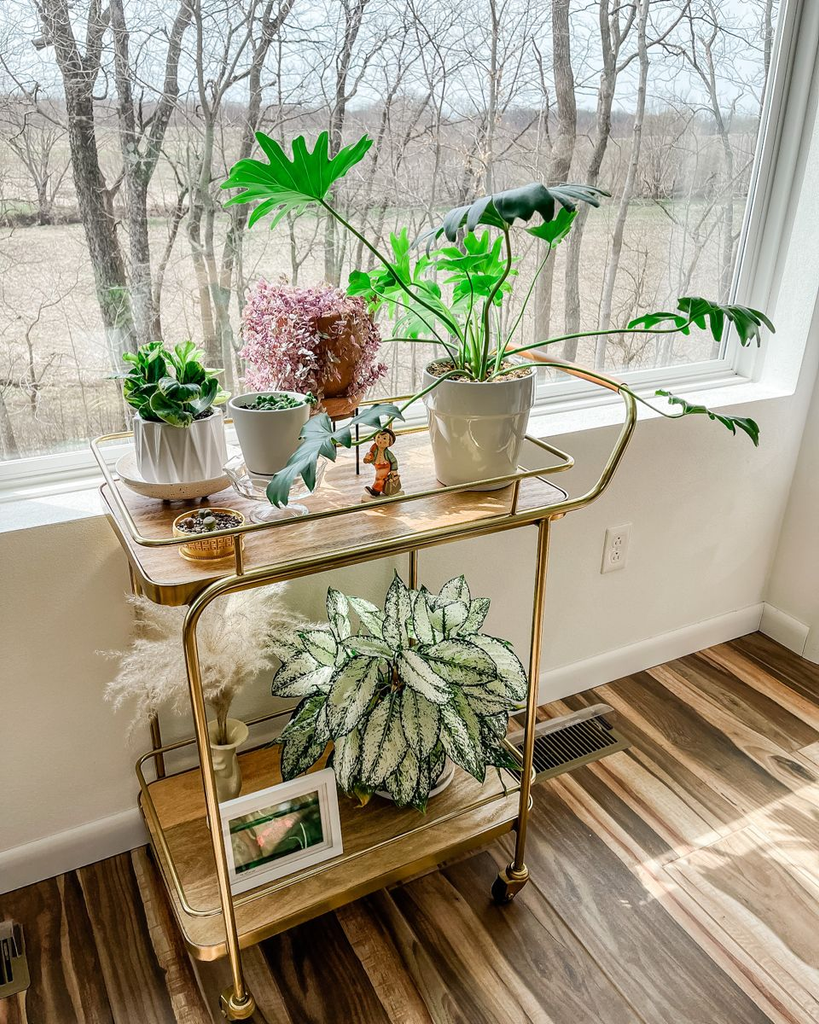
25. Command-strip picture ledges instead of nail-heavy gallery walls
A full gallery wall with a dozen nail holes isn’t realistic for most renters, and honestly isn’t realistic for a lot of small rooms either — it can visually crowd a space that needs breathing room more than it needs decoration.
A single picture ledge, hung with a couple of renter-friendly strips, lets you lean and layer a few frames without committing the wall to one fixed arrangement, and you can rearrange it in five minutes when you get bored of it.

What I’d Actually Do First
If I were starting over in a small apartment tomorrow, I wouldn’t start with decor at all — I’d start with the entryway hooks and the under-bed storage, because those two fixed the two things that made my first apartment feel chaotic every single day: tripping over shoes and not having anywhere to put off-season clothes.
The living room styling, the mirrors, the rugs — all of that matters, but it matters a lot less when the functional stuff underneath it is still a mess.
Not every idea on this list belongs in every apartment. A Murphy bed doesn’t make sense if you’re not in a true studio, and a rolling kitchen cart is dead weight if your kitchen already has enough counter space.
Look at which room in your apartment actually stresses you out day to day, and start there — the small, unglamorous fixes tend to pay off faster than the ones that look better in photos.


Leave a Reply